
The text to image AI generator ecosystem has become a core part of modern content creation, replacing many traditional design workflows. These tools convert natural language prompts into detailed visuals, supporting marketing, concept art, and digital storytelling. In 2026, competition among platforms is defined by model diversity, ease of use, and integration capabilities rather than simple image quality alone. The following five tools represent widely adopted solutions across creative industries.
1. Pollo AI Text to Image AI Generator
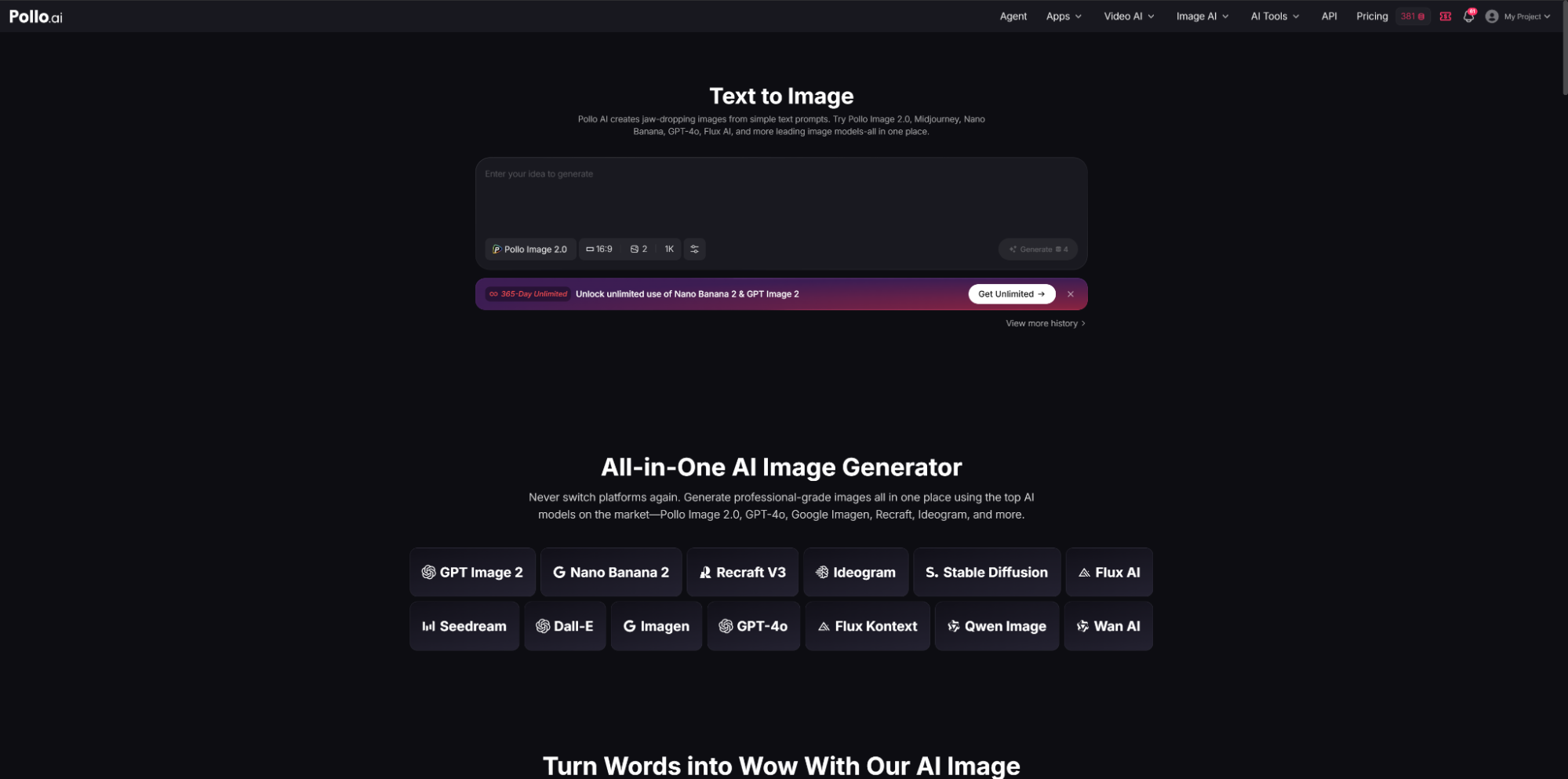

Pollo AI is an all-in-one creative platform that integrates multiple AI models into a single environment. It goes beyond a standard text to image AI generator by combining tools such as AI Image Generator, Image to Image AI, AI Photo Editor, and text-to-video workflows. Users can access models like Stable Diffusion, DALL·E, Flux, Ideogram, GPT-4o, and Imagen, enabling flexible visual styles from one interface.
The platform also includes specialized tools such as AI Shirt Design, AI Emoji Generator, AI Movie Poster, and AI Sketch Generator. With over 2000 LoRA models, it supports highly customized image generation. Its positioning is less about a single model and more about unified access to multiple generation systems, making it suitable for broad creative workflows.
Why Choose Text to Image AI Generator Pollo AI
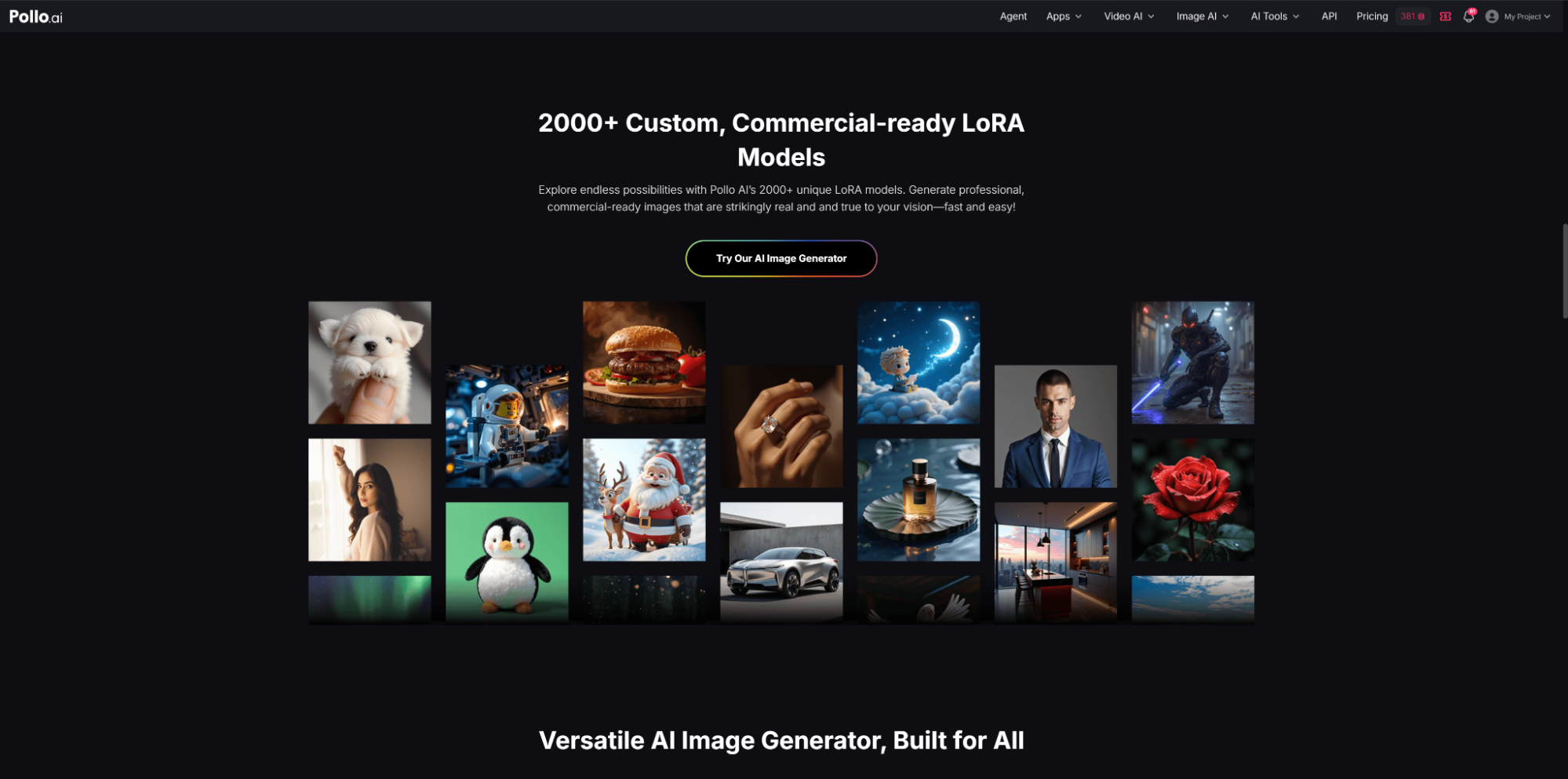

Pollo AI stands out due to its multi-model comparison capability, allowing users to test different outputs without switching platforms. This is useful for designers who need varied visual directions from the same prompt. It also supports marketing-focused generation like ads, product visuals, and social content, making it practical for commercial workflows. With integrated models such as the GoEnhance AI video generator, users can push their visuals further with advanced enhancement and stylization directly inside the same workspace.
In real usage, Pollo AI is often adopted by marketers and content teams who need fast, scalable visuals. Its combination of image and video tools reduces workflow fragmentation. It works best for users who prioritize speed, variety, and centralized creative control.
2. Adobe Firefly Text to Image AI Generator
Adobe Firefly is Adobe’s generative AI tool designed for integration with Photoshop, Illustrator, and other creative apps. It focuses on producing commercially safe and design-ready outputs, making it suitable for professional environments. As a text to image AI generator, it emphasizes control, consistency, and brand-safe generation.
Firefly is built to function inside Adobe’s ecosystem, allowing users to generate and refine images directly within editing workflows. It supports tasks like background creation, layout variation, and concept visualization. Compared to more experimental tools, it prioritizes reliability over stylistic unpredictability.
Why Choose Text to Image AI Generator Adobe Firefly
Adobe Firefly is commonly used because of its deep integration with professional design tools. This allows seamless movement from generation to editing, which is valuable for design teams. It also reduces legal concerns due to its commercially safe output approach.
In practice, Firefly is used for marketing assets, brand visuals, and production-ready design variations. It is best suited for users already working within Adobe’s ecosystem who need structured and predictable outputs.
3. Midjourney Text to Image AI Generator
Midjourney is widely known for its strong artistic style and high-quality visual outputs. It focuses on interpreting prompts creatively, producing cinematic, fantasy, and concept-driven images. As a text to image AI generator, it emphasizes aesthetic depth over strict literal accuracy.
Midjourney works through iterative prompting, where users refine inputs to guide visual direction. This makes it suitable for exploration rather than precision workflows. Its outputs often carry a recognizable artistic style.
Why Choose Text to Image AI Generator Midjourney
Midjourney is preferred for its ability to generate visually strong concepts with minimal input. It is widely used in game design, film pre-visualization, and creative ideation.
It works best for mood boards, concept art, and artistic experimentation. Users choose it when visual style matters more than exact prompt fidelity.
4. Stable Diffusion Text to Image AI Generator
Stable Diffusion is an open-source model known for flexibility and customization. It allows local deployment and third-party integration, making it highly adaptable. As a text to image AI generator, it supports advanced control over generation parameters and model tuning.
Its ecosystem includes community models, plugins, and custom workflows. Users can train datasets and modify outputs for specific use cases. This makes it a foundation for many AI image tools.
Why Choose Text to Image AI Generator Stable Diffusion
Stable Diffusion is chosen by users who need full control over image generation. It is widely used in development, research, and custom AI pipelines.
It performs best in technical environments requiring fine-tuned outputs. While it requires more setup, it offers unmatched flexibility among text to image AI generator tools.
5. DALL·E 3 Text to Image AI Generator
DALL·E 3 focuses on strong prompt understanding and accurate image generation. It converts natural language into coherent visuals with minimal prompt engineering. As a text to image AI generator, it prioritizes clarity and semantic alignment.
It is often integrated into conversational AI systems, allowing users to generate images through dialogue. This makes it accessible for non-technical users and quick ideation tasks.
Why Choose Text to Image AI Generator DALL·E 3
DALL·E 3 is chosen for its ease of use and reliable prompt interpretation. It is suitable for educational visuals, concept sketches, and general creative tasks.
It works best when users want straightforward, predictable outputs without complex configuration. It balances simplicity and quality in text to image AI generation.
Conclusion
The text to image AI generator landscape in 2026 is shaped by specialization. Pollo AI focuses on multi-model integration, Adobe Firefly on professional workflows, Midjourney on artistic output, Stable Diffusion on open customization, and DALL·E 3 on prompt accuracy. Each tool serves different creative needs depending on workflow, control, and output style.