

Master of Evil and the analogue information galaxy

- Advertisement -
- Advertisement -

While we wait until Tuesday 11th November and the arrival of Master of Evil from Adam Christopher, here’s something to ponder on. Inverse have read the book and picked out a fascinating element from the plot that bears further investigation, and that is the very analogue nature of information exchange in the Star Wars galaxy. While the concept of a cloud-based global (galactic) networking system like the one we have here on Earth today would have been considered science fiction when George Lucas was writing the 1977 original back in the early 70’s, it did set in motion the method of information exchange – one that largely sees data stored in independent, sepoarate physical locations rather than shared in an ephemeral, unseen realm – that has remained with the saga ever since.
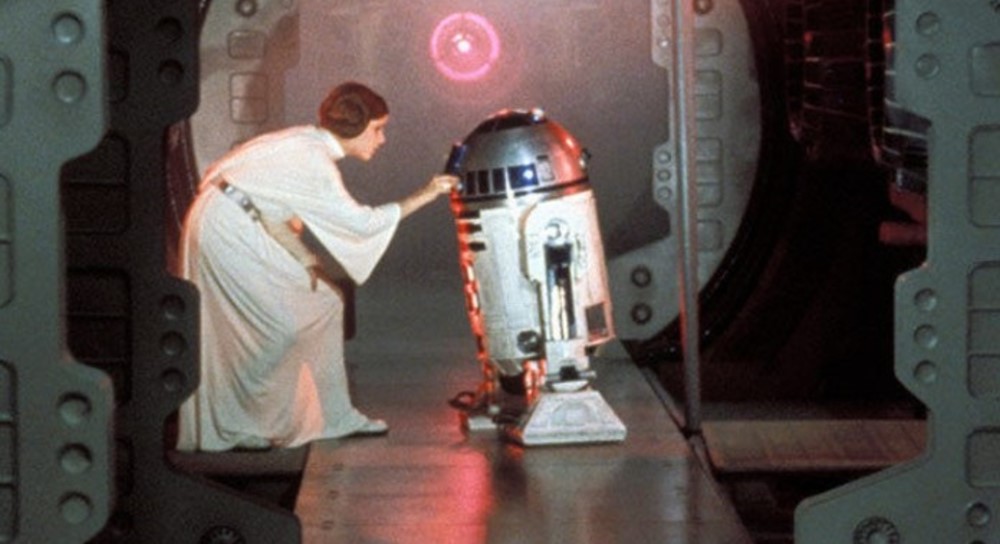
The subtext of Master of Evil also dances around a somewhat familiar Star Wars trope: Information is siloed in so many ways that manipulation of the facts is easy for those in power, but also means it’s paradoxically hard to know anything for sure, even if you are the Emperor or Lord Vader. Case in point: Palpatine sends Vader on this mission to try and find the Force shaman because even Palpatine doesn’t know for sure. Meanwhile, throughout the first half of the book, TC-99 tries to track down raw data fragments about Vader’s transformation, which results in finding some half-fried hard drives of medical droids who performed Anakin’s surgery in Revenge of the Sith. In short, the science fiction aspect of data in Star Wars is that, even at the height of the Empire’s power, data is extremely analog.

Relative to Star Wars lore, this is how it should be. Though it’s a paperless galaxy, the digital files in Star Wars — whether they’re hologram footage of Vader’s surgery, or details about how to bring people back to life with the Dark Side — aren’t available in the cloud for anyone to Google. Recall in Attack of the Clones just how easy it was for Count Dooku to erase a star system from the Jedi library archive, a process which might sound outrageous, but, relative to actual processes for storing star chart data today, isn’t actually that nuts. The larger point here is that Master of Evil is about the pursuit of information as much as it’s about trying to nail down certain deep-cut abilities of the Dark Side of the Force.

It’s a thought-provoking read, highlighting an element of Star Wars you may not have overtly pondered but which when you scratch the surface even a little feels like the most obvious thing ever.

SourceInverse
Mark Newbold
Mark Newbold
Exploring the galaxy since 1978, Mark wrote his first fan fiction in 1981 and been a presence online since his first webpage Fanta War in 1996. He currently contributes to ILM.com, SkywalkerSound.com and Star Wars Insider, having previously written for StarWars.com, Star Wars Encyclopedia, Build The Millennium Falcon, Starburst Magazine, Geeky Monkey, TV Film Memorabilia and Model and Collectors Mart. He is a four-time Star Wars Celebration Stage host, the only podcaster to have appeared on every Celebration podcast stage since it began in 2015, the Daily Content Manager of Fantha Tracks and the co-host of Making Tracks, Canon Fodder and Start Your Engines on Fantha Tracks Radio.
- Advertisement -
- Advertisement -

While we wait until Tuesday 11th November and the arrival of Master of Evil from Adam Christopher, here’s something to ponder on. Inverse have read the book and picked out a fascinating element from the plot that bears further investigation, and that is the very analogue nature of information exchange in the Star Wars galaxy. While the concept of a cloud-based global (galactic) networking system like the one we have here on Earth today would have been considered science fiction when George Lucas was writing the 1977 original back in the early 70’s, it did set in motion the method of information exchange – one that largely sees data stored in independent, sepoarate physical locations rather than shared in an ephemeral, unseen realm – that has remained with the saga ever since.

The subtext of Master of Evil also dances around a somewhat familiar Star Wars trope: Information is siloed in so many ways that manipulation of the facts is easy for those in power, but also means it’s paradoxically hard to know anything for sure, even if you are the Emperor or Lord Vader. Case in point: Palpatine sends Vader on this mission to try and find the Force shaman because even Palpatine doesn’t know for sure. Meanwhile, throughout the first half of the book, TC-99 tries to track down raw data fragments about Vader’s transformation, which results in finding some half-fried hard drives of medical droids who performed Anakin’s surgery in Revenge of the Sith. In short, the science fiction aspect of data in Star Wars is that, even at the height of the Empire’s power, data is extremely analog.

Relative to Star Wars lore, this is how it should be. Though it’s a paperless galaxy, the digital files in Star Wars — whether they’re hologram footage of Vader’s surgery, or details about how to bring people back to life with the Dark Side — aren’t available in the cloud for anyone to Google. Recall in Attack of the Clones just how easy it was for Count Dooku to erase a star system from the Jedi library archive, a process which might sound outrageous, but, relative to actual processes for storing star chart data today, isn’t actually that nuts. The larger point here is that Master of Evil is about the pursuit of information as much as it’s about trying to nail down certain deep-cut abilities of the Dark Side of the Force.

It’s a thought-provoking read, highlighting an element of Star Wars you may not have overtly pondered but which when you scratch the surface even a little feels like the most obvious thing ever.

SourceInverse
Mark Newbold
Mark Newbold
Exploring the galaxy since 1978, Mark wrote his first fan fiction in 1981 and been a presence online since his first webpage Fanta War in 1996. He currently contributes to ILM.com, SkywalkerSound.com and Star Wars Insider, having previously written for StarWars.com, Star Wars Encyclopedia, Build The Millennium Falcon, Starburst Magazine, Geeky Monkey, TV Film Memorabilia and Model and Collectors Mart. He is a four-time Star Wars Celebration Stage host, the only podcaster to have appeared on every Celebration podcast stage since it began in 2015, the Daily Content Manager of Fantha Tracks and the co-host of Making Tracks, Canon Fodder and Start Your Engines on Fantha Tracks Radio.
- Advertisement -
- Advertisement -
- Advertisement -
Close Popup
Privacy Settings saved!
Privacy Settings

When you visit any web site, it may store or retrieve information on your browser, mostly in the form of cookies. Control your personal Cookie Services here.

These cookies are necessary for the website to function and cannot be switched off in our systems.

Technical Cookies
In order to use this website we use the following technically required cookies
  • wordpress_test_cookie
  • wordpress_logged_in_
  • wordpress_sec

Google Adsense
We use Google AdSense to show online advertisements on our website.
  • _tlc
  • _tli
  • _tlp
  • _tlv
  • DSID
  • id
  • IDE

One Signal
For performance reasons we use OneSignal as a notification service.  This saves a number of cookies in order to apply notifcation services on a per-client basis. These cookies are strictly necessary for OneSignal's notification features.  It is essential to the service that these are not turned off.
  • _OneSignal_session
  • __cfduid
  • _ga
  • _gid

Affiliate Links
Fantha Tracks is reader-supported.  When you buy through links on our site, we may earn an affiliate commission.

Media Net
We use Media Net to show online advertisements on our website.
  • SESS#

Decline all Services
Save
Accept all Services
Mastodon