


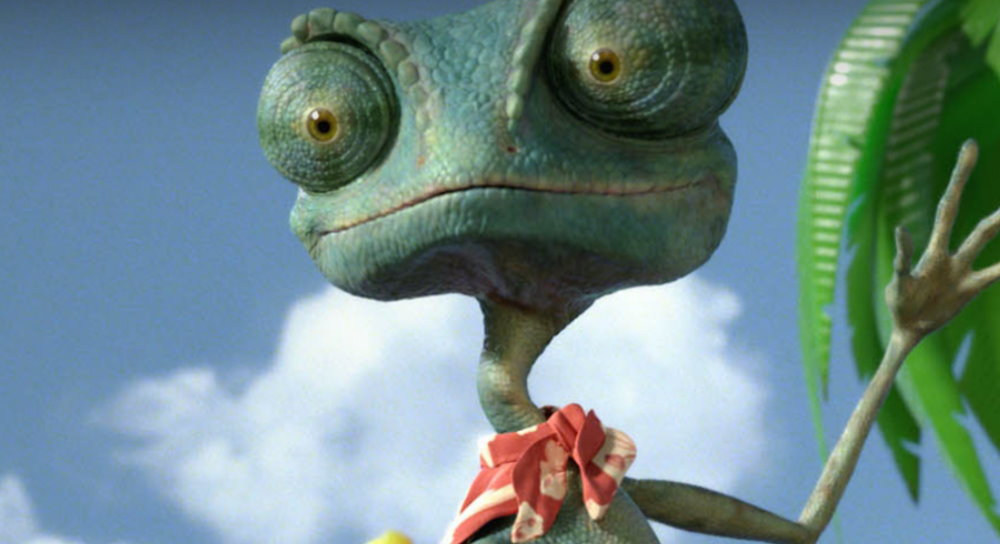
Writing over at ILM, Jamie Benning kicks off ILM Evolutions, a new series looking at 50 years of the galaxy’s greatest effects house with a look at the evolution of animation, from the earliest hand-crafted work on 1977’s Star Wars right up to ILM’s Oscar winning 2011 animated film Rango.
ILM’s reputation for innovation took a significant leap forward with Who Framed Roger Rabbit. Directed by Robert Zemeckis, the film demanded the seamless integration of hand-drawn, cel-animated characters with live-action performances and practical on-set effects. ILM’s task was to anchor the animated characters convincingly in the real world.
Visual effects supervisor Ken Ralston oversaw the technical and creative challenges of making cartoon characters interact believably with real environments. “The animation had to exist in a real world, with real lighting, perspective, and interaction. That had never been done before at this level,” Ralston told Cinefex.
“It was great for me because I am a huge fan of those early cartoons by the great Warner Brothers directors, Tex Avery and Chuck Jones. And when that showed up with the intent that Bob [Zemeckis] wanted for it, man, that was a match made in heaven. And it was brutal, but it was great at the same time. It keeps you going. And when you see results on something that’s finally coming together, it’s a blast,” Ralston explained to The Filmumentaries Podcast.
Marking a turning point in hybrid filmmaking, they also decided to discard the traditional locked-off camera in favor of dynamic movement. To support this, ILM developed new methods to track live-action camera motion and translate it into data that animators could use to maintain consistent character positioning and perspective. “The opening camera crane shot proved to be historic. … No one had ever done a crane drop with a live-action camera and planted an animated character firmly on the ground,” Zemeckis recalled to Cinefex.