

One of the key elements of 2016’s Rogue One: A Star Wars Story was the presense of Grand Moff Tarkin, portrayed via sharply honed acting skills and the magic of ILM by Guy Henry, but outside the event of the GFFA a long-simmering Court case has moved to the next level as Tyburn Film Productions continue their actions against Lunak Heavy Industries (UK) Ltd, the Disney-owned entity that produced Rogue One. While Disney believe the original contract Cushing signed gives them the necessary permissions to do what they did back in 2016, Tyburn feel they have an equally strong case.
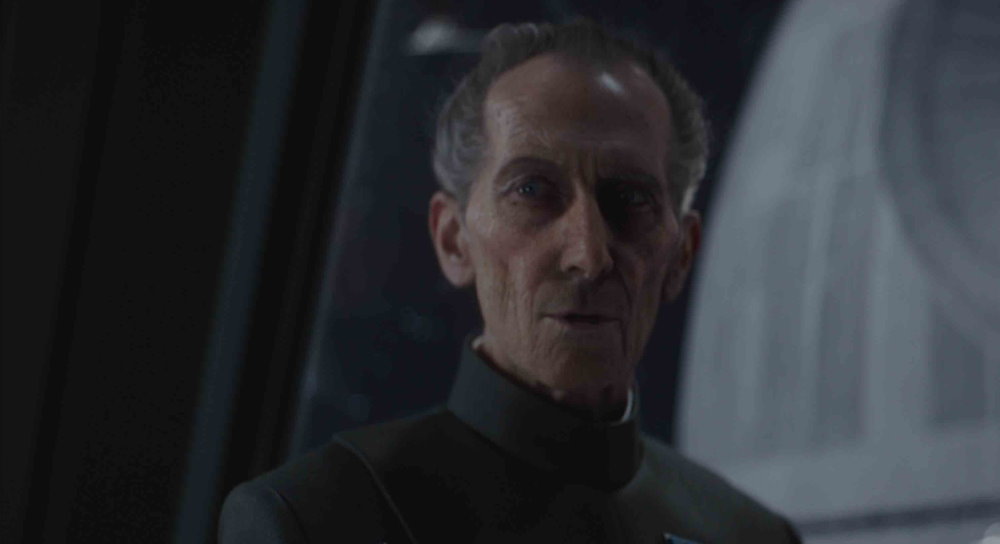
A legal battle over the digital resurrection of actor Peter Cushing in the Star Wars spin-off film Rogue One has reached the Court of Appeal, with film companies arguing the claim should be dismissed.
Tyburn Film Productions is pursuing legal action against Lunak Heavy Industries (UK) Ltd, a Disney-owned entity that produced Rogue One: A Star Wars Story, concerning its use of Cushing’s likeness.
Cushing, renowned for his portrayal of imperial commander Grand Moff Tarkin in 1977’s Star Wars: Episode IV – A New Hope, passed away in 1994. However, his character was brought back to the screen in the 2016 film through advanced special effects, following an agreement between Lunak and the executors of Cushing’s estate in 2016.
Tyburn initiated legal proceedings in 2019 against Lunak and Lucasfilm, the studio behind the original Star Wars saga, alleging “unjust enrichment” from the use of Cushing’s image in Rogue One without their consent.
The company asserts that it entered into a “letter agreement” with Cushing in 1993, which, it claims, prohibited the reproduction of his appearance via special effects without Tyburn’s explicit permission.