

While we wait until Tuesday 11th November and the arrival of Master of Evil from Adam Christopher, here’s something to ponder on. Inverse have read the book and picked out a fascinating element from the plot that bears further investigation, and that is the very analogue nature of information exchange in the Star Wars galaxy. While the concept of a cloud-based global (galactic) networking system like the one we have here on Earth today would have been considered science fiction when George Lucas was writing the 1977 original back in the early 70’s, it did set in motion the method of information exchange – one that largely sees data stored in independent, sepoarate physical locations rather than shared in an ephemeral, unseen realm – that has remained with the saga ever since.
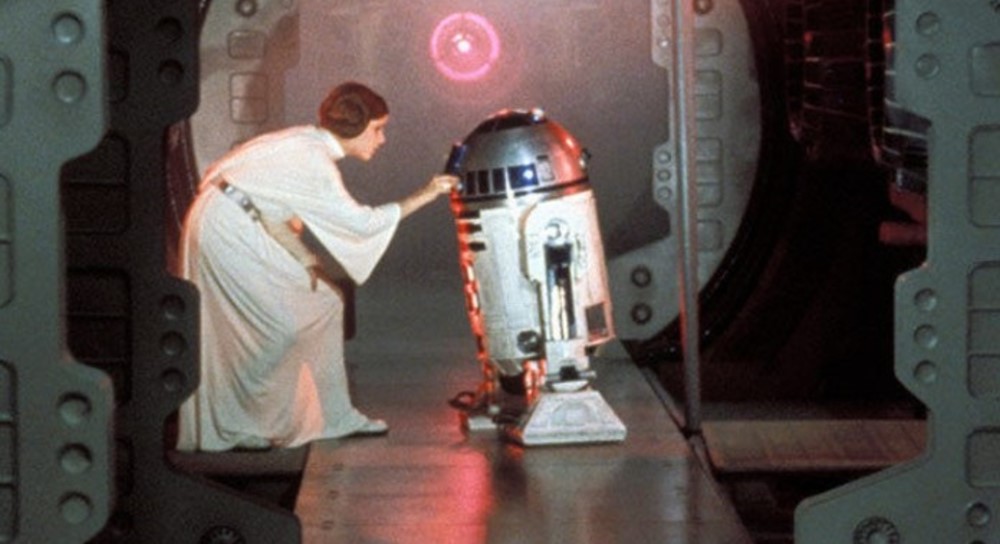
The subtext of Master of Evil also dances around a somewhat familiar Star Wars trope: Information is siloed in so many ways that manipulation of the facts is easy for those in power, but also means it’s paradoxically hard to know anything for sure, even if you are the Emperor or Lord Vader. Case in point: Palpatine sends Vader on this mission to try and find the Force shaman because even Palpatine doesn’t know for sure. Meanwhile, throughout the first half of the book, TC-99 tries to track down raw data fragments about Vader’s transformation, which results in finding some half-fried hard drives of medical droids who performed Anakin’s surgery in Revenge of the Sith. In short, the science fiction aspect of data in Star Wars is that, even at the height of the Empire’s power, data is extremely analog.
Relative to Star Wars lore, this is how it should be. Though it’s a paperless galaxy, the digital files in Star Wars — whether they’re hologram footage of Vader’s surgery, or details about how to bring people back to life with the Dark Side — aren’t available in the cloud for anyone to Google. Recall in Attack of the Clones just how easy it was for Count Dooku to erase a star system from the Jedi library archive, a process which might sound outrageous, but, relative to actual processes for storing star chart data today, isn’t actually that nuts. The larger point here is that Master of Evil is about the pursuit of information as much as it’s about trying to nail down certain deep-cut abilities of the Dark Side of the Force.
It’s a thought-provoking read, highlighting an element of Star Wars you may not have overtly pondered but which when you scratch the surface even a little feels like the most obvious thing ever.