
Event Review: Toy Stories: A Conversation with Master Collectors with Steve Sansweet and Pete Vilmur

- Advertisement -
- Advertisement -

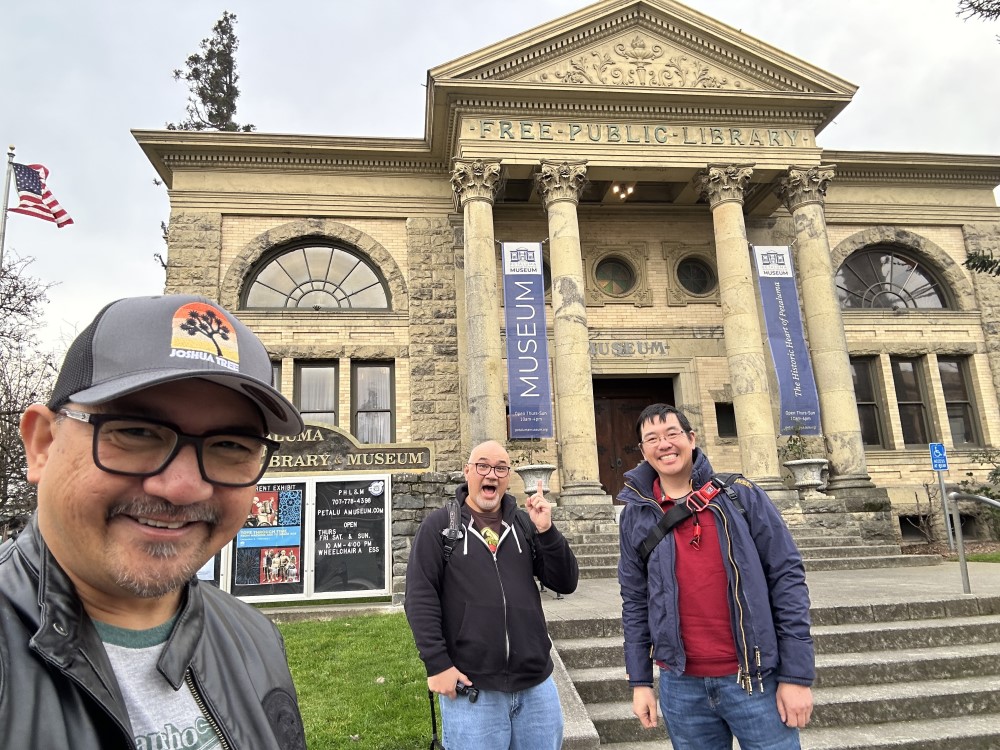
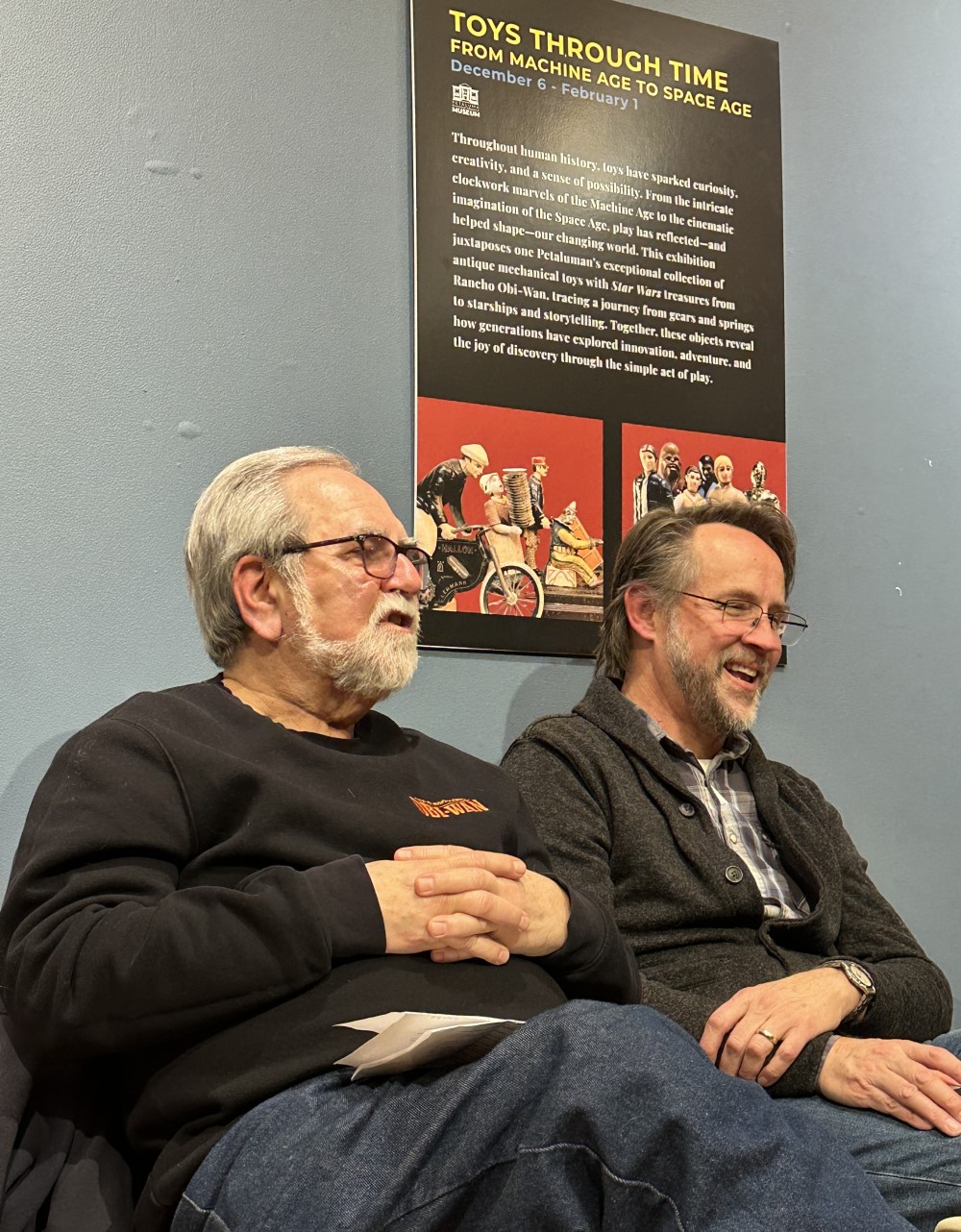
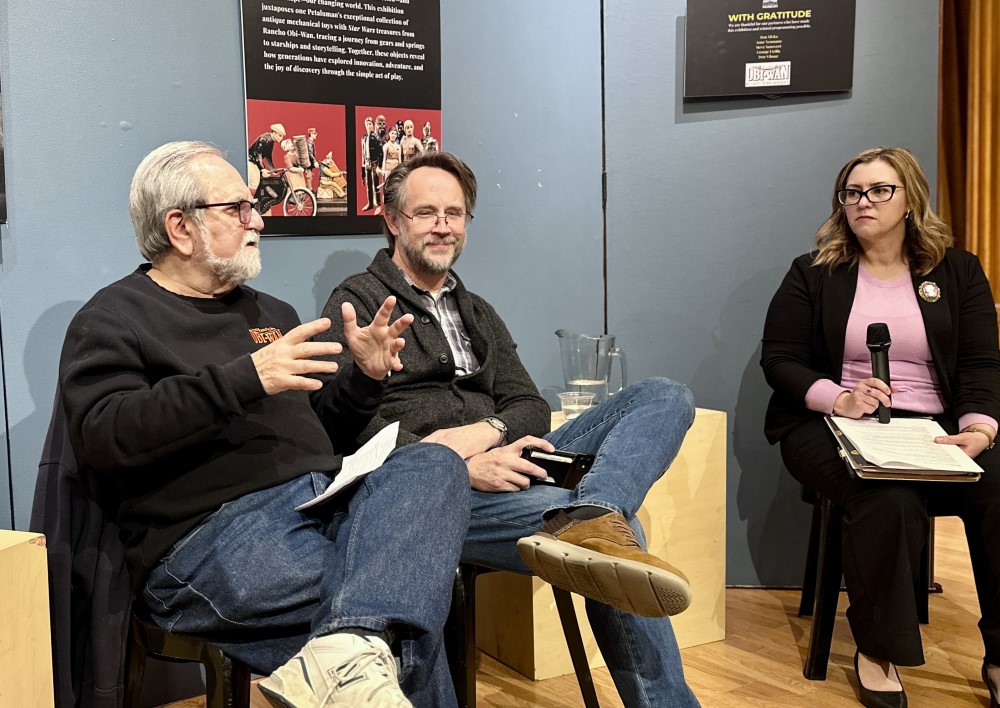
Just before the Toys Through Time exhibit in Petaluma, CA wrapped up its run from December 6 through February 1, the toy collecting community gathered for Toy Stories: A Conversation with Master Collectors, a discussion that felt like a proper send-off. The intimate conversation brought together Steve Sansweet, founder of Rancho Obi-Wan and steward of the Guinness World Record–recognized largest collection of Star Wars memorabilia, and Pete Vilmur, Senior Writer for Public Relations at Lucasfilm, reflecting not just on collecting, but on why these toys continue to follow us well beyond childhood.
EVERY COLLECTING SAGA HAS A BEGINNING

The host framed the night by calling toys time capsules. A hundred years of play, different eras, and ideas of the future, all wrapped up in objects meant for kids. But once Steve and Pete began speaking, the conversation landed where most collecting really begins. With memory.

Steve’s path started earlier. He was already a space kid before Star Wars. Rockets, satellites, science fiction, even saving newspaper clippings from the space race. When Star Wars arrived, it fit naturally.

And then came the Early Bird Kit. The story that always gets a reaction. Kenner had the license, the movie was a hit, Christmas arrived, and there were no action figures. So they sold a cardboard promise instead. Steve recalled missing it at Christmas, finding one in January, and still buying it at full price (retailed at $9.99). Even the absence of toys, it turned out, became part of the mythology.

It was not until the late eighties, when several major collections suddenly came up for sale, that he began to see the scope of what existed beyond the films.

Pete talked about his first Star Wars toy, the large Darth Vader figure from the late seventies. What stayed with him was not rarity or value, but the filament lightsaber (the kind of small detail most of us fixate on in our own way). Something about it felt like magic to a nine-year-old. He admitted that the idea of toys as history came much later.

Pete traced his own shift to the early nineties, when Steve’s book, Star Wars: From Concept to Screen to Collectible, reframed toys as something worth documenting in their own right.
LIVING HOLOCRONS AND CHICKEN BARNS

At one point, the conversation drifted away from the display cases and toward what happens when collecting grows beyond a shelf. Steve shared how his collection outgrew his home, and how a move from Southern to Northern California to join Lucasfilm forced him to rethink where it could live. That search eventually led him to Petaluma, where a former chicken barn became the unlikely foundation for what would become Rancho Obi- Wan.

As he talked about welcoming guests into Rancho Obi-Wan, Steve shared one encounter that stuck with him. A couple walking through the space together. One clearly the collector, the other taking it all in. And at some point, the non-collector finally turned and said something like, “OK, I’m fine with your collection… just don’t let it get this crazy.” The room laughed because it felt familiar (or maybe a lot of us felt seen). Pete picked up on that idea from a different angle. Since he curates the display near the Lucasfilm café with pieces from his own collection, people often assume his entire house must be filled wall to wall with Star Wars. He smiled and corrected that. Most of his collection stays archived away, simply because there isn’t room at his Petaluma home.

Steve did not hesitate. “You need a barn.”
A WOODEN STORMTROOPER, A HAND-STITCHED LULA

The deeper turn, for me, came when Steve started talking about homemade toys. Toys made because someone did not have access to what was on the shelf or could not afford what hung on the pegs.

He described a hand-carved AT-AT he once found at a toy show, likely made by a father who wanted his kid to have something close to the dream. Nails, blunt ends out, used as cannons. Two holes drilled on top so action figures could ride. Legs shaped to look jointed, even if they were not. It could stand. It could even move in its own way.

Steve said that piece meant more to him than a boxed AT-AT. “To me, that tells a story of a love that’s passed on from one generation to another, and how you make do when you can’t afford a specific object. That means a lot more to me than the boxed AT-AT.”

Pete picked up on that idea and pointed to a wooden landspeeder on display: “In this case, there’s a landspeeder down here that was made out of wood, probably by a father or a seller or something, probably before the toys came out, because their kid just wanted to play and just couldn’t — there was nothing available out there.

At that point, the night shifted. It became less a conversation about objects, and more a conversation about people.

Pete talked about how his collecting has changed over the years. How he now looks for the stories behind the objects. Where something came from. Who had it. Why it mattered. He said the story is going to live beyond you. It is going to live beyond me.
WE ARE WHAT THEY GROW BEYOND

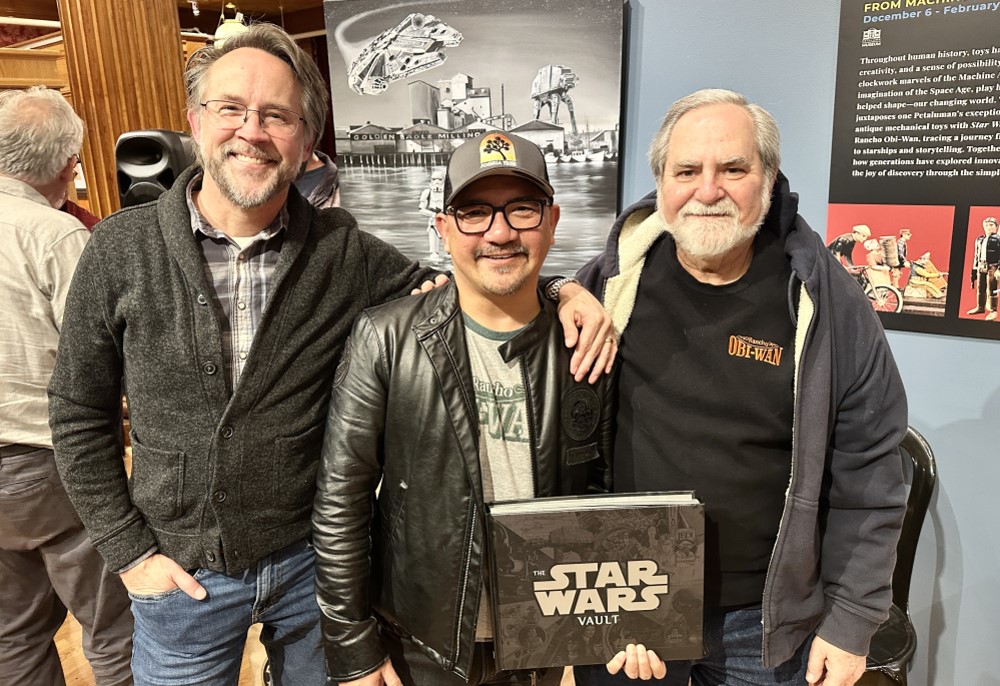
Toward the end of the conversation, Steve and Pete were asked to describe why toys matter using just one word. Sansweet answered, “Imagination.” Vilmur followed with, “Inspiration.”

For all of us who once played with our handful of Star Wars action figures, covering our bedroom windows to block out the sun and recreate the darkness of space, sprawled out on the floor with a bedsheet spread beneath us as the battlefield, those answers feel instinctive. Genuine.

This is what Star Wars toys have always been about. They are not just about recreating memories from the movie, but about the Star Wars stories we created for ourselves. Most of us continue to collect even now because these items represent our childhood, or for some of us, like me, the Star Wars childhood we never fully had.

Over time, they become more than objects.

They carry the stories of their owners, of us, and each piece holds the ability to unearth a glimpse into the person who chose to keep it, and the stories that may still be told long after we are gone.

Ricky Resurreccion
Ricky Resurreccion
Based in the Bay Area of San Francisco, Ricky (TK-74259 of the Golden Gate Garrison of the 501st Legion and a member of the Rebel Legion) is a lifelong Star Wars fan with a deep love for costuming, collecting, and immersive fandom. An events professional by trade, he is especially drawn to the energy of fan gatherings and the meaningful connections formed through shared passion at conventions, charity appearances, and community events.
- Advertisement -
- Advertisement -

Just before the Toys Through Time exhibit in Petaluma, CA wrapped up its run from December 6 through February 1, the toy collecting community gathered for Toy Stories: A Conversation with Master Collectors, a discussion that felt like a proper send-off. The intimate conversation brought together Steve Sansweet, founder of Rancho Obi-Wan and steward of the Guinness World Record–recognized largest collection of Star Wars memorabilia, and Pete Vilmur, Senior Writer for Public Relations at Lucasfilm, reflecting not just on collecting, but on why these toys continue to follow us well beyond childhood.

EVERY COLLECTING SAGA HAS A BEGINNING

The host framed the night by calling toys time capsules. A hundred years of play, different eras, and ideas of the future, all wrapped up in objects meant for kids. But once Steve and Pete began speaking, the conversation landed where most collecting really begins. With memory.

Steve’s path started earlier. He was already a space kid before Star Wars. Rockets, satellites, science fiction, even saving newspaper clippings from the space race. When Star Wars arrived, it fit naturally.

And then came the Early Bird Kit. The story that always gets a reaction. Kenner had the license, the movie was a hit, Christmas arrived, and there were no action figures. So they sold a cardboard promise instead. Steve recalled missing it at Christmas, finding one in January, and still buying it at full price (retailed at $9.99). Even the absence of toys, it turned out, became part of the mythology.

It was not until the late eighties, when several major collections suddenly came up for sale, that he began to see the scope of what existed beyond the films.

Pete talked about his first Star Wars toy, the large Darth Vader figure from the late seventies. What stayed with him was not rarity or value, but the filament lightsaber (the kind of small detail most of us fixate on in our own way). Something about it felt like magic to a nine-year-old. He admitted that the idea of toys as history came much later.

Pete traced his own shift to the early nineties, when Steve’s book, Star Wars: From Concept to Screen to Collectible, reframed toys as something worth documenting in their own right.

LIVING HOLOCRONS AND CHICKEN BARNS

At one point, the conversation drifted away from the display cases and toward what happens when collecting grows beyond a shelf. Steve shared how his collection outgrew his home, and how a move from Southern to Northern California to join Lucasfilm forced him to rethink where it could live. That search eventually led him to Petaluma, where a former chicken barn became the unlikely foundation for what would become Rancho Obi- Wan.

As he talked about welcoming guests into Rancho Obi-Wan, Steve shared one encounter that stuck with him. A couple walking through the space together. One clearly the collector, the other taking it all in. And at some point, the non-collector finally turned and said something like, “OK, I’m fine with your collection… just don’t let it get this crazy.” The room laughed because it felt familiar (or maybe a lot of us felt seen). Pete picked up on that idea from a different angle. Since he curates the display near the Lucasfilm café with pieces from his own collection, people often assume his entire house must be filled wall to wall with Star Wars. He smiled and corrected that. Most of his collection stays archived away, simply because there isn’t room at his Petaluma home.

Steve did not hesitate. “You need a barn.”

A WOODEN STORMTROOPER, A HAND-STITCHED LULA

The deeper turn, for me, came when Steve started talking about homemade toys. Toys made because someone did not have access to what was on the shelf or could not afford what hung on the pegs.

He described a hand-carved AT-AT he once found at a toy show, likely made by a father who wanted his kid to have something close to the dream. Nails, blunt ends out, used as cannons. Two holes drilled on top so action figures could ride. Legs shaped to look jointed, even if they were not. It could stand. It could even move in its own way.

Steve said that piece meant more to him than a boxed AT-AT. “To me, that tells a story of a love that’s passed on from one generation to another, and how you make do when you can’t afford a specific object. That means a lot more to me than the boxed AT-AT.”

Pete picked up on that idea and pointed to a wooden landspeeder on display: “In this case, there’s a landspeeder down here that was made out of wood, probably by a father or a seller or something, probably before the toys came out, because their kid just wanted to play and just couldn’t — there was nothing available out there.

At that point, the night shifted. It became less a conversation about objects, and more a conversation about people.

Pete talked about how his collecting has changed over the years. How he now looks for the stories behind the objects. Where something came from. Who had it. Why it mattered. He said the story is going to live beyond you. It is going to live beyond me.

WE ARE WHAT THEY GROW BEYOND

Toward the end of the conversation, Steve and Pete were asked to describe why toys matter using just one word. Sansweet answered, “Imagination.” Vilmur followed with, “Inspiration.”

For all of us who once played with our handful of Star Wars action figures, covering our bedroom windows to block out the sun and recreate the darkness of space, sprawled out on the floor with a bedsheet spread beneath us as the battlefield, those answers feel instinctive. Genuine.

This is what Star Wars toys have always been about. They are not just about recreating memories from the movie, but about the Star Wars stories we created for ourselves. Most of us continue to collect even now because these items represent our childhood, or for some of us, like me, the Star Wars childhood we never fully had.

Over time, they become more than objects.

They carry the stories of their owners, of us, and each piece holds the ability to unearth a glimpse into the person who chose to keep it, and the stories that may still be told long after we are gone.

Ricky Resurreccion
Ricky Resurreccion
Based in the Bay Area of San Francisco, Ricky (TK-74259 of the Golden Gate Garrison of the 501st Legion and a member of the Rebel Legion) is a lifelong Star Wars fan with a deep love for costuming, collecting, and immersive fandom. An events professional by trade, he is especially drawn to the energy of fan gatherings and the meaningful connections formed through shared passion at conventions, charity appearances, and community events.
- Advertisement -
- Advertisement -
- Advertisement -
Close Popup
Privacy Settings saved!
Privacy Settings

When you visit any web site, it may store or retrieve information on your browser, mostly in the form of cookies. Control your personal Cookie Services here.

These cookies are necessary for the website to function and cannot be switched off in our systems.

Technical Cookies
In order to use this website we use the following technically required cookies
  • wordpress_test_cookie
  • wordpress_logged_in_
  • wordpress_sec

Google Adsense
We use Google AdSense to show online advertisements on our website.
  • _tlc
  • _tli
  • _tlp
  • _tlv
  • DSID
  • id
  • IDE

One Signal
For performance reasons we use OneSignal as a notification service.  This saves a number of cookies in order to apply notifcation services on a per-client basis. These cookies are strictly necessary for OneSignal's notification features.  It is essential to the service that these are not turned off.
  • _OneSignal_session
  • __cfduid
  • _ga
  • _gid

Affiliate Links
Fantha Tracks is reader-supported.  When you buy through links on our site, we may earn an affiliate commission.

Media Net
We use Media Net to show online advertisements on our website.
  • SESS#

Decline all Services
Save
Accept all Services
Mastodon