


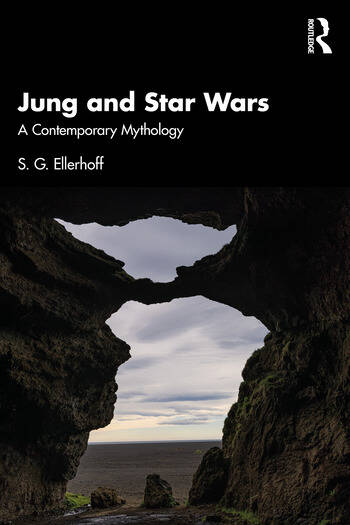
Jung and Star Wars: A Contemporary Mythology
Jung and Star Wars is a comprehensive deep dive, analyzing the Star Wars phenomenon from the perspective of analytical psychology as a living mythology in our time.
Drawing from Jungian perspectives, as well as the influence of both Joseph Campbell and James Hillman, this book examines the rich characters and history of the saga using concepts developed in the field of analytical psychology. It explores Disney’s acquisition of Lucasfilm in 2012 and the concept of canon, as well as examining the Force and a number of iconic characters, including Yoda, Luke Skywalker, Darth Vader, Princess Leia Organa, and more. By coming to understand the psychological ground of its mythic aspects, we learn to see Star Wars as a grand narrative of the human condition.
With Star Wars being ubiquitous in mainstream pop culture, this book will be of interest to both Jungian analysts and scholars, as well as academics in the fields of film studies and popular culture, offering a fresh and lesser-known perspective on depth psychology.
Author: S.G. Ellerhoff
Release Date: August 12, 2025
Page Count: 276 Pages
ISBN: 9781041033523
S. G. Ellerhoff’s Jung and Star Wars: A Contemporary Mythology stands out as an illuminating work of depth psychology that treats George Lucas’s galaxy not merely as popular entertainment, but as a dynamic, living mythos. While countless film critics and cultural essayists have mapped Star Wars to Joseph Campbell’s monomyth, Ellerhoff pushes beyond the conventional hero’s journey by examining the saga through Carl Jung and James Hillman. The result is a rigorous, analytical guide that provides a sophisticated look at the unconscious patterns, archetypes, and symbolic truths driving the entire narrative, not just throughout the movies, but in various mediums of Star Wars storytelling.
 Rather than presenting the Jedi Order as flawless paragons of light, Ellerhoff exposes the psychological flaws built into their dogmatic structure. By dissecting the five rigid tenets of the Jedi Code (most famously “There is no emotion, there is peace“) the book illustrates how the Order calcified into a monkish institution reliant upon denial. In repressing emotion rather than integrating the Shadow, the High Council developed a fatal institutional blind spot. Their obsessive elevation of single-sided light ultimately left them vulnerable to shadow projection, paving the way for their catastrophic fall and Palpatine’s rise.
This author provides compelling insights across the saga’s villains and fallen heroes. Emperor Palpatine is analyzed as the Dark-Side Senex and an embodiment of pure psychic shadow. Drawing on Hillman’s concept of the “Bad Seed,” Ellerhoff frames Palpatine’s obsession with absolute control and physical cloning, spanning through EU / Legends lore like Dark Empire, all the way to The Rise of Skywalker, as a pathological refusal to allow generational or natural succession. In contrast, Anakin Skywalker’s vergence birth is framed through comparative myth, connecting his surname to the Tibetan dakini (“sky dancers“) and charting how his unintegrated trauma fractures his psyche into Darth Vader. Vader’s tragic struggle between his mechanical shell and his suppressed identity is heightened through recent live-action lore, such as his confrontation in Obi-Wan Kenobi, illustrating a shattered self in desperate need of redemption.
Ellerhoff’s familiarity with the franchise elevates the text further by treating physical props and filmmaking craft as psychological extensions. Yoda’s duality as both Senex and Divine Child is explored through his famous inverted speech syntax alongside the collaborative puppetry of Frank Oz and Jim Henson. Weaponry is similarly parsed for symbolic depth: Kylo Ren’s unstable crossguard lightsaber evokes St. Peter’s inverted cross, embodying raw, unrefined affect and self-harm. The bond between Rey and Ben Solo, a relatively new concept in Star Wars lore which hasn’t been analyzed and talked about for decades, also receives considerable attention, the Force Dyad seen as the necessary union of opposites required to heal generations of galactic trauma. Even minor background figures like the Mos Eisley pilot BoShek serve to illustrate Jungian synchronicity in expanded lore. And all of the above-mentioned is just the tip of the iceberg when it comes to what this book has to offer. Ultimately, Jung and Star Wars is a serious work of film and mythic scholarship, offering dedicated readers a profound lens through which to view the far, far away galaxy.