

From the sublime to the meticulous: John Simmons Scale Modelling – Star Wars modelling on another scale

- Advertisement -
- Advertisement -

John Simmons Scale Modelling certainly drew a crowd at MCM Birmingham Comic Con over the weekend of March 17 and 18. Here, Fantha Trackers Paul Naylor and Mark Newbold chat with John about his highly detailed mini marvels.

Paul: So, John Simmons, how did this all start?

John: Ah well, just watching the film really and having a love for it. Then doing tanks – model tanks you know – and seeing what parts of the Star Wars model kits used from those tank parts, like Panther grills and tools and accessories.

Paul: There was a crossover between those kits?
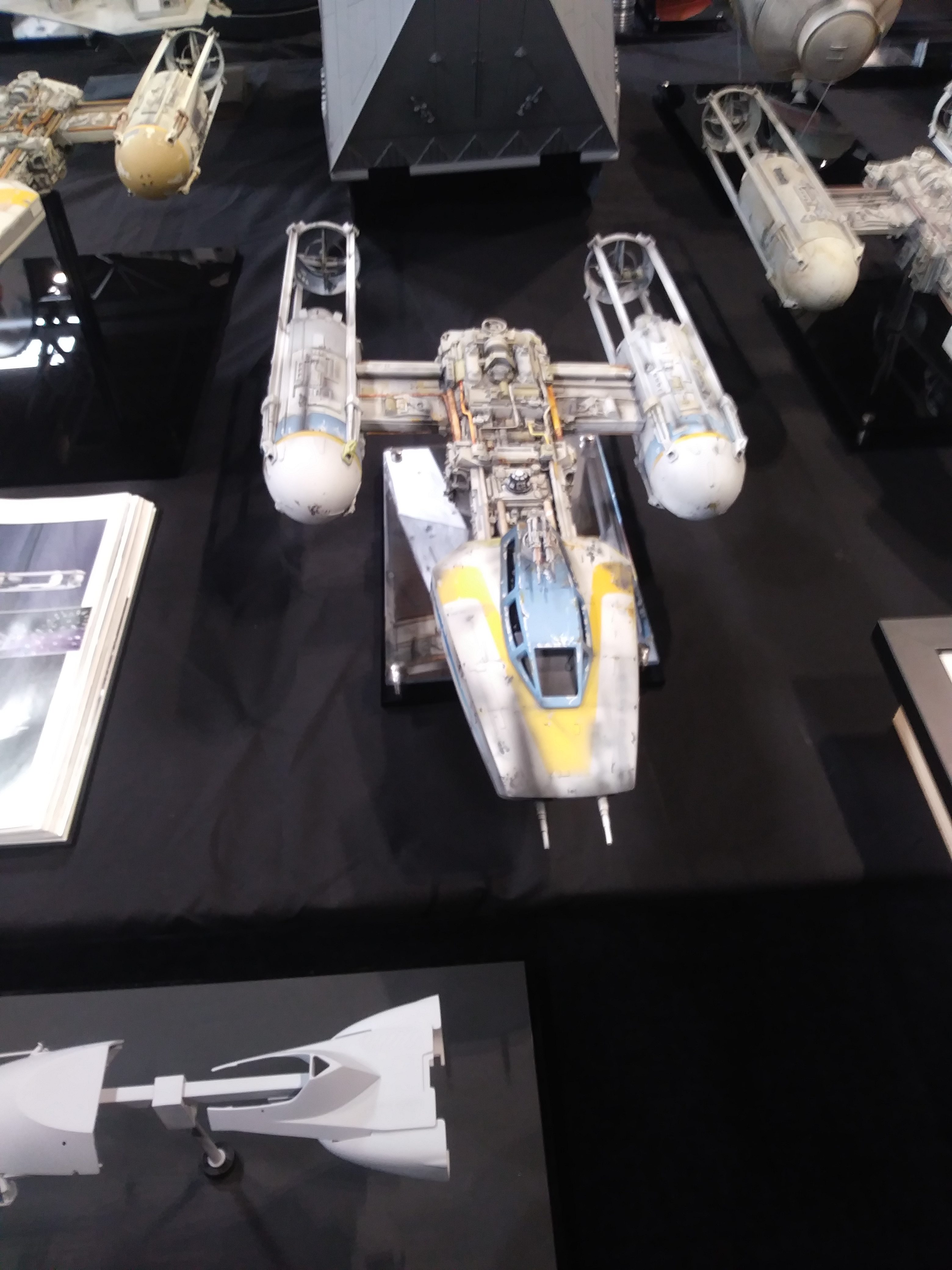
John Simmons Y-Wing

John: Yeah. I’d look at the Star Wars models and wonder what the parts originally came from and you’d find them on a tank kit. There’s shovels on a Y-Wing. I don’t know why you’d need a World War II shovel in space.

Paul: Good when you land on Hoth?

John: Possibly. But yeah, that’s what got me into it. I started off with the styrene kits from Fine Moulds and others, and It grew onto the bigger studio-scale versions of the models and the actual love of having an identical replica of what they used when filming scenes…

Paul: Screen accurate.

John: Exactly. And when you start building studio scale you don’t stop. You enter debt and divorce, you know?
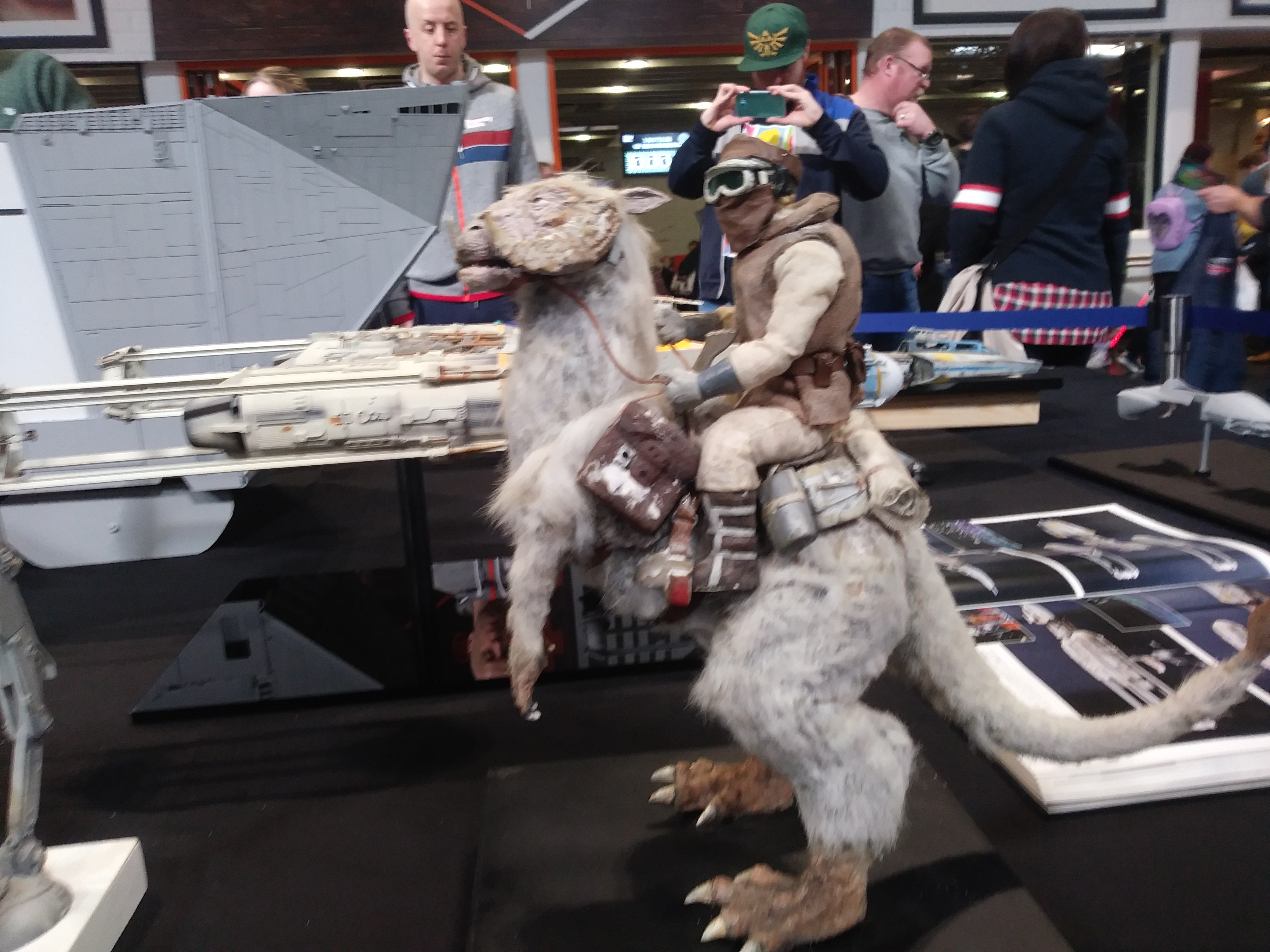
Tauntaun belonging to Guy Cowen 

Paul: Well we’ve all been there sir. So which was the first model you built?

John: The first studio scale model I built was the TIE-Bomber. It was still a kit – a resin kit from JPG Productions. That’s a beautiful kit, but of course I painted it all wrong. I painted it with huge highlights and deep shadows – like a tank – but ILM didn’t paint like that. Often you would find – even in the recess panel lines – it’s actually a lighter colour than the body, which is the complete reverse of how a tank would be.

Paul: The lighting would then do all the work?

John: Yeah. And then I moved on and everything was done with oils and washes, but I stopped doing that and went onto airbrushes. Around 90 per cent of the effects on the models here today are achieved with an airbrush. There would be ink staining and that sort of thing, and then Guy Cowen produced the screen accurate matched colours from the floquil range of paints that were around in the 70s and 80s which are what ILM used. That opens up a minefield then. They changed the range to an enamel-based product and all the shades were wrong. Everyone rushed out and bought the enamel paints – thinking they’d got the right shade – but they realised that ILM a lacquer-based paint which were different. Guy has replicated the lacquer-based paints and now we are finally onto the right shades of paint.
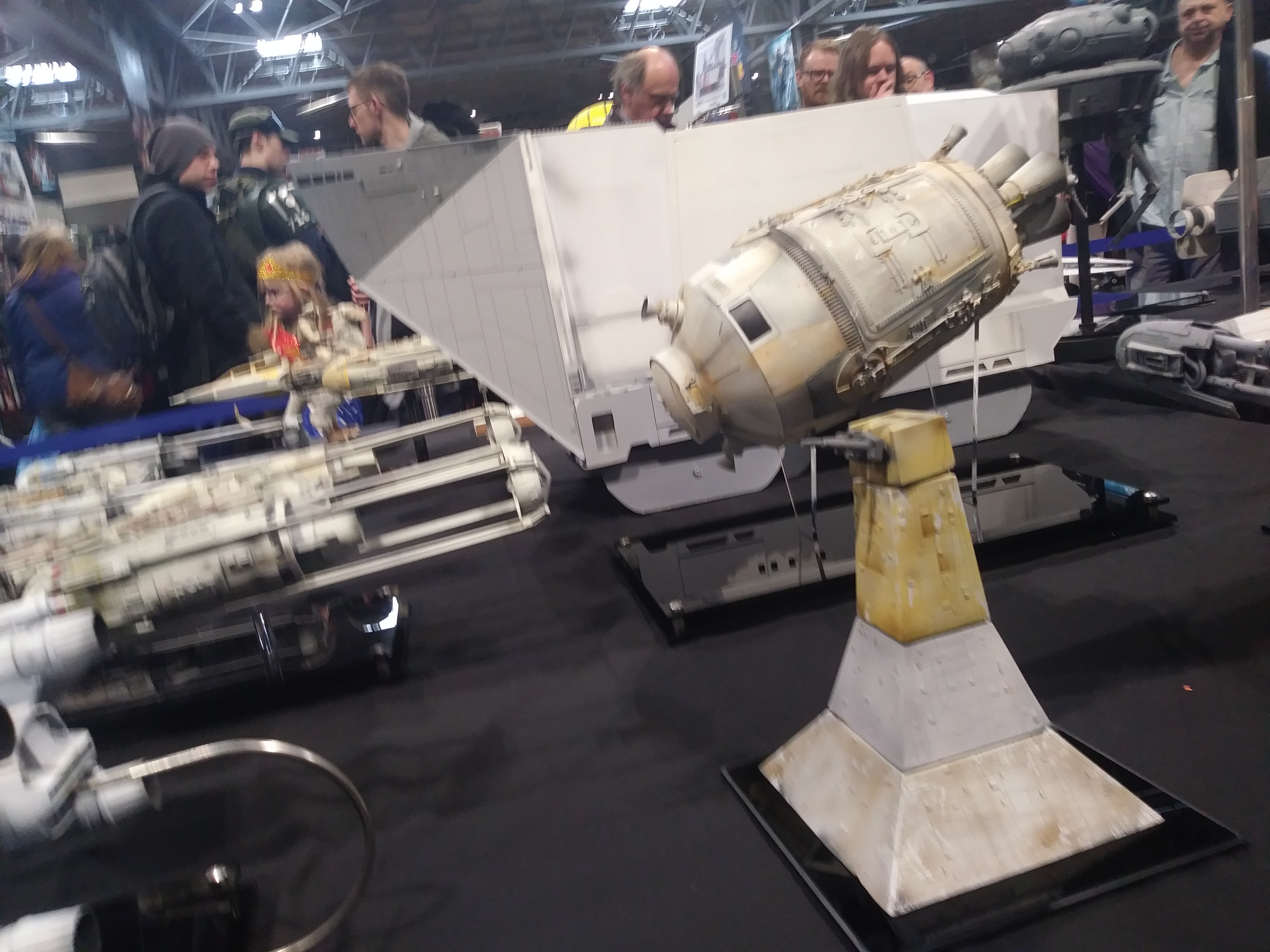
Escape pod

Paul: Wow. You’ve gone into that much detail, down to the specific colours?

John: Absolutely.

Paul: Whether it’s matt or gloss on specific elements?

John: Yeah. Yeah.

Paul: Do you have a favourite model at the moment?

John: Well, I’ve just finished the Slave-I and you can see the original here in the book. I’m pretty close to the colours I think.

Paul: It’s amazing. Mark and I were saying earlier how you’d got the rust marks in exactly the right position.
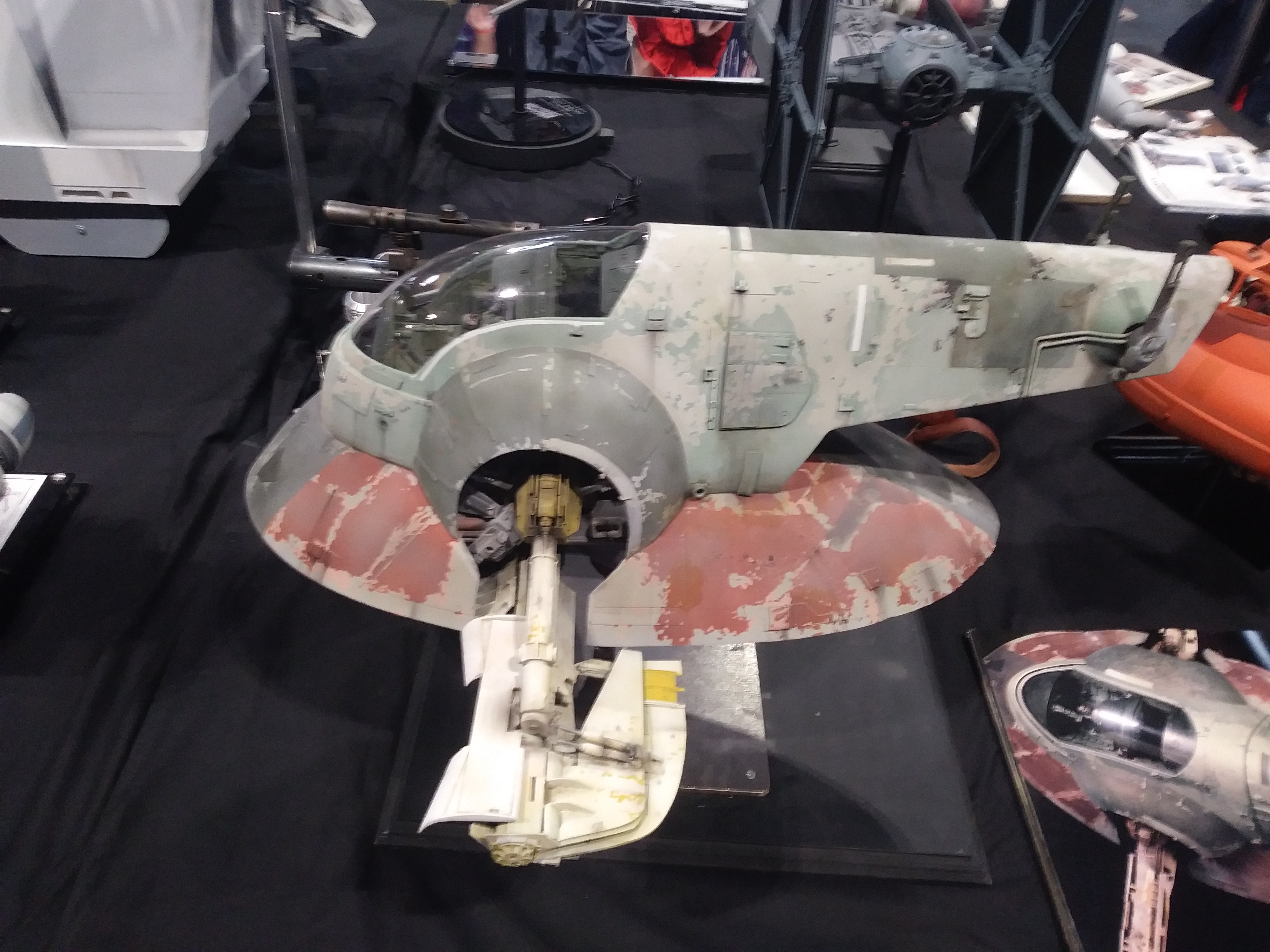
John Simmons’ Slave-I

John: Yeah. And if you look at the Boba Fett helmet as well, they are very similar colours. It’s quite interesting how Joe Johnston – who painted the original – literally would have painted that at the same time and he would have had the paints on the shelf and just gone that one, that one, that one, to match the vehicle to Fett.

Paul: I’d never even thought about that until now, but you are right.
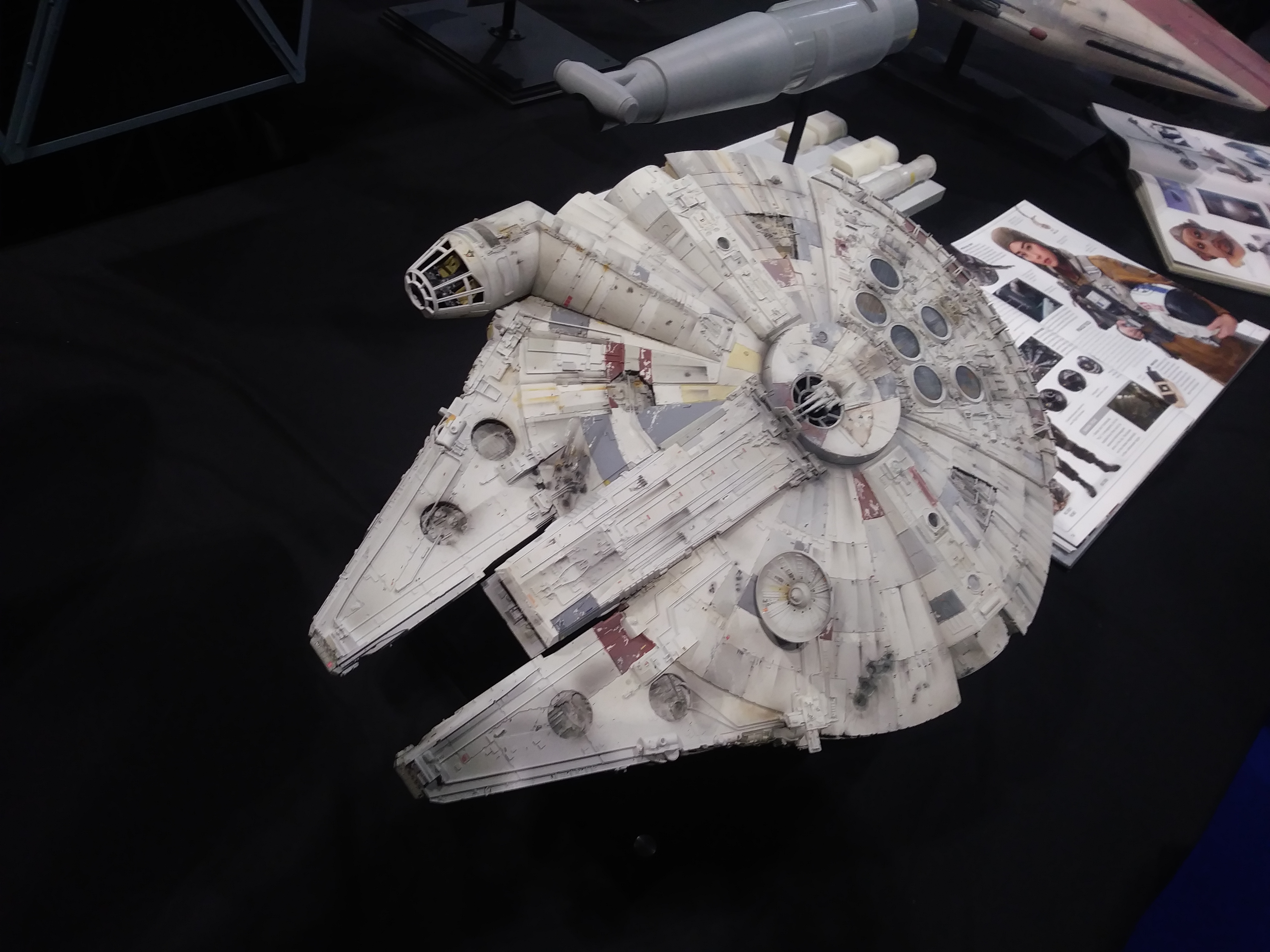
John Simmons’ Falcon

John: It gets tricky because it’s a green, a red and grey, but to try and get that working like that – there’s greys on there that started out green and you have to layer on a colour called grime, which is what the Empire Strikes Back Falcon was painted in – again, same film, same era, that has been heavily used over the whole ship and brings the muted look right down.

Mark: Excellent.

John: I don’t know if you’ve been to the Identities exhibition, but when you walk in there under a low light, it looks grey and muted because of that grime layer. When you start using grime you find it on all the models. Lee’s cloud car here, which is again beautiful, you can see the grime on it. It looks like dust. That’s grime.
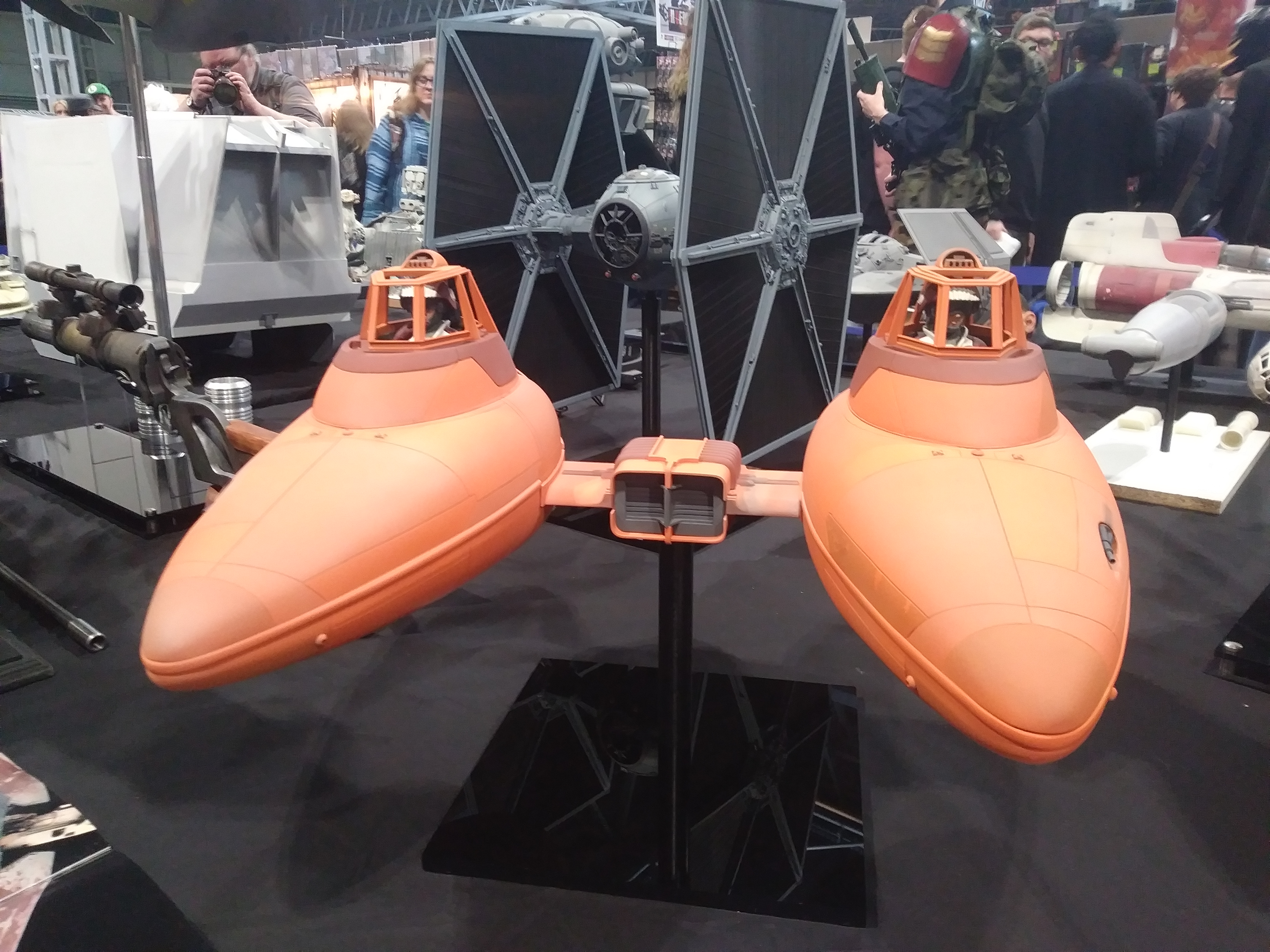
Lee Ralph’s Cloud Car

Paul: It does look like a layer of dust.

John: Very thin coats with the airbrush – 90 per cent thinner and the rest paint that gets that dusty, muted look with the ILM feel.

Mark: Have you had any contact with the original ILM model maker guys from back in the day?

John: Yeah. I’ve sent my work to Phil Tippett. He just, well, he put ‘great’. I sent this long wordy ‘you’re my hero’ and all this kind of stuff. I put ‘can you please have a look’ and ‘what do you think’ and he just put ‘great’. I don’t know if that was his copy and paste answer for all fans, but it was good enough for me. I did send to Joe Johnson’s page and I think his PA answered, but yeah, you know, you try and find out from people like Lorne Petersen that did this work, what paint they used and they just say ‘well, I used a white’, or what colour is a TIE-fighter? ‘It’s a grey’. That’s the most elusive colour you can think of.

Paul: They didn’t think to catalogue it in detail.

John: They just painted with what they had on the shelf. Nerds like us are trying to find out what brand of paint it was and how it was painted. It’s the same with the model kit parts. That opens up another whole can of worms trying to find out what original kit parts were used to create the models. I mean, the sandcrawler in the middle of the display…
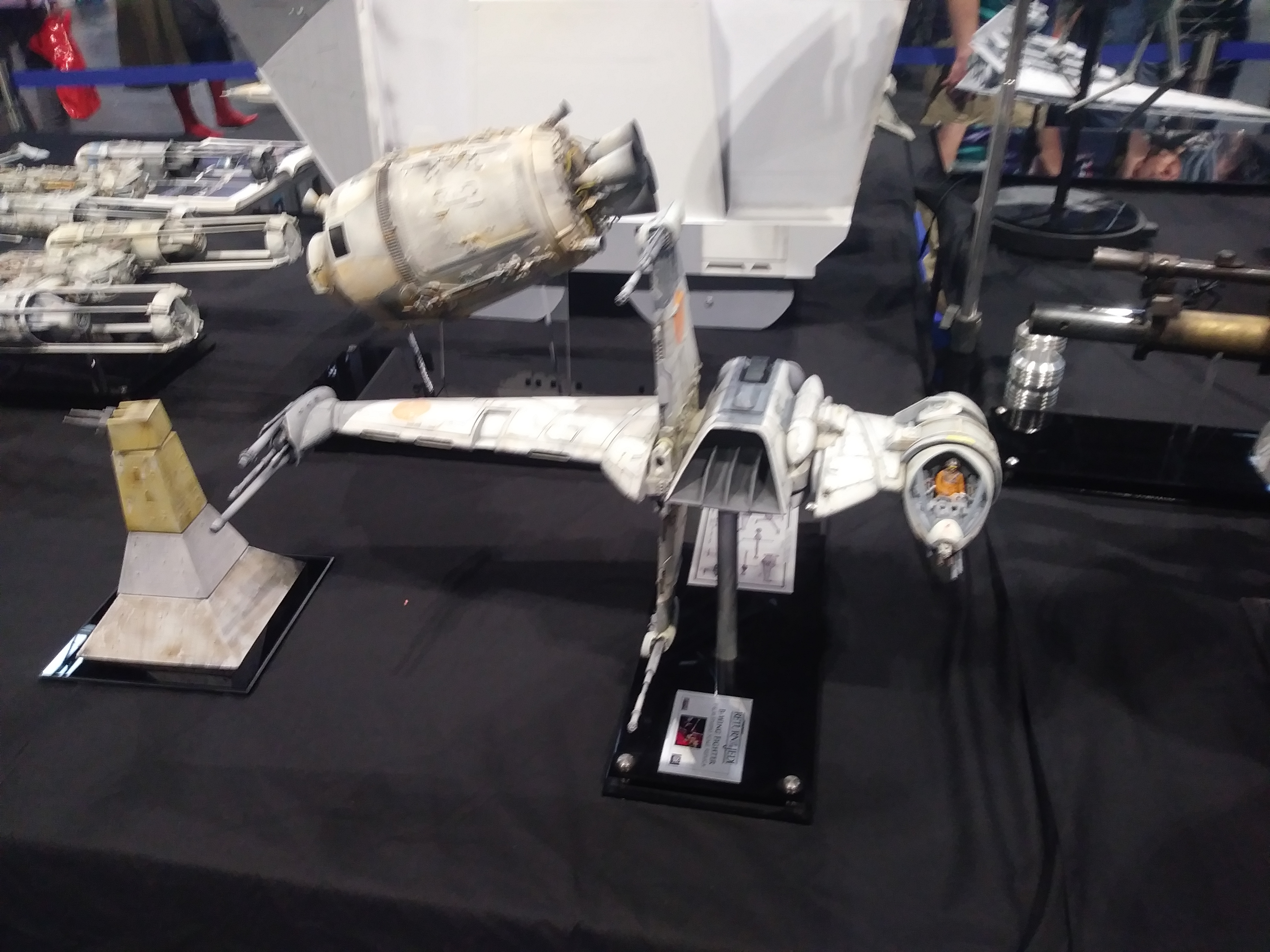
John Simmons’ B-Wing and sandcrawler by Marvin Stiefelhagen

Paul: That’s a work in progress.

John: Yeah. That’s covered with random parts.

Mark: The back panel will end up getting filled with lots of interesting bits.

John: Plane engines and that sort of thing. And over there the escape pod…

Paul: The escape pod is brilliant.

John: Yeah, that’s got a lot of parts in it. The Y-Wings are full of tank parts.

Mark: Can you tell then, from the parts, which ones were built here and which were built there, in America?
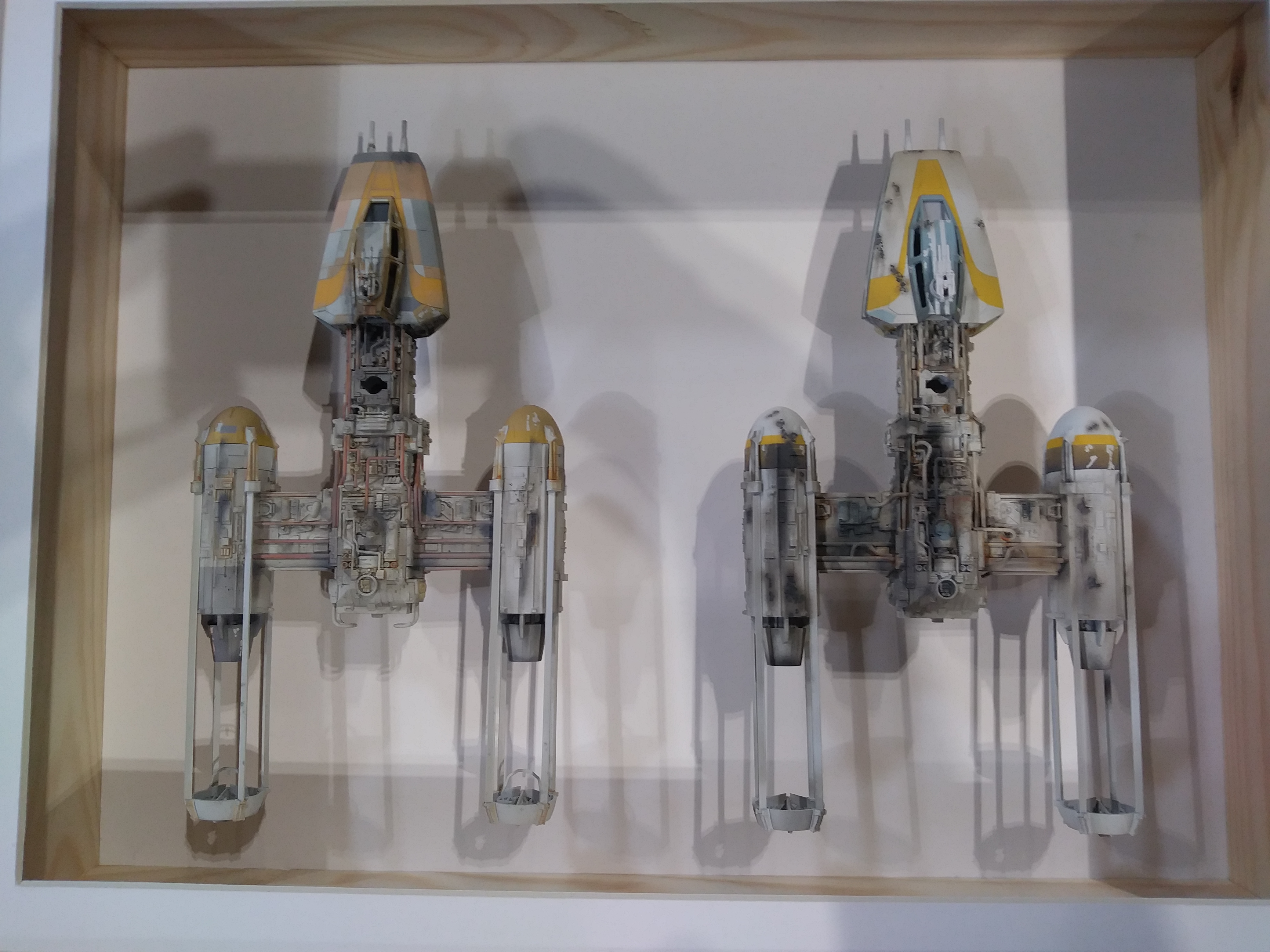
Y-Wings by Lee Ralph

John: You can’t really tell where they were produced, but another thing to look at is the old production photos with kit boxes stacked up behind the artists in the background. You can zoom in and see the 1:24 scale, 1:25 scale truck parts, that sort of thing. You might not know where it goes but at least you know it is from that set. The guys on the RPF – replica prop forum – actually scan all the old images of the kits and you can identify them.

Mark: And then you just need to source them.

John: Yeah. There’s parts on Slave-I from a Ferrari Formula One kit. They are so few and far between. They are from 70s kits and go for about £1,000 each.

Paul: And you’re buying them to cannibalise them.

John: Yeah. The Empire Strikes Back probe droid has five specific bars. So do you buy 5 kits at £1,000 each or one and cast from it? Or a friend of a friend will cast it. That spreads like wildfire in the community

Paul: Do you find you cast a lot?

John: Oh yeah. You have to. You’d be out of pocket every model you do. The other thing is kit part ID information is very much sought after and under lock and key. Someone’s spent a long time finding out what part came from what original kit and found out themselves. Do you tell everyone and they all know where to get it, or do you keep it to yourself? That’s sort of the dark side to it – excuse the pun.

Paul: Do you ever have to make any compromise, bits you aren’t totally satisfied with?

John: I do. broken bits I spray over with a rust effect. Hide the crimes, you know? The sandcrawler, I will try and make it look as good as I can, but there will be little embellishments. I rush through my builds and move onto the next one because I just want to paint it. I’m a painter much more than a builder. That has damaging effects to my models as well. If you compare mine to the other guys in the group – whose are so pristine and clean – mine is all wonky, glue and thumb prints, but I don’t worry because the paint goes there.

Mark: I expect the originals were much the same.

John: Yeah. I guess. Mine are more authentic!
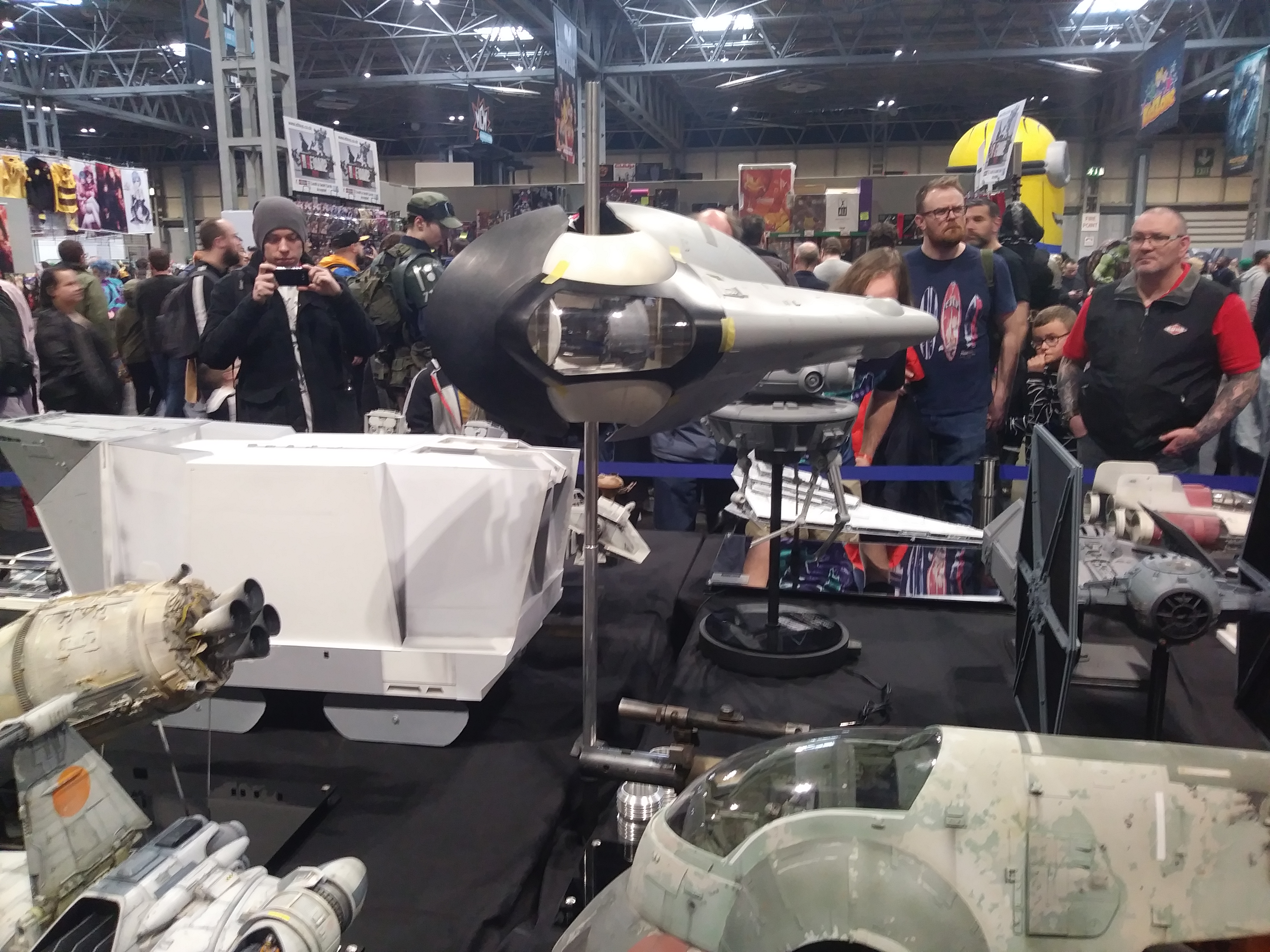
Guy Cowen’s unfinished Slave-I & Sandcrawler by Marvin Stiefelhagen

Paul: So how long did Slave-I take you?

John: Six weeks. Actually no, that’s a lie. Painting was six weeks. That was a resin kit from Nice-n Models, Steve Leeson’s company from the States. The hard work was done for me. I just needed to assemble it and tidy it up. The other Slave-I you see here on the stand was scratch-built by Guy and there are some noticeable differences. At the end of the day, if you paint it like it looks you are pretty much there.

Paul: So the one that is scratch-built, is that going to be decorated for the Attack of the Clones look?

John: No, that’s a scandalous thing to say! That will be Fett’s version. Boba Fett. It’s all good fun.

The display at MCM Birmingham featured work by John Simmons and his talented friends and co-workers, including Guy Cowen, Lee Ralph and Marvin Stiefelhagen.


Paul Naylor
Paul Naylor
Paul has been a fan of Star Wars since seeing it on a cold February evening in Wellington, Shropshire back in 1978. He worked for the Shropshire Star and Express & Star newspapers for 25 years, launching design agency Media & You in 2017. He is co-host of Start Your Engines and The Fantha From Down Under on Fantha Tracks Radio and Good Morning Tatooine on Fantha Tracks TV.
- Advertisement -
- Advertisement -

John Simmons Scale Modelling certainly drew a crowd at MCM Birmingham Comic Con over the weekend of March 17 and 18. Here, Fantha Trackers Paul Naylor and Mark Newbold chat with John about his highly detailed mini marvels.

Paul: So, John Simmons, how did this all start?

John: Ah well, just watching the film really and having a love for it. Then doing tanks – model tanks you know – and seeing what parts of the Star Wars model kits used from those tank parts, like Panther grills and tools and accessories.

Paul: There was a crossover between those kits?

John Simmons Y-Wing

John: Yeah. I’d look at the Star Wars models and wonder what the parts originally came from and you’d find them on a tank kit. There’s shovels on a Y-Wing. I don’t know why you’d need a World War II shovel in space.

Paul: Good when you land on Hoth?

John: Possibly. But yeah, that’s what got me into it. I started off with the styrene kits from Fine Moulds and others, and It grew onto the bigger studio-scale versions of the models and the actual love of having an identical replica of what they used when filming scenes…

Paul: Screen accurate.

John: Exactly. And when you start building studio scale you don’t stop. You enter debt and divorce, you know?

Tauntaun belonging to Guy Cowen 

Paul: Well we’ve all been there sir. So which was the first model you built?

John: The first studio scale model I built was the TIE-Bomber. It was still a kit – a resin kit from JPG Productions. That’s a beautiful kit, but of course I painted it all wrong. I painted it with huge highlights and deep shadows – like a tank – but ILM didn’t paint like that. Often you would find – even in the recess panel lines – it’s actually a lighter colour than the body, which is the complete reverse of how a tank would be.

Paul: The lighting would then do all the work?

John: Yeah. And then I moved on and everything was done with oils and washes, but I stopped doing that and went onto airbrushes. Around 90 per cent of the effects on the models here today are achieved with an airbrush. There would be ink staining and that sort of thing, and then Guy Cowen produced the screen accurate matched colours from the floquil range of paints that were around in the 70s and 80s which are what ILM used. That opens up a minefield then. They changed the range to an enamel-based product and all the shades were wrong. Everyone rushed out and bought the enamel paints – thinking they’d got the right shade – but they realised that ILM a lacquer-based paint which were different. Guy has replicated the lacquer-based paints and now we are finally onto the right shades of paint.

Escape pod

Paul: Wow. You’ve gone into that much detail, down to the specific colours?

John: Absolutely.

Paul: Whether it’s matt or gloss on specific elements?

John: Yeah. Yeah.

Paul: Do you have a favourite model at the moment?

John: Well, I’ve just finished the Slave-I and you can see the original here in the book. I’m pretty close to the colours I think.

Paul: It’s amazing. Mark and I were saying earlier how you’d got the rust marks in exactly the right position.

John Simmons’ Slave-I

John: Yeah. And if you look at the Boba Fett helmet as well, they are very similar colours. It’s quite interesting how Joe Johnston – who painted the original – literally would have painted that at the same time and he would have had the paints on the shelf and just gone that one, that one, that one, to match the vehicle to Fett.

Paul: I’d never even thought about that until now, but you are right.

John Simmons’ Falcon

John: It gets tricky because it’s a green, a red and grey, but to try and get that working like that – there’s greys on there that started out green and you have to layer on a colour called grime, which is what the Empire Strikes Back Falcon was painted in – again, same film, same era, that has been heavily used over the whole ship and brings the muted look right down.

Mark: Excellent.

John: I don’t know if you’ve been to the Identities exhibition, but when you walk in there under a low light, it looks grey and muted because of that grime layer. When you start using grime you find it on all the models. Lee’s cloud car here, which is again beautiful, you can see the grime on it. It looks like dust. That’s grime.

Lee Ralph’s Cloud Car

Paul: It does look like a layer of dust.

John: Very thin coats with the airbrush – 90 per cent thinner and the rest paint that gets that dusty, muted look with the ILM feel.

Mark: Have you had any contact with the original ILM model maker guys from back in the day?

John: Yeah. I’ve sent my work to Phil Tippett. He just, well, he put ‘great’. I sent this long wordy ‘you’re my hero’ and all this kind of stuff. I put ‘can you please have a look’ and ‘what do you think’ and he just put ‘great’. I don’t know if that was his copy and paste answer for all fans, but it was good enough for me. I did send to Joe Johnson’s page and I think his PA answered, but yeah, you know, you try and find out from people like Lorne Petersen that did this work, what paint they used and they just say ‘well, I used a white’, or what colour is a TIE-fighter? ‘It’s a grey’. That’s the most elusive colour you can think of.

Paul: They didn’t think to catalogue it in detail.

John: They just painted with what they had on the shelf. Nerds like us are trying to find out what brand of paint it was and how it was painted. It’s the same with the model kit parts. That opens up another whole can of worms trying to find out what original kit parts were used to create the models. I mean, the sandcrawler in the middle of the display…

John Simmons’ B-Wing and sandcrawler by Marvin Stiefelhagen

Paul: That’s a work in progress.

John: Yeah. That’s covered with random parts.

Mark: The back panel will end up getting filled with lots of interesting bits.

John: Plane engines and that sort of thing. And over there the escape pod…

Paul: The escape pod is brilliant.

John: Yeah, that’s got a lot of parts in it. The Y-Wings are full of tank parts.

Mark: Can you tell then, from the parts, which ones were built here and which were built there, in America?

Y-Wings by Lee Ralph

John: You can’t really tell where they were produced, but another thing to look at is the old production photos with kit boxes stacked up behind the artists in the background. You can zoom in and see the 1:24 scale, 1:25 scale truck parts, that sort of thing. You might not know where it goes but at least you know it is from that set. The guys on the RPF – replica prop forum – actually scan all the old images of the kits and you can identify them.

Mark: And then you just need to source them.

John: Yeah. There’s parts on Slave-I from a Ferrari Formula One kit. They are so few and far between. They are from 70s kits and go for about £1,000 each.

Paul: And you’re buying them to cannibalise them.

John: Yeah. The Empire Strikes Back probe droid has five specific bars. So do you buy 5 kits at £1,000 each or one and cast from it? Or a friend of a friend will cast it. That spreads like wildfire in the community

Paul: Do you find you cast a lot?

John: Oh yeah. You have to. You’d be out of pocket every model you do. The other thing is kit part ID information is very much sought after and under lock and key. Someone’s spent a long time finding out what part came from what original kit and found out themselves. Do you tell everyone and they all know where to get it, or do you keep it to yourself? That’s sort of the dark side to it – excuse the pun.

Paul: Do you ever have to make any compromise, bits you aren’t totally satisfied with?

John: I do. broken bits I spray over with a rust effect. Hide the crimes, you know? The sandcrawler, I will try and make it look as good as I can, but there will be little embellishments. I rush through my builds and move onto the next one because I just want to paint it. I’m a painter much more than a builder. That has damaging effects to my models as well. If you compare mine to the other guys in the group – whose are so pristine and clean – mine is all wonky, glue and thumb prints, but I don’t worry because the paint goes there.

Mark: I expect the originals were much the same.

John: Yeah. I guess. Mine are more authentic!

Guy Cowen’s unfinished Slave-I & Sandcrawler by Marvin Stiefelhagen

Paul: So how long did Slave-I take you?

John: Six weeks. Actually no, that’s a lie. Painting was six weeks. That was a resin kit from Nice-n Models, Steve Leeson’s company from the States. The hard work was done for me. I just needed to assemble it and tidy it up. The other Slave-I you see here on the stand was scratch-built by Guy and there are some noticeable differences. At the end of the day, if you paint it like it looks you are pretty much there.

Paul: So the one that is scratch-built, is that going to be decorated for the Attack of the Clones look?

John: No, that’s a scandalous thing to say! That will be Fett’s version. Boba Fett. It’s all good fun.

The display at MCM Birmingham featured work by John Simmons and his talented friends and co-workers, including Guy Cowen, Lee Ralph and Marvin Stiefelhagen.


Paul Naylor
Paul Naylor
Paul has been a fan of Star Wars since seeing it on a cold February evening in Wellington, Shropshire back in 1978. He worked for the Shropshire Star and Express & Star newspapers for 25 years, launching design agency Media & You in 2017. He is co-host of Start Your Engines and The Fantha From Down Under on Fantha Tracks Radio and Good Morning Tatooine on Fantha Tracks TV.
- Advertisement -
- Advertisement -
- Advertisement -
Close Popup
Privacy Settings saved!
Privacy Settings

When you visit any web site, it may store or retrieve information on your browser, mostly in the form of cookies. Control your personal Cookie Services here.

These cookies are necessary for the website to function and cannot be switched off in our systems.

Technical Cookies
In order to use this website we use the following technically required cookies
  • wordpress_test_cookie
  • wordpress_logged_in_
  • wordpress_sec

Google Adsense
We use Google AdSense to show online advertisements on our website.
  • _tlc
  • _tli
  • _tlp
  • _tlv
  • DSID
  • id
  • IDE

One Signal
For performance reasons we use OneSignal as a notification service.  This saves a number of cookies in order to apply notifcation services on a per-client basis. These cookies are strictly necessary for OneSignal's notification features.  It is essential to the service that these are not turned off.
  • _OneSignal_session
  • __cfduid
  • _ga
  • _gid

Affiliate Links
Fantha Tracks is reader-supported.  When you buy through links on our site, we may earn an affiliate commission.

Media Net
We use Media Net to show online advertisements on our website.
  • SESS#

Decline all Services
Save
Accept all Services
Mastodon