


Industrial Light & Magic: 50 Years of Innovation
A spectacular celebration of the first 50 years of Industrial Light & Magic (ILM), the award-winning visual effects house behind the Star Wars saga, Indiana Jones, E.T., Terminator 2, and Jurassic Park
Industrial Light & Magic: 50 Years of Innovation is the official decade-by-decade visual retrospective of the legendary visual effects house.
Founded by Star Wars creator George Lucas in 1975, ILM has won 16 Academy Awards in Best Visual Effects and pushed the boundaries of what can be visually realized in storytelling, from the big screen to emerging technologies such as streaming television, 3D immersive adventures, and more.
Breaking down ILM’s evolution in visual effects decade-by-decade, 50 Years of Innovation features stunning visuals and analysis of the creative and technical processes from concept to execution, and highlights 50 of their key projects that have helped shape the visual effects industry.
Concluding with a look at both the future of ILM and the visual effects industry at large, the key creative forces at ILM speculate about what the next 50 years may have in store for the innovators that transformed entertainment forever.
Author: Ian Failes
ISBN: 9798896840985
Page Count: 368
Publication Date: 13th January 2026
In a book focusing on the worlds best known, successful, longest living and most incredible visual effects company, where do you start? That was the question facing author Ian Failes as he began to map out what would become Industrial Light & Magic: 50 Years of Innovation, the 368 page love letter to a company that was created back in 1975 to bring the vehicles, worlds and creatures of the Star Wars galaxy to life, and along the way has given us dinosaurs, taken us to the edges of multiple galaxies, shrunk us, blipped us, spirited up ghosts, made us believe a man can fly, and even taken 40 years off Indiana Jones without having to use his Dad’s Grail Diary to do it.
It doesn’t seem long since the release of Industrial Light & Magic – The Art of Innovation back in 2011, but in that seemingly short span of time, so much has changed in the world of visual effects. Given that, perhaps it’s wise that Failes starts at the beginning, detailing the creation of ILM and walking us through those early years, when every Academy Awards ceremony brought home the gold as innovation followed innovation, expanding the scope and reach of optical visual effects as the company grew through and beyond the Star Wars and Indiana Jones trilogies out into the wider worlds of film and then on into the realm of digital effects where – it could be confidently argued – ILM changed the game even more, refining texture mapping, digital backlot, digital characters, performance capture and so much more.
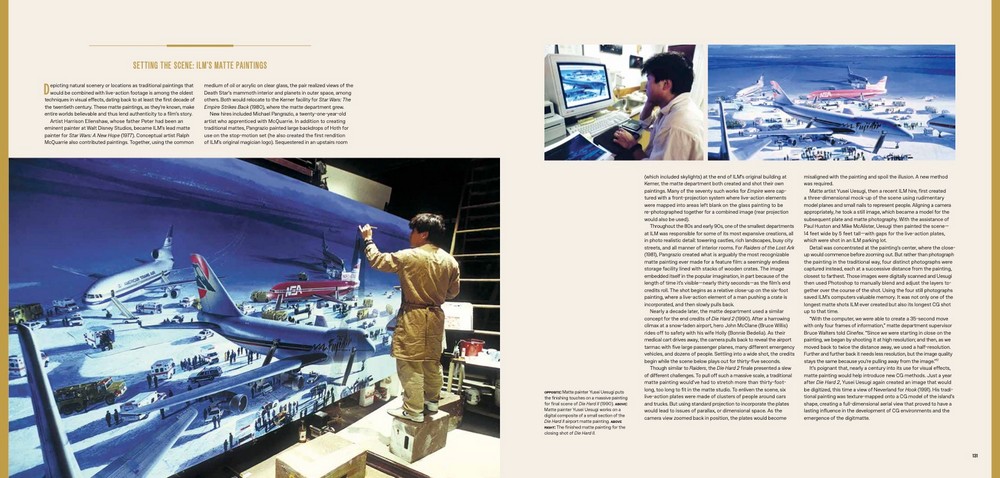
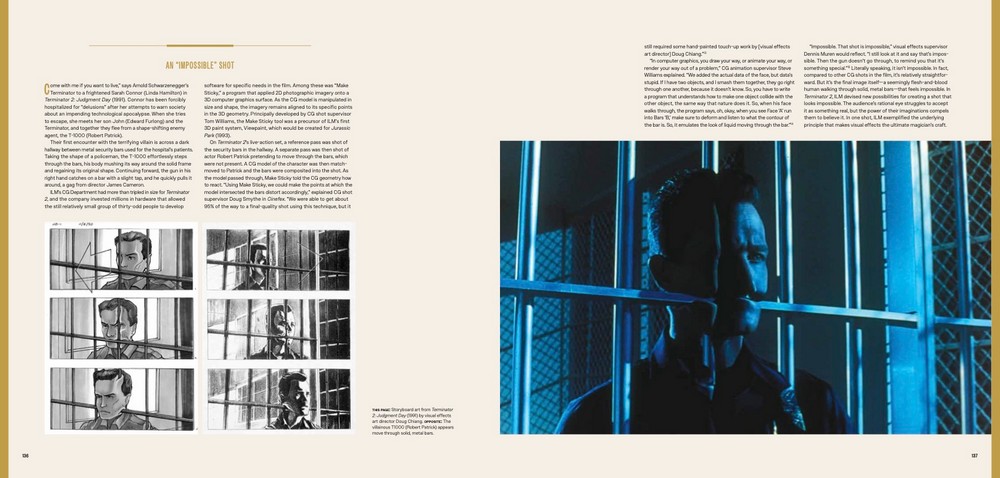
Indeed, it’s easy to overlook just how much work ILM has done in the past half century. While there are the high-profile endeavours like Star Wars, Indy, Star Trek, Jurassic and so on, ILM refinied techniques on films like Dragonslayer and Dragonheart that allowed megahits like E.T and The Phantom Menace to make their magic, and often before these films were even released, the company had forged on to the next challenge. For example, The Perfect Storm employed multiple times the computing power used to bring Episode 1 to the screen to create the roiling waters of the Portugese Cap in the mid Atlantic, and the years that followed have seen exponential leaps forward from project to project.
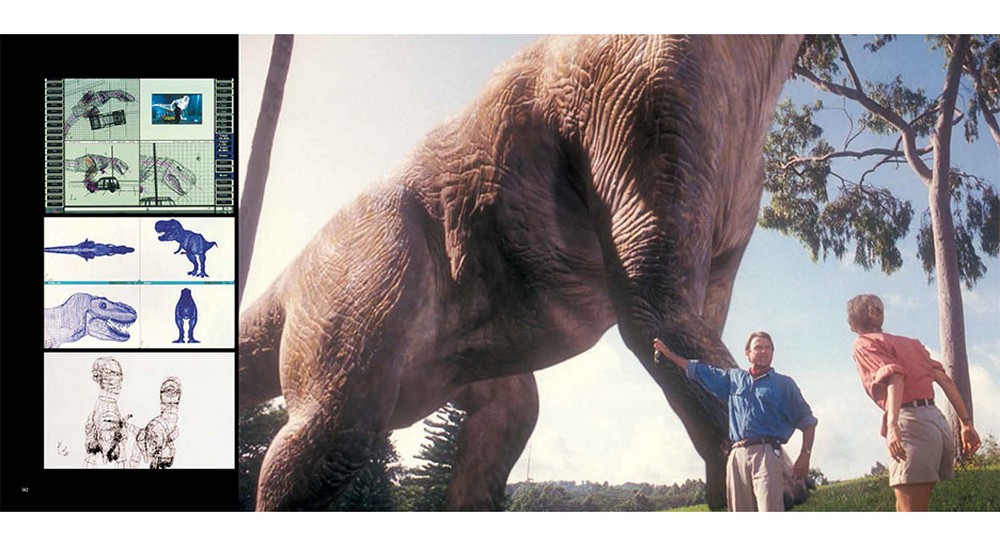
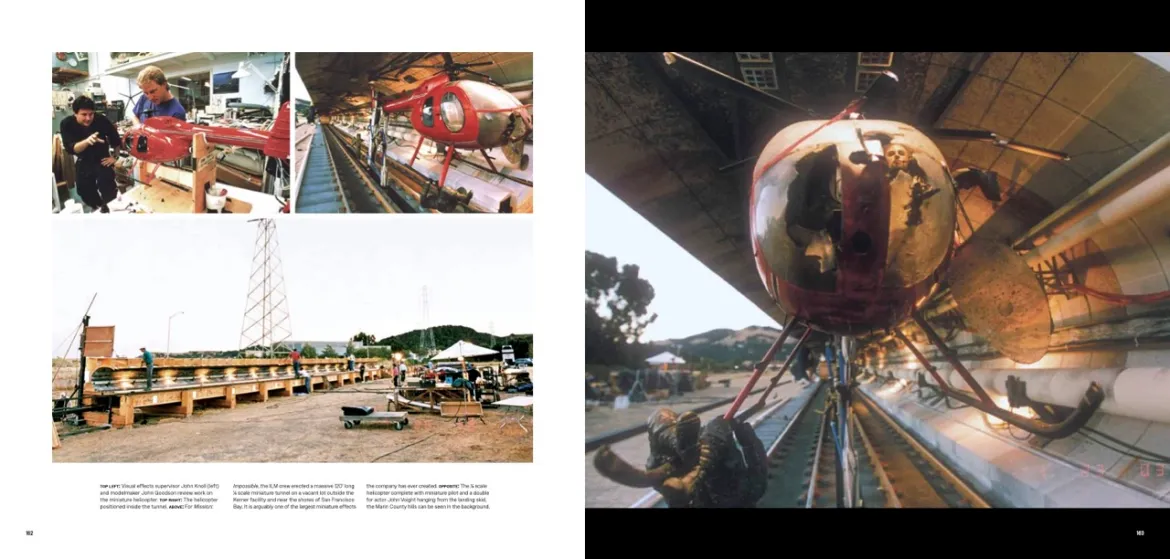
We also get to tour the homes of ILM, not just Letterman in San Francisco, but a look back at Kerner and its legendary C building (where Sprocket Systems and the Lucasfilm Computer Division were birthed, home of ‘the pit’ where digital dinosaurs first roared, of THX and Lucasfilm Games) but also Singapore (which closed in 2023), Vancouver, London, Sydney and Mumbai. It’s a truly global affair, giving the increasingly busy company the capacity to share the load on multiple projects, and innovate as the ever-changing landscape of VFX continues to move on. It looks at theme parks (the iconic Star Tours), StageCraft, a bookwide focus on the incredible work involved in deageing De Niro, Pacino and Pesci for The Mandalorian and Grogu star Martin Scorsese’s The Irishman, and vitally, the importance of story. This could be a dry, factual affair (and yes, it’s full of facts), but Failes doesn’t fail to put the people first. ILM changed the world of visual effects technology and technique, but it’s always about the people.


Never a company to sit on its laurels (despite a baffling habit of the Academy of ovcerlooking their great work, with only two Oscars in the last 20 years for Pirates of the Carribean: Dead Man’s Chest in 2007 and Rango in 2010) the third decade of the 21st century has inarguably been the companies busiest. With the advent of Disney Plus, ILM’s continued work in the MCU along with forays in the DCU, the expansion of the GFFA, the final adventure of Henry Jones Jr., not to mention StageCraft opening its doors to numerous productions – ILM even entered Middle Earth for The Lord of the Rings: The Rings of Power – you could write a book focusing only on their post 2020 content; for ILM this really is the roaring twenties, and perhaps that’s where future ILM books will turn their eye.
Industrial Light & Magic: The Art of Special Effects and Industrial Light & Magic: Into the Digital Realm charted the earliest days of ILM from 1975 to 1986 and beyond into the digital era from ’86 to ’95, and the trio of Making of Books by the late J.W. Rinzler, not to mention Paul Duncan’s two hefty tomes also gave plenty of page space to ILM and it’s work…but can we really get enough of the infectious energy the ILM teams of the past put out into the galaxy? Turn to page 94, and the images of the Jedi crew goofing around, trying on costumes and without even knowing it, making themselves legends in the history of visual effects. That’s why we’re here, and that’s why books like Industrial Light & Magic: 50 Years of Innovation are so important.