



ILM VFX are working harder than ever to bring top-quality visual effects to not only the big screen but also the small one, and talking over at Lucasfilm.com, members of the ILM team including Trevor Hazel, Chris Jones, Andrew Watkins, Rebecca Forth and Mihai Cioroba, discuss just what goes into making an episode of the hit Disney Plus show The Santa Clauses, which is now into its second season.
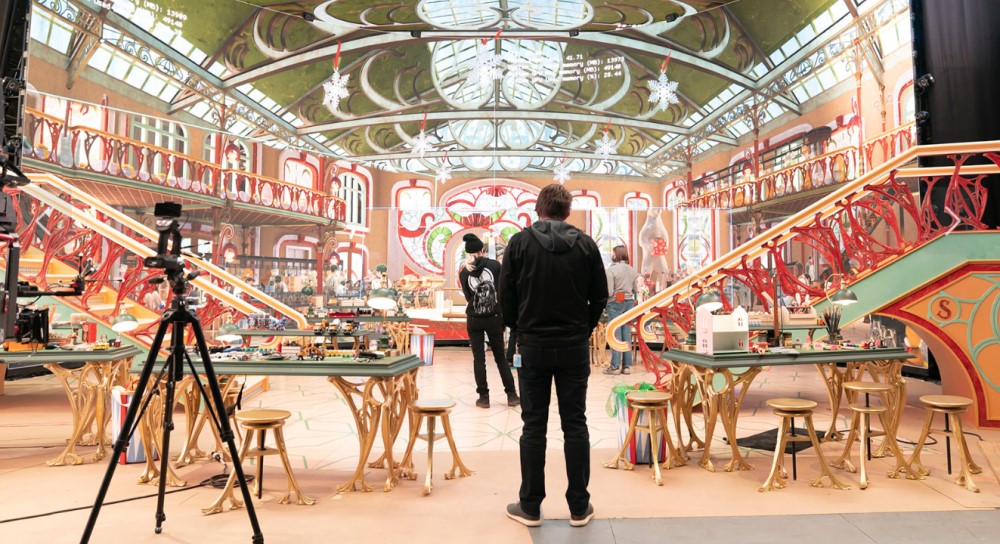
When it came to realizing Santa’s workshop, ILM StageCraft — the studio’s on-set digital backgrounds, projected onto a giant LED screen called the Volume and captured in-camera — played an enormous part. The technology was first employed on The Mandalorian, and more innovations and learnings have followed. The Santa Clauses has been shot using ILM’s medium-sized Volume, the Infinity; for Season 2, an extension was added that made the LED wall shaped more like a giant fish hook. This allowed for a greater sense of depth, scope, and wonder. “Santa’s workshop is this huge, two-story building with glass ceilings and giant glass windows, which would have proved challenging for the series to practically build out,” Chris Jones, virtual production supervisor, says. “But by building out the center of the workshop practically, with a deis and a big globe element, we could put them in that huge environment. Because we’re tracking the camera, we could have all this wonderful, kind of real-time movement, and give them the 3D and the parallax and all the wonderful stuff that StageCraft can do, but on a much faster moving timeline for a show that doesn’t quite have the production scale that The Mandalorian does.”
One memorable scene in Season 2 sees the workshop redecorated for a prom, and the production team built a dance floor and used practical lights on-set. With StageCraft, ILM digitally extended the room and its decorations, including the lights, which were color graded to match the exact hue of the strings used during filming. The result is a seamless transition from set to Volume.
“Using StageCraft and using our virtual art department teams to work directly with the production designer, we were able to take what is a well-known and well-established area, rediscover it, and then also turn it around into something new for additional points of storytelling to elevate the whole story overall for Season 1 and Season 2,” adds Andrew Watkins, ILM StageCraft virtual production producer.