

He’s the master of sound, an Oscar winning audio genius who gave us the familiar whistles and beeps of R2-D2, the roars of Chewbacca and a fleet of starships and the thrum of lightsabers, but on The Phantom Menace Ben Burtt was also editing the visuals of the film, and to celebrate the 25th anniversary he talks about the challenges of both, and here he looks at the iconic podrace.
“So when you get to the podrace, you’re dealing with all of these tonalities,” Burtt continues. “You create a distinctive sound for each podracer so you have a sense of differentiation between them, some that are high, others low. Sebulba had his pulsing engines like a big heartbeat. Another was just an electric toothbrush motor. Anakin’s was a blend of a lot of high-speed racecars. It’s a hodge-podge of high-energy vehicle sounds that the audience knows from their own experience that these things represent power and danger. If you place them in, and disguise them just a little bit so you don’t hear a dragster or a P-51 Mustang, then you capitalize on the emotions those sounds carry with them, because people have heard them in real life. That process goes back to the first Star Wars movie where we built a lot of things with World War II airplanes and jets.”
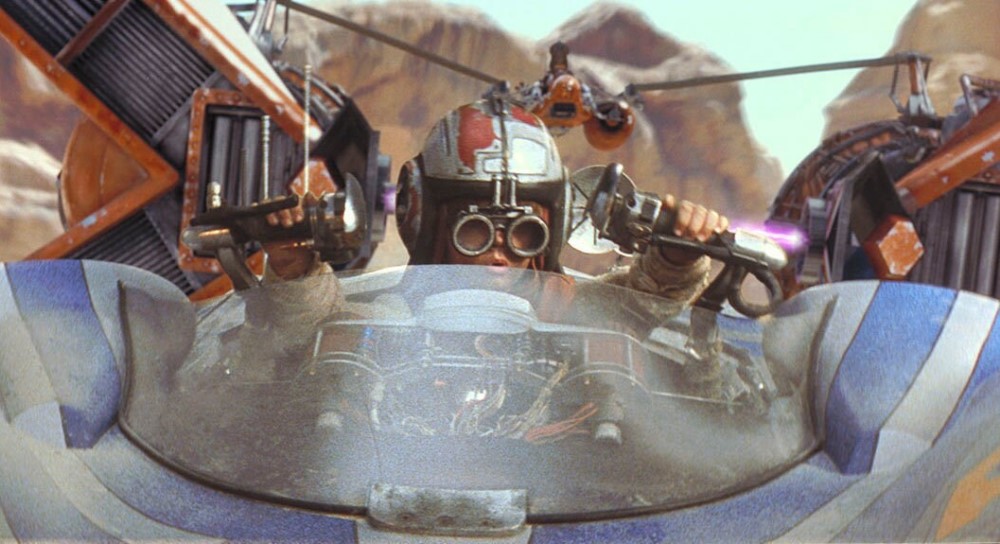
What began as a nearly 30-minute, 25-lap epic in the videomatic phase, was carefully refined down to a three-lap nail-biter that rivals A New Hope’s trench run in energy and suspense. Lucas and his crew withheld any musical score until the final lap of the race as Anakin Skywalker closes in on his opponent and the ultimate chance of freedom.
“Filmmakers often miss opportunities to use sound in this way,” says Burtt. “I understand the power of music, but there can be a lot of insecurity in terms of what filmmakers think is needed to have the biggest impact. It’s easier to have music run all the way through something and feel like you’ve done your job. But my feeling is that the power of music is so strong that you want to use it carefully. On the other hand, I’ve run some of the sequences in the films without their music and you’re missing something. It’s all about balance, with the right choices made for the right moment in the context of the whole movie.”