

Founded in 1947, Kenner was already a respected name in the toy world, but it was the decision to take on the Star Wars license (a decision not hurt by Jim Swearingen telling his boss “We have to do this. We have to make these toys” after reading the script) that turned Kenner into a global toy superpower. Here, the Northern Kentucky Tribune proudly take a look back at Kenner and the role that Swearingen played in turning the characters and vehicles of the film into the best selling toys in history.
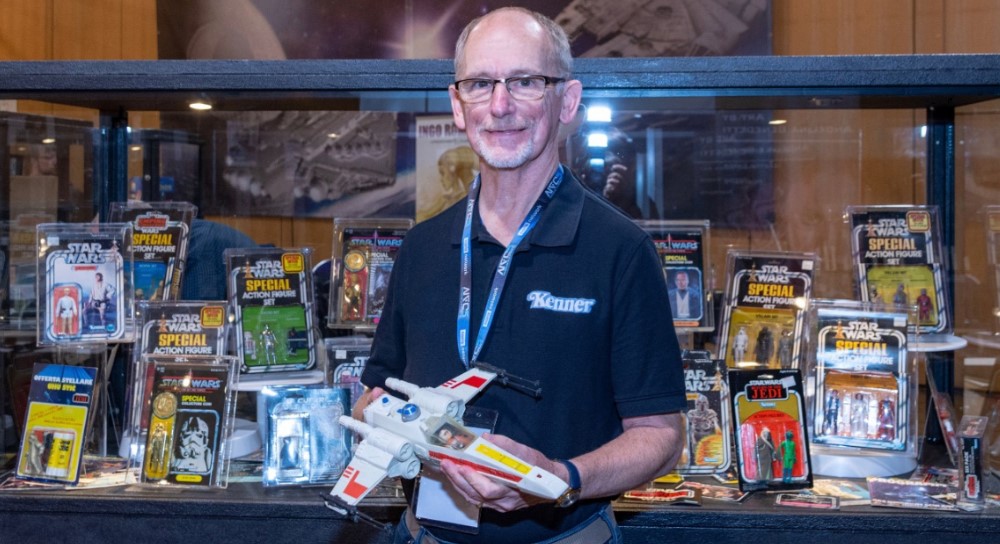
When “Star Wars” blasted onto movie screens in 1977, it didn’t just redefine cinema—it sparked a revolution in the toy industry. Children everywhere wanted to bring the galaxy home, and Kenner Toys in Cincinnati answered the call. From 1978 to 1985, Kenner produced hundreds of different action figures, vehicles, and playsets inspired by “Star Wars,” “The Empire Strikes Back,” and “Return of the Jedi.” These toys became as iconic as the films themselves, cementing Kenner’s place in pop culture history.
At the heart of this success was industrial designer Jim Swearingen, whose vision shaped the look and feel of the Star Wars toy line. Swearingen recalls first reading the script in early 1977 and being captivated by the dogfights between X-Wings and TIE Fighters. “I always tried to put myself in the shoes of a seven-year-old boy,” Swearingen said. “The ships were the heroes. The figures were the supporting cast” (Interview of Jim Swearingen by John Schlipp and Paul A. Tenkotte, December 13, 2025, Covington, Kentucky).
Jim Swearingen holding a prototype of Darth Vader made by transforming a Fisher Price Adventure People fireman figure. (Photo by Paul A. Tenkotte, 2025)
That insight drove the decision to create vehicles large enough for kids to handle, paired with figures scaled to fit inside — ultimately leading to the now-standard 3¾-inch action figure.