
Rest in peace Young Indiana Jones Chronicles Digital Editor Edgar Burcksen

- Advertisement -
- Advertisement -

Lucasfilm digital editor Edgar Burcksen has passed away. Making a name for himself in his native Holland, Edgar journeyed to the US and via his early work with EditDroid and The Young Indiana Jones Chronicles he became a key figure in the advancement of digital editing, securing his name in Lucasfilm legend as he spearheaded a new era.
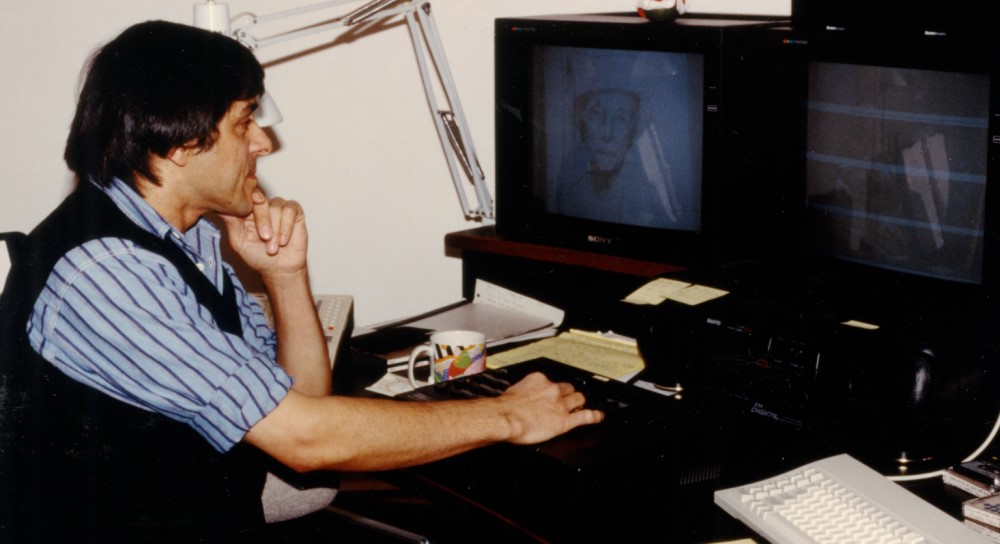
Early in 1991, Lucasfilm producer Rick McCallum recruited Burcksen to help establish the post-production department for the company’s new live action television series, The Young Indiana Jones Chronicles.

George Lucas had ambitious plans for the series, with cast and crew setting out on a globetrotting shoot across Europe, Africa, Asia, and North America. The intrepid production schedule, however, was only the beginning. For years, Lucas had been pushing innovation in digital filmmaking tools, utilizing different groups within Lucasfilm to do so. Among these breakthroughs was the EditDroid, one of the first nonlinear computer editing systems, which debuted in 1984. By the early 1990s, the tool had seen limited use, and was yet to catch on in the mainstream. Lucas was eager to change that.

Edgar Burcksen had been introduced to the EditDroid while still at ILM, where an updated version had recently been installed. During a time when many traditional film editors were skeptical if not outright fearful of computerized editing machines, Burcksen openly embraced the new technology. Joining the Young Indy crew, he collaborated with Lucasfilm engineers and technicians to establish a functioning EditDroid post-production office in the basement of the Main House at Skywalker Ranch.

With Burcksen as supervising editor, Young Indy was edited with an entirely digital workflow, including its soundtrack, which Skywalker Sound artists created with the EditDroid’s sibling tool, the SoundDroid. Burcksen and his fellow editors also utilized new imaging tools like Photoshop (co-created by ILM employee John Knoll) to create simple visual effects for various episodes. “With…digital post-production, once the show has been shot, it never really goes back to film,” George Lucas would say at the time. “We have managed to streamline everything, and hopefully make…the entire post-production process [more efficient].”

SourceLucasfilm
Mark Newbold
Mark Newbold
Exploring the galaxy since 1978, Mark wrote his first fan fiction in '81 and been a presence online since his first webpage Fanta War in 1996. He currently contributes to ILM.com and SkywalkerSound.com, having previously written for Star Wars Insider, StarWars.com, Star Wars Encyclopedia, Build The Millennium Falcon, Starburst Magazine, Geeky Monkey, TV Film Memorabilia and Model and Collectors Mart. He is a four-time Star Wars Celebration Stage host (the only podcaster to have appeared on every Celebration podcast stage since it began in 2015), the Daily Content Manager of Fantha Tracks and the co-host of Making Tracks, Canon Fodder and Start Your Engines on Fantha Tracks Radio.
- Advertisement -
- Advertisement -

Lucasfilm digital editor Edgar Burcksen has passed away. Making a name for himself in his native Holland, Edgar journeyed to the US and via his early work with EditDroid and The Young Indiana Jones Chronicles he became a key figure in the advancement of digital editing, securing his name in Lucasfilm legend as he spearheaded a new era.

Early in 1991, Lucasfilm producer Rick McCallum recruited Burcksen to help establish the post-production department for the company’s new live action television series, The Young Indiana Jones Chronicles.

George Lucas had ambitious plans for the series, with cast and crew setting out on a globetrotting shoot across Europe, Africa, Asia, and North America. The intrepid production schedule, however, was only the beginning. For years, Lucas had been pushing innovation in digital filmmaking tools, utilizing different groups within Lucasfilm to do so. Among these breakthroughs was the EditDroid, one of the first nonlinear computer editing systems, which debuted in 1984. By the early 1990s, the tool had seen limited use, and was yet to catch on in the mainstream. Lucas was eager to change that.

Edgar Burcksen had been introduced to the EditDroid while still at ILM, where an updated version had recently been installed. During a time when many traditional film editors were skeptical if not outright fearful of computerized editing machines, Burcksen openly embraced the new technology. Joining the Young Indy crew, he collaborated with Lucasfilm engineers and technicians to establish a functioning EditDroid post-production office in the basement of the Main House at Skywalker Ranch.

With Burcksen as supervising editor, Young Indy was edited with an entirely digital workflow, including its soundtrack, which Skywalker Sound artists created with the EditDroid’s sibling tool, the SoundDroid. Burcksen and his fellow editors also utilized new imaging tools like Photoshop (co-created by ILM employee John Knoll) to create simple visual effects for various episodes. “With…digital post-production, once the show has been shot, it never really goes back to film,” George Lucas would say at the time. “We have managed to streamline everything, and hopefully make…the entire post-production process [more efficient].”

SourceLucasfilm
Mark Newbold
Mark Newbold
Exploring the galaxy since 1978, Mark wrote his first fan fiction in '81 and been a presence online since his first webpage Fanta War in 1996. He currently contributes to ILM.com and SkywalkerSound.com, having previously written for Star Wars Insider, StarWars.com, Star Wars Encyclopedia, Build The Millennium Falcon, Starburst Magazine, Geeky Monkey, TV Film Memorabilia and Model and Collectors Mart. He is a four-time Star Wars Celebration Stage host (the only podcaster to have appeared on every Celebration podcast stage since it began in 2015), the Daily Content Manager of Fantha Tracks and the co-host of Making Tracks, Canon Fodder and Start Your Engines on Fantha Tracks Radio.
- Advertisement -
- Advertisement -
- Advertisement -