


Bill Kimberlin may refer to himself as “one of those names on the endless list of credits at the close of blockbuster movies.” In reality though, he’s a true insider on some of the most celebrated and popular movies and franchises of the past century.Jurassic Park. Star Trek. Jumanji. Schindler’s List. Saving Private Ryan. Even Forrest Gump. And perhaps most notably, Star Wars.
Inside the Star Wars Empire is the very funny and insightful tell-all about the two decades Kimberlin spent as a department director at Lucasfilm Industrial Light and Magic (ILM), the special effects studio founded by the legendary filmmaker George Lucas.
 Hardcover: 272 pages
Publisher: The Lyons Press
Language: English
ISBN-10: 1493032313
ISBN-13: 978-1493032310
Throw your mind back thirty-five years. You may remember watching, watching again and then re-watching From Star Wars to Jedi: The Making of a Saga, which briefly showed a sheepdog following a panicked hoard of ILM-ers in the creature effects shop, being chased by a rampaging Gamorrean Guard. Now imagine that Sheepdog had a Go-Pro attached to its head and was filming everything that went on. Take that intimacy, annotate it to include ILM projects from the next two decades and you may come up with something as insightful as Inside The Star Wars Empire: A Memoir, by former ILM department director Bill Kimberlin.
The book kicks off in 1982 and reminds us, in Kimberlin’s own words, why Lucasfilm and ILM was the ‘center of the universe for anyone interested in motion pictures‘. So far ahead of the field as it was, and with once in a generation properties on its slate like Star Wars, Indiana Jones and E.T., ILM truly was a magical place to work. The atmosphere was competitive, prompting excellence in every department, and pushed the technology of the time to its optical limits.
And yet, despite the high-octane projects of the era and the bulletproof exterior Lucasfilm presented, Skywalker Ranch loomed on the horizon, a project that – for visual effects editor Kimberlin – marked the end of an era for ILM, as the opulence of the ranch drew a line between the spit and sawdust, hands-on approach of ILM and the glass-domed, isolated haven for filmmakers that would spearhead the next chapter of the Lucasfilm story. As with everything else in life, ILM and Lucasfilm would evolve and continue to evolve (as it does to this day under the Disney banner).
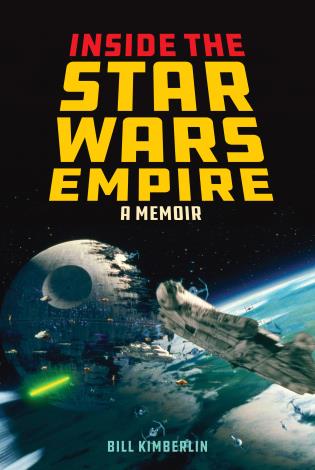
Kimberlin’s recanting of his time on Jedi is illuminating, revealing information about legendary moments such as his work on SB19, the largest optical compositing shot ever put on celluloid with 63 separate elements that was as much about trial, error, reusing footage from the first two films and of course, amazing talent as anything else. If you want to see that shot, look at the cover of the book. Today, almost 30 years into the digital age, you’ll regularly see more elements in televisual VFX. For skill, craft and technique you’re unlikely to ever see something of its ilk again.
The book isn’t just about his time on Jedi or his later involvement in the Special Editions. Kimberlin would go on to work on some major Hollywood blockbusters, and this is where the book becomes even more revelatory, including some cringe-inducing moments discussing SPFX budgets with Die Hard 2 producer Joel Silver, the ‘propeller-heads’ of Lucasfilms computer division which would eventually become PIXAR and how Kathleen Kennedy first saw ILM’s chicken-wire dinosaurs that would become the groundbreaking beasts of Jurassic Park. To give too much away would do the book a great disservice, suffice to say that every page unfolds with amazing detail, written in a conversational and easy style that begs you to keep on turning the page.
As a career, while Bill Kimberlin has been in and around legendary projects and worked with many of the great Hollywood technical talents, this charming and honest book ranks right up there with the best of his achievements. Giving us knowledge nuggets to savour (did you know that around the time of the Special Editions George Lucas wanted to make a Star Wars comedy film? Perhaps Lord and Miller weren’t as far off the mark as we previously thought) and honest commentary on his career, it’s a must-read for anyone with a Beatlemania-style adoration for the geniuses who cooked up the original trilogy and the transition from optical into digital. And yes, he does look a lot like Richard Dreyfuss.