

Interview: Aldona Talarczyk from ATAT Costume Art

- Advertisement -
- Advertisement -

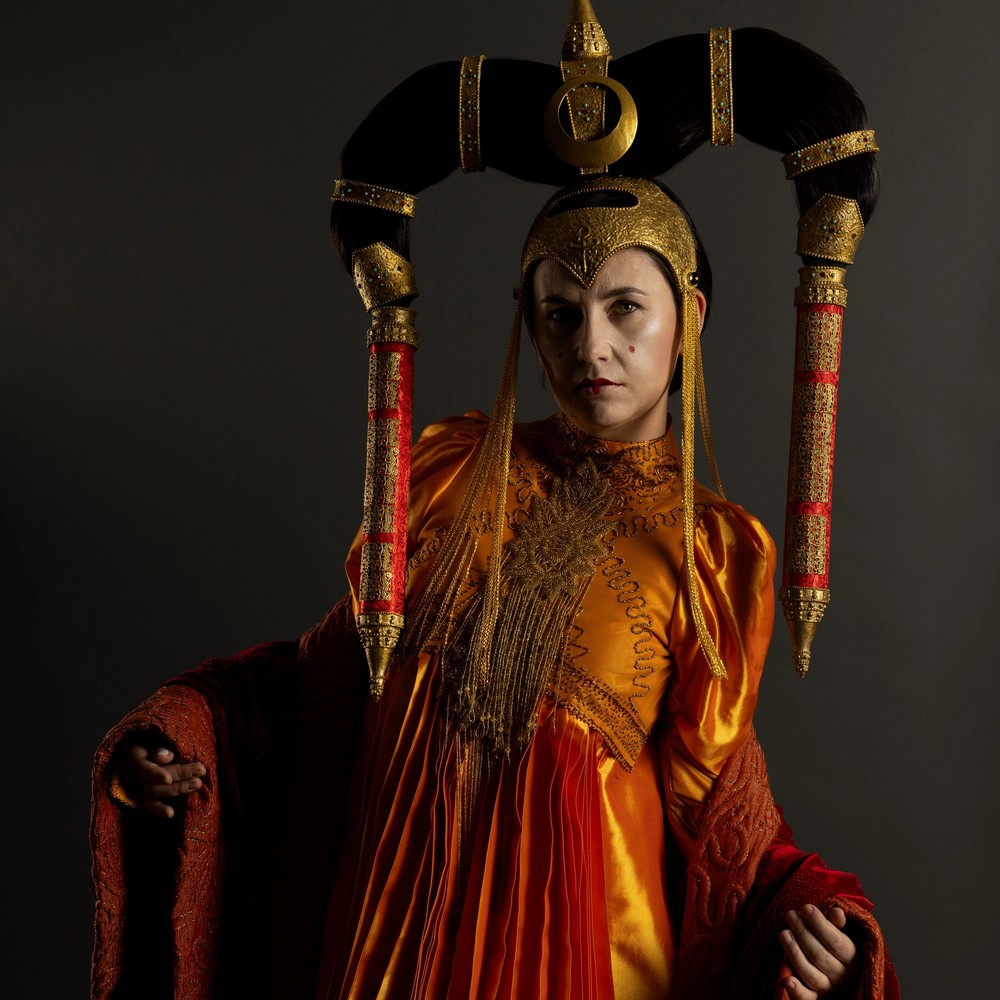
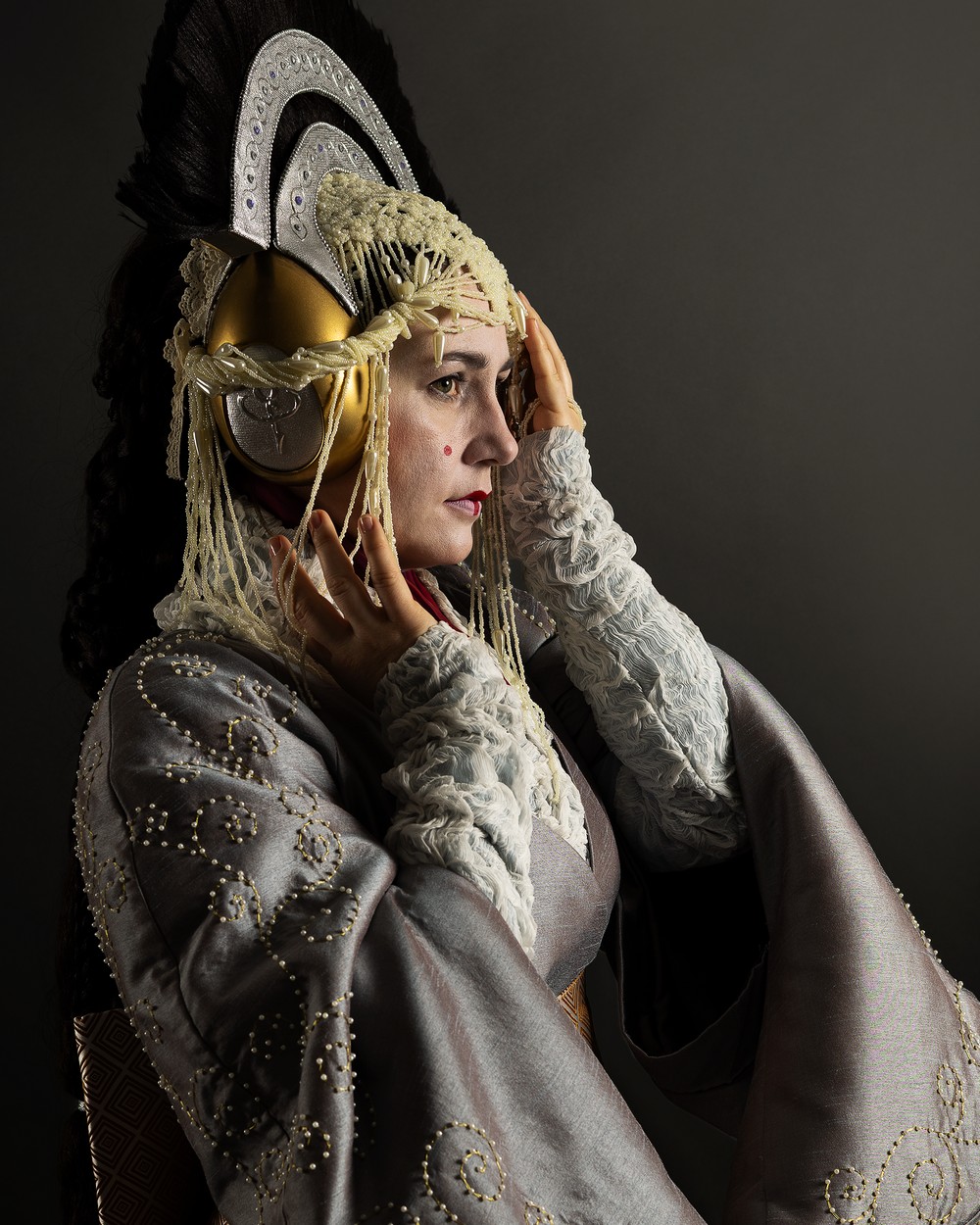
If you’ve ever visited the Star Wars Zone at Pyrkon, chances are you’ve admired the breathtaking collection of Padmé Amidala costumes created by Polish costume artist Aldona Talarczyk, better known in the cosplay, fashion, and Star Wars communities as ATAT Costume Art. For the past 10 years, her ever-growing exhibition has been one of the highlights of the convention, showcasing extraordinary craftsmanship, historical research, and a deep love for the galaxy far, far away.

I had the pleasure of meeting Aldona at last year’s Pyrkon, and I was genuinely blown away by the scale and quality of her work. In this interview, we talk about the passion, dedication, and artistry behind recreating some of Star Wars’ most iconic costumes, as well as the journey that has made her exhibition a beloved part of Pyrkon for a decade.

FT: You have been recreating Star Wars costumes since 2012, with a clear and dedicated focus on the wardrobe of Queen Amidala. What was the initial spark that drew you to start this journey specifically with her dresses?

AT: It all started because I wanted to take part in the Masquerade cosplay competition held during Pyrkon, one of Poland’s biggest fan conventions in Poznań. At first, I was considering making a costume of the Childlike Empress from The NeverEnding Story. However, while searching for reference images online, search engines kept showing me Queen Amidala in her Parade Gown from the final scenes of The Phantom Menace. I have to admit, they were remarkably persuasive—I abandoned my original idea and found myself diving deeper and deeper into Amidala’s extraordinary wardrobe.

That first costume was a huge challenge, but I managed to finish it and eventually stepped onto the Masquerade stage. After that, I simply couldn’t stop thinking about the Queen’s other incredible outfits. That’s how it all began.
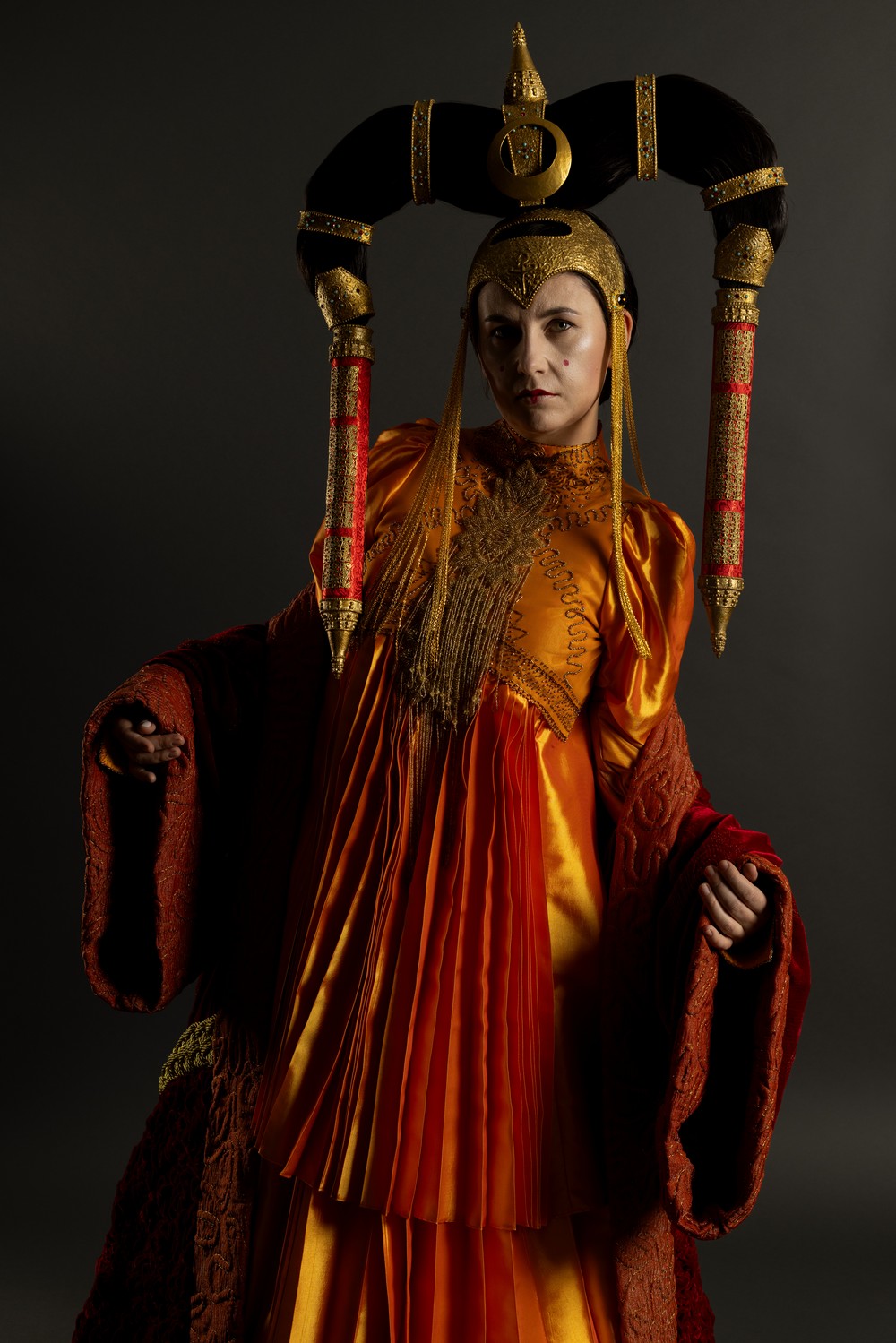
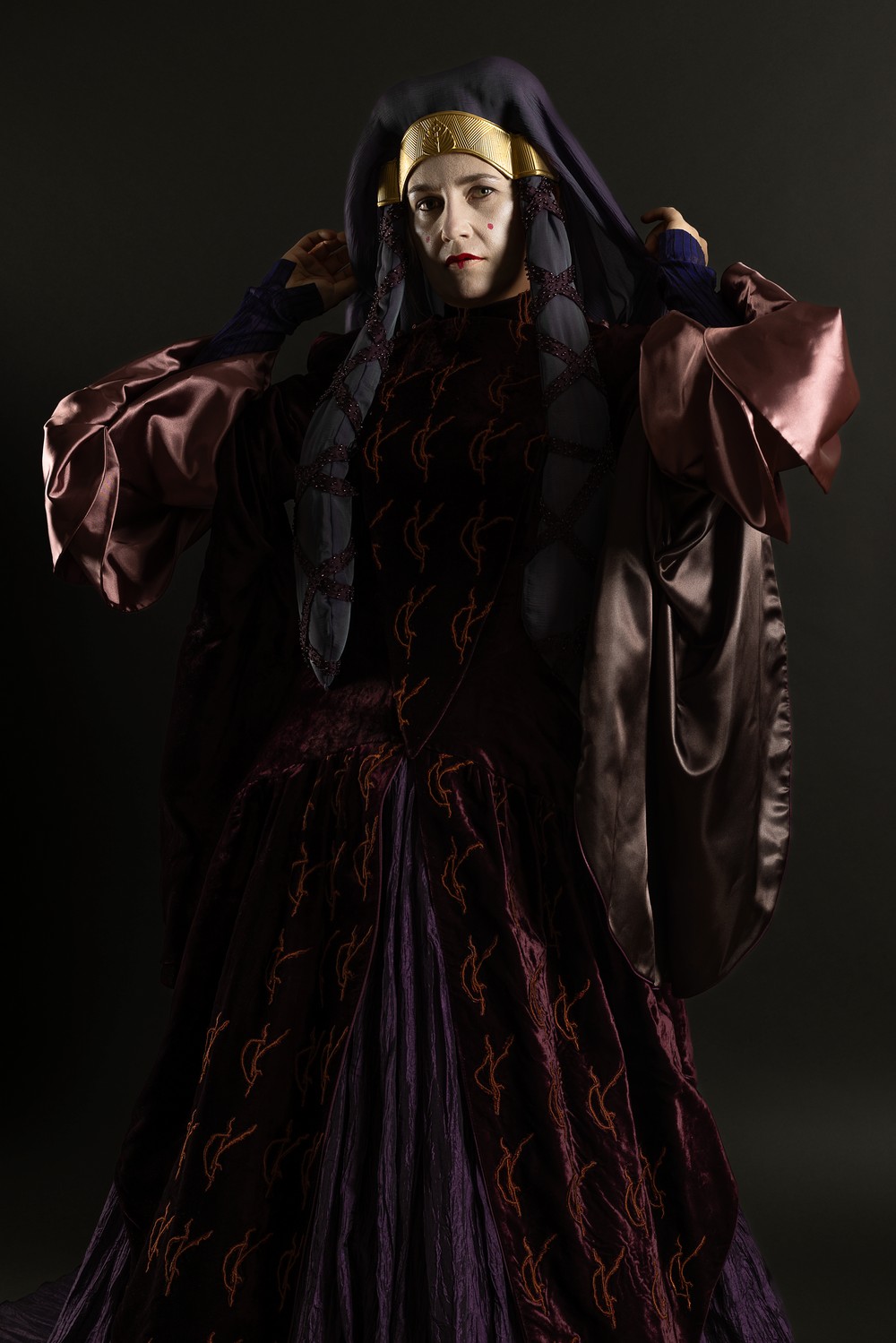
FT: The original costumes in the prequel trilogy were created using expensive fabrics and inspired by traditional and historical clothing from various periods and cultures. How do you handle the technical challenge of sourcing materials and replicating such specific, high-end looks while maintaining screen accuracy?

AT: I’m fortunate to have a background in fashion and costume design. I graduated from a vocational high school specializing in garment construction and later spent two years studying Scenography at the University of the Arts in Poznań. On top of that, I’ve been sewing for as long as I can remember—I was probably six or seven years old when I started.

That experience has given me a solid understanding of textiles and how different fabrics behave. It’s much easier for me to imagine how a modern fabric will drape and whether it can recreate the look seen on screen.

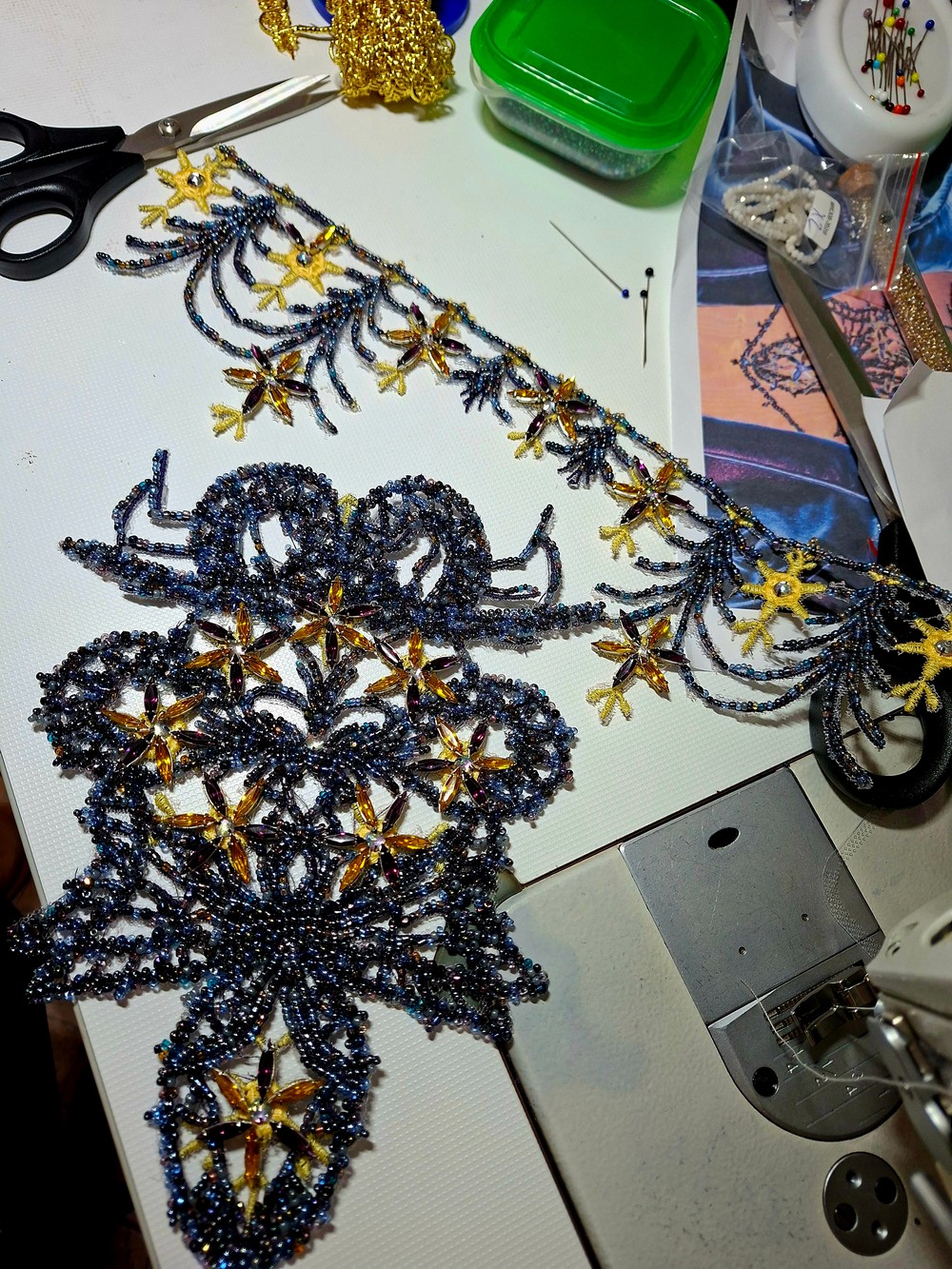
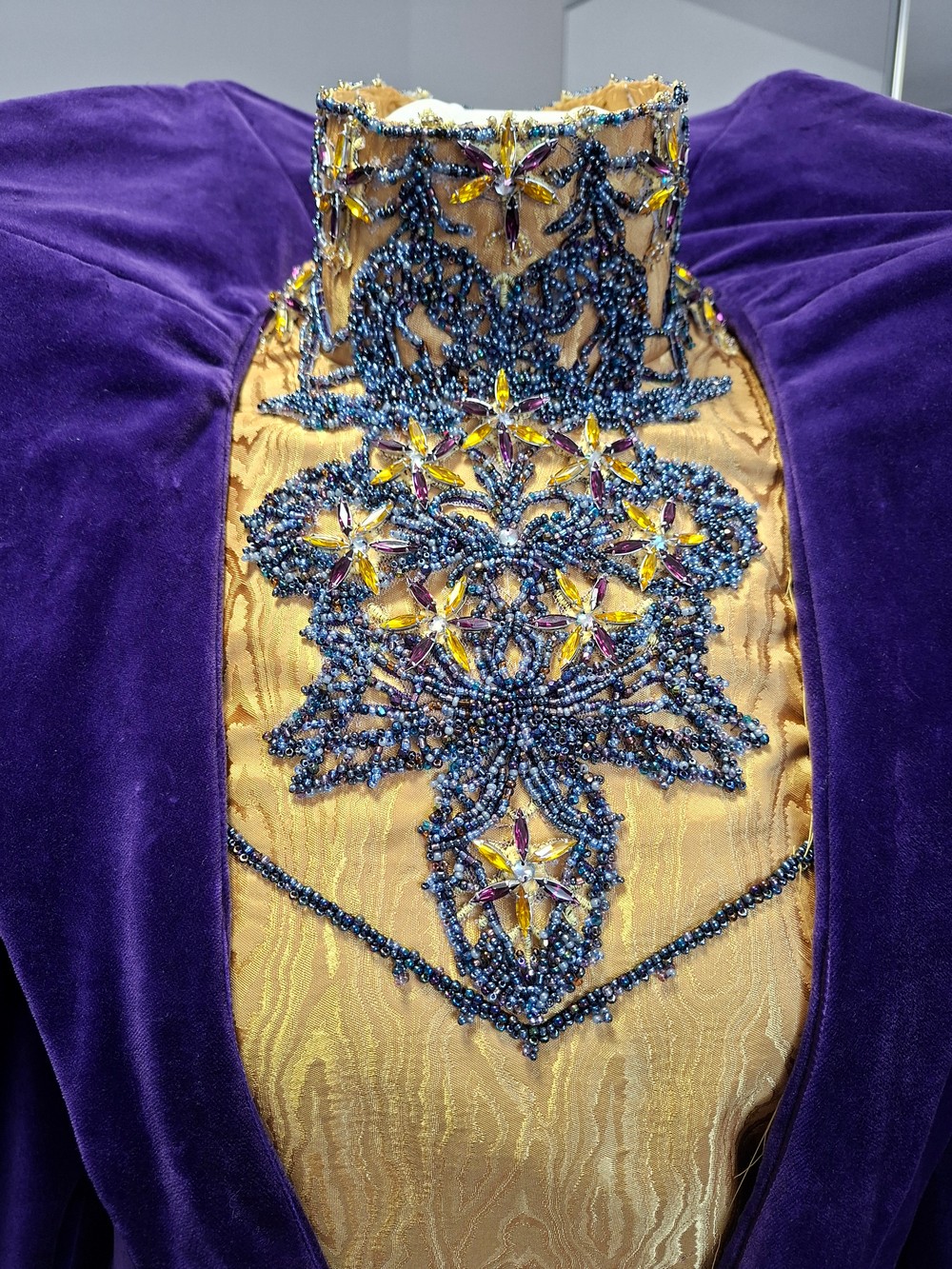
Finding the right materials is probably the greatest challenge. Unfortunately, it isn’t as simple as visiting an online fabric store and buying everything I need for a single costume in one order. It’s more like long-term planning and treasure hunting. Sometimes I buy fabrics “just in case,” even when I don’t yet have a specific costume planned. There’s also a great deal of dyeing, washing, pleating, embroidery, and other finishing techniques that can transform an ordinary polyester or viscose into something that convincingly resembles silk.

It’s also important to remember that The Phantom Menace premiered over twenty-five years ago. Textile manufacturing has changed enormously since then, as have fashion trends. For example, taffeta—so common in formal gowns during the early 2000s—is now almost impossible to find in apparel stores and has largely migrated to the curtain fabric section.

FT: You have been presenting your hand-sewn Padmé costumes at Pyrkon for ten years now. Looking back at that decade, how has your approach to reconstructing these masterpieces evolved since your very first project?

AT: The biggest change is that I’ve learned to eliminate rushing from the process. It never leads to good results because it tempts you to take shortcuts.

I’ve also discovered something that may sound a little counterintuitive: working on two or three costumes at the same time is actually more efficient. It allows me to make better use of my time instead of forcing a single project forward with compromises. If I can’t find the perfect fabric or the right beads for one costume, I simply switch to another. Quite often, materials that seem impossible to find today suddenly appear on the market a few months later, so patience really pays off.

FT: What do you think is the most important lesson you have learned about yourself or your craft throughout these last ten years of exhibiting your work at Pyrkon?

AT: I’ve learned that being independent, self-reliant, and maintaining a healthy sense of perspective is the best way to truly enjoy both my exhibition and the opportunity to share my work with others during the event.

FT: Managing the physical demands of intricate costume design while also navigating the challenges of T1D and endometriosis is an immense feat. How do you find the strength and balance to keep creating despite these health struggles?

AT: To be honest, creating these costumes is my own form of art therapy. Sewing helps me relax, clears my mind, and allows me to forget about my health problems for a while. At the same time, I get to create something that brings joy not only to me but also to the people who have supported and encouraged me throughout this journey.

That said, I can definitely feel that I have less energy each year for fast-paced, physically demanding projects. That’s one of the reasons I no longer take part in cosplay competitions—they’re simply exhausting for me. If my health were better, I’d probably also be making costumes from The Witcher and Game of Thrones, because I absolutely love the costume design in both worlds.

FT: Considering you have been able to recreate a large portion of Her Majesty’s wardrobe so far, do you have a specific dream costume you are currently working toward or hope to tackle next?

AT: At the moment, I’m especially drawn to Padmé’s wedding dress from Attack of the Clones and the richly embroidered burgundy velvet robe from Revenge of the Sith. I’m absolutely in love with the embroidery and decorative details on both costumes. They’re simply breathtaking pieces of design.

They also represent an enormous technical challenge, and at the moment I don’t feel quite ready to take them on. For now, they remain dream projects waiting for the right time.

FT: If you could have a conversation with Trisha Biggar, the original costume designer behind these iconic outfits, what is the one question you would ask her about her design process?

AT: I might jokingly ask where her fascination with eggs and neckties came from when designing Queen Amidala’s costumes!

But seriously, I’d probably spend most of the conversation asking technical questions—why certain construction methods were chosen, why specific fabrics were selected, and what led to those particular design decisions.

FT: I assume Trisha Biggar’s book Dressing a Galaxy: The Costumes of Star Wars is already a cornerstone of your personal library, but for other book nerds like me or for aspiring costumers who want to follow in your footsteps, what other titles would you recommend?

AT: Absolutely—it’s been one of the treasures on my bookshelf for years, sitting right next to its companion volume devoted to the original trilogy.

For anyone interested in film costume design, I wholeheartedly recommend Game of Thrones: The Costumes by Michelle Clapton. I’m also a huge fan of Savage Beauty, which showcases Alexander McQueen’s most iconic creations.

FT: Your exhibitions allow the public to see details that are easily missed on screen. How does your perspective as an artist change when you shift from being the creator wearing the costume to an exhibitor presenting them as static, gallery-quality pieces of art? As you continue your work at ATAT Costume Art, do you feel that your role has shifted from simply being a cosplayer to becoming an educator or historian of these specific, intricate designs?

AT: Definitely.

When I’m supervising my exhibition, many visitors come over to ask questions. Even if I’m wearing one of the costumes, they’re usually interested in much more than just taking a photo with me. I genuinely enjoy talking about the technical side of costume making and sharing what I’ve learned over the years.

I’m also very happy that my work helps introduce more people to Queen Amidala. When I first started exhibiting, many visitors didn’t even know who she was, and the Parade Gown was constantly mistaken for “Princess Leia.” It still happens occasionally, but thankfully much less often.

I hope that, in my own small way, I’ve helped popularize both the character and the extraordinary works of art that her costumes truly are.

Follow ATAT Costume Art online:

https://www.instagram.com/atat.costume.art/

https://www.facebook.com/ATATCostumeArt/

https://www.flickr.com/photos/atsuri/


Nenko Genov
Nenko Genovhttps://www.goodreads.com/author/list/5124820._
Nenko Genov was born in Plovdiv and has been a Star Wars fan since the early 1990s, discovering the saga through worn-out bootleg VHS tapes and the occasional imported collectible in post-communist Bulgaria. During the early years of Bulgarian Star Wars fandom he was known among local fans as “Young_Jedi” and served as a librarian, hosting a humble collection of English-language Star Wars books for local fans to borrow. (Today his collection includes most of the Star Wars titles ever published and takes up his entire attic!) Nenko holds degrees in English Studies and Film & Television Arts, worked for five years in television production and short filmmaking, and has lived in Poland since 2011, where he currently works as an educator. He also runs a long-standing Bulgarian book blog, launched in 2016, and regularly takes part in workshops, conventions and panel discussions focused on literature, film, pop culture and the creative arts. Nenko is a published writer and the author of the award-winning Bulgarian “Farewell, Diary!” trilogy (“Сбогом, дневнико!”) and the steampunk fantasy novel “The Adventures of Captain Claude and the Sky Scoundrels” (“Приключенията на капитан Клод и Небесните негодяи”). Working across Bulgarian, English and Polish, he has translated and edited a wide range of projects, and since 2022 has translated all the Bulgarian editions of Star Wars comics, manga and picture books, while also consulting on Star Wars novel translations and publishing plans. In collaboration with local publishers and with approvals from Lucasfilm and Marvel, he also writes the forewords for Bulgarian editions of Star Wars comics.
- Advertisement -
- Advertisement -

If you’ve ever visited the Star Wars Zone at Pyrkon, chances are you’ve admired the breathtaking collection of Padmé Amidala costumes created by Polish costume artist Aldona Talarczyk, better known in the cosplay, fashion, and Star Wars communities as ATAT Costume Art. For the past 10 years, her ever-growing exhibition has been one of the highlights of the convention, showcasing extraordinary craftsmanship, historical research, and a deep love for the galaxy far, far away.

I had the pleasure of meeting Aldona at last year’s Pyrkon, and I was genuinely blown away by the scale and quality of her work. In this interview, we talk about the passion, dedication, and artistry behind recreating some of Star Wars’ most iconic costumes, as well as the journey that has made her exhibition a beloved part of Pyrkon for a decade.

FT: You have been recreating Star Wars costumes since 2012, with a clear and dedicated focus on the wardrobe of Queen Amidala. What was the initial spark that drew you to start this journey specifically with her dresses?

AT: It all started because I wanted to take part in the Masquerade cosplay competition held during Pyrkon, one of Poland’s biggest fan conventions in Poznań. At first, I was considering making a costume of the Childlike Empress from The NeverEnding Story. However, while searching for reference images online, search engines kept showing me Queen Amidala in her Parade Gown from the final scenes of The Phantom Menace. I have to admit, they were remarkably persuasive—I abandoned my original idea and found myself diving deeper and deeper into Amidala’s extraordinary wardrobe.

That first costume was a huge challenge, but I managed to finish it and eventually stepped onto the Masquerade stage. After that, I simply couldn’t stop thinking about the Queen’s other incredible outfits. That’s how it all began.
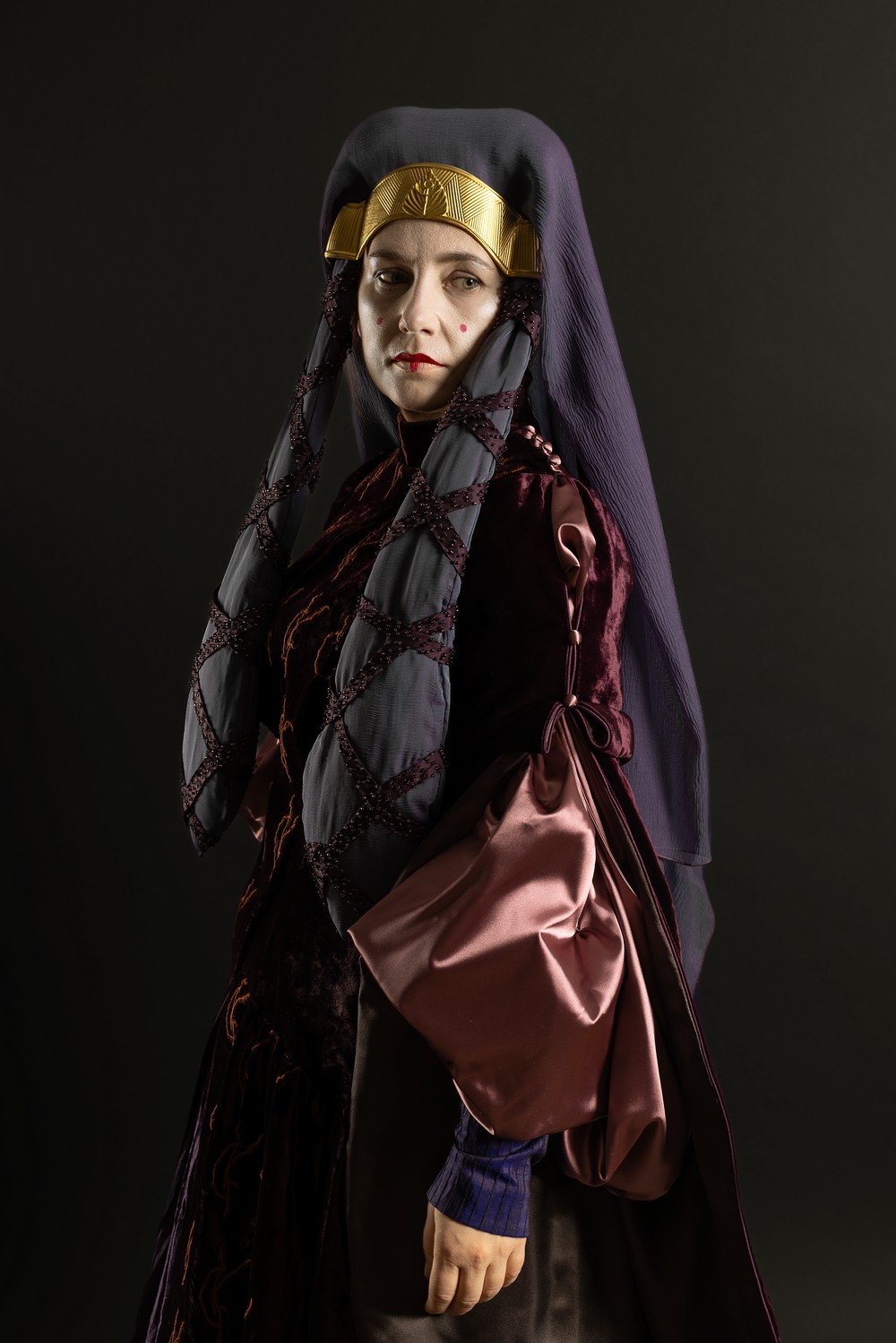
FT: The original costumes in the prequel trilogy were created using expensive fabrics and inspired by traditional and historical clothing from various periods and cultures. How do you handle the technical challenge of sourcing materials and replicating such specific, high-end looks while maintaining screen accuracy?

AT: I’m fortunate to have a background in fashion and costume design. I graduated from a vocational high school specializing in garment construction and later spent two years studying Scenography at the University of the Arts in Poznań. On top of that, I’ve been sewing for as long as I can remember—I was probably six or seven years old when I started.

That experience has given me a solid understanding of textiles and how different fabrics behave. It’s much easier for me to imagine how a modern fabric will drape and whether it can recreate the look seen on screen.

Finding the right materials is probably the greatest challenge. Unfortunately, it isn’t as simple as visiting an online fabric store and buying everything I need for a single costume in one order. It’s more like long-term planning and treasure hunting. Sometimes I buy fabrics “just in case,” even when I don’t yet have a specific costume planned. There’s also a great deal of dyeing, washing, pleating, embroidery, and other finishing techniques that can transform an ordinary polyester or viscose into something that convincingly resembles silk.

It’s also important to remember that The Phantom Menace premiered over twenty-five years ago. Textile manufacturing has changed enormously since then, as have fashion trends. For example, taffeta—so common in formal gowns during the early 2000s—is now almost impossible to find in apparel stores and has largely migrated to the curtain fabric section.
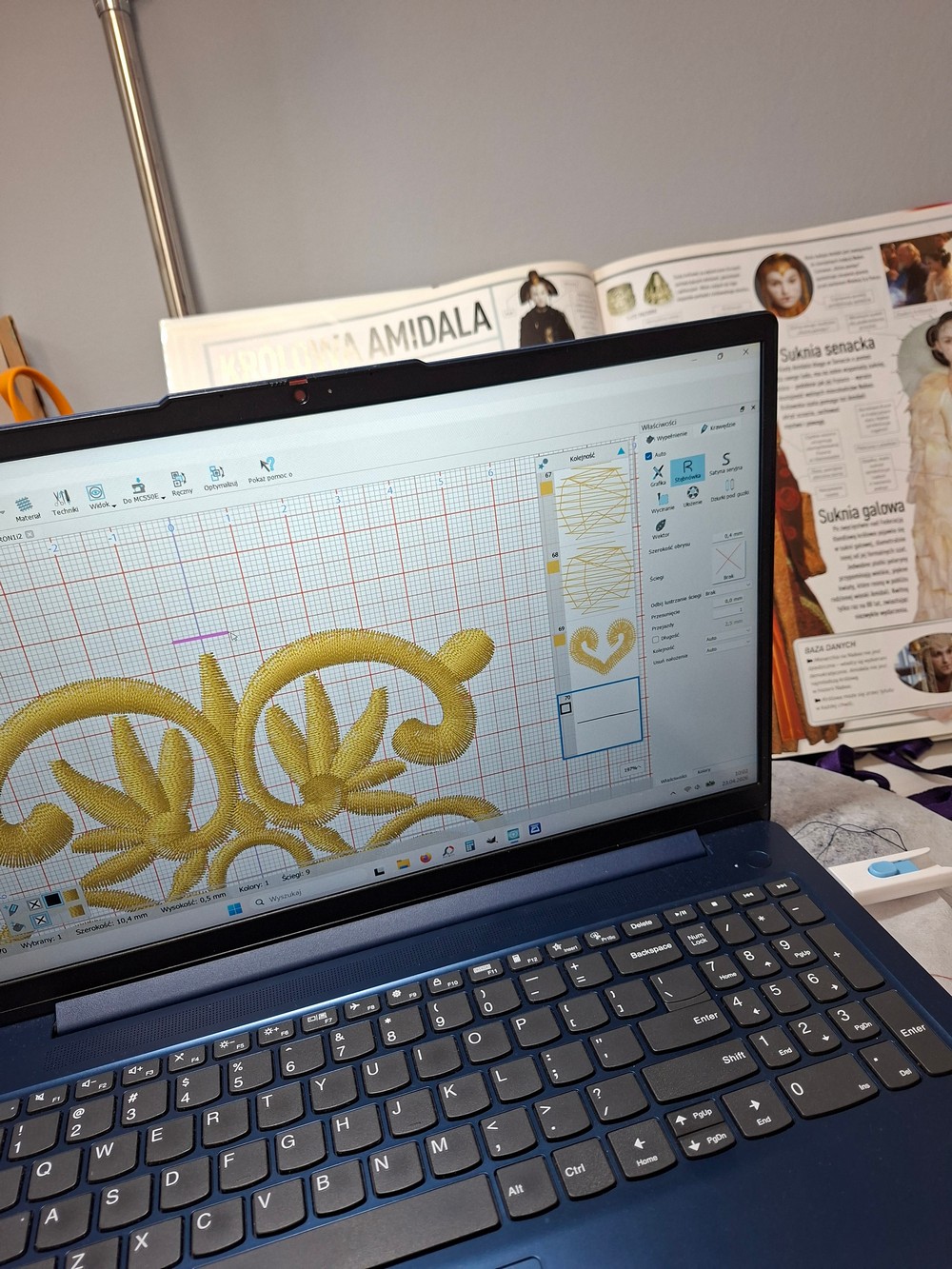
FT: You have been presenting your hand-sewn Padmé costumes at Pyrkon for ten years now. Looking back at that decade, how has your approach to reconstructing these masterpieces evolved since your very first project?

AT: The biggest change is that I’ve learned to eliminate rushing from the process. It never leads to good results because it tempts you to take shortcuts.

I’ve also discovered something that may sound a little counterintuitive: working on two or three costumes at the same time is actually more efficient. It allows me to make better use of my time instead of forcing a single project forward with compromises. If I can’t find the perfect fabric or the right beads for one costume, I simply switch to another. Quite often, materials that seem impossible to find today suddenly appear on the market a few months later, so patience really pays off.

FT: What do you think is the most important lesson you have learned about yourself or your craft throughout these last ten years of exhibiting your work at Pyrkon?

AT: I’ve learned that being independent, self-reliant, and maintaining a healthy sense of perspective is the best way to truly enjoy both my exhibition and the opportunity to share my work with others during the event.

FT: Managing the physical demands of intricate costume design while also navigating the challenges of T1D and endometriosis is an immense feat. How do you find the strength and balance to keep creating despite these health struggles?

AT: To be honest, creating these costumes is my own form of art therapy. Sewing helps me relax, clears my mind, and allows me to forget about my health problems for a while. At the same time, I get to create something that brings joy not only to me but also to the people who have supported and encouraged me throughout this journey.

That said, I can definitely feel that I have less energy each year for fast-paced, physically demanding projects. That’s one of the reasons I no longer take part in cosplay competitions—they’re simply exhausting for me. If my health were better, I’d probably also be making costumes from The Witcher and Game of Thrones, because I absolutely love the costume design in both worlds.
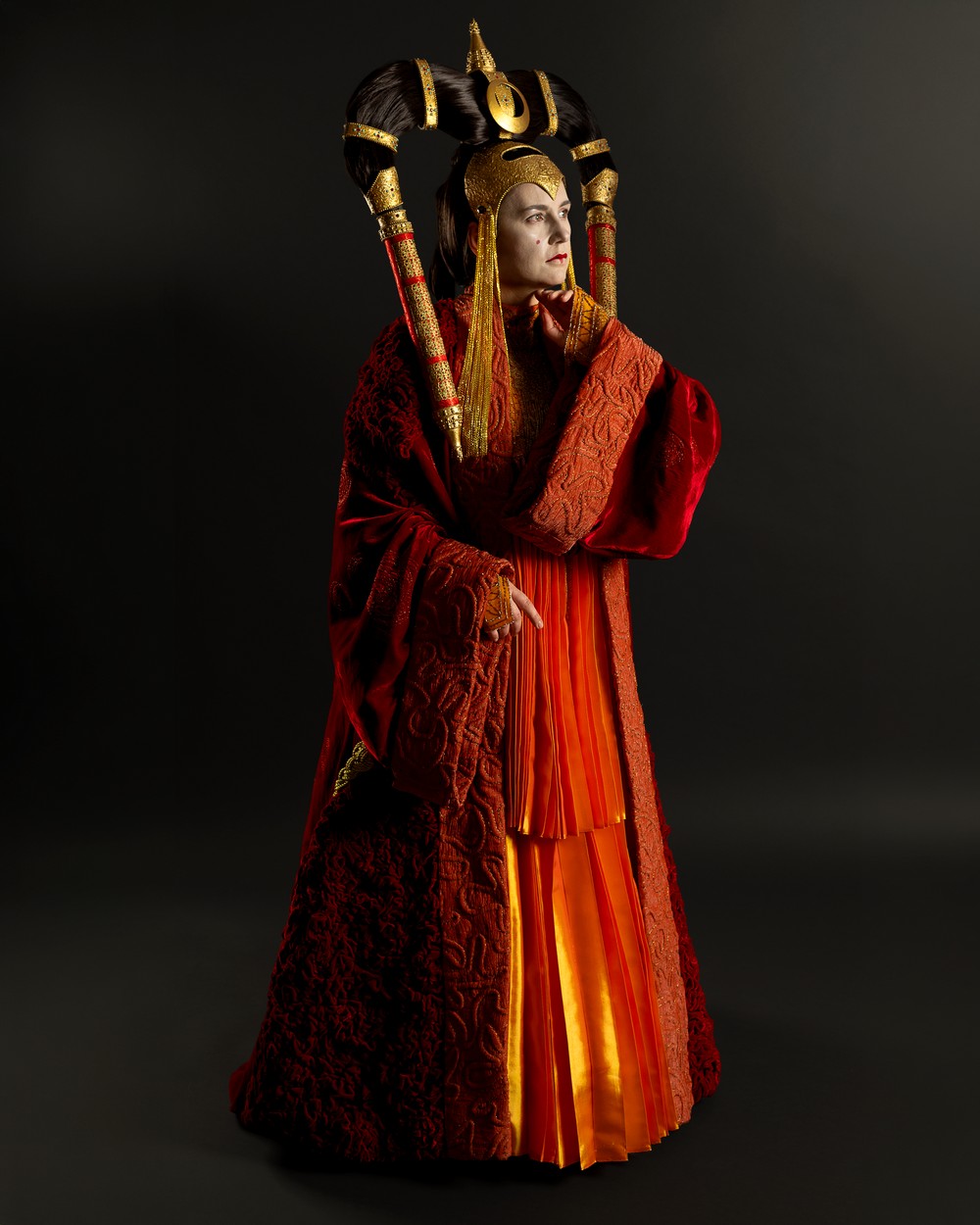
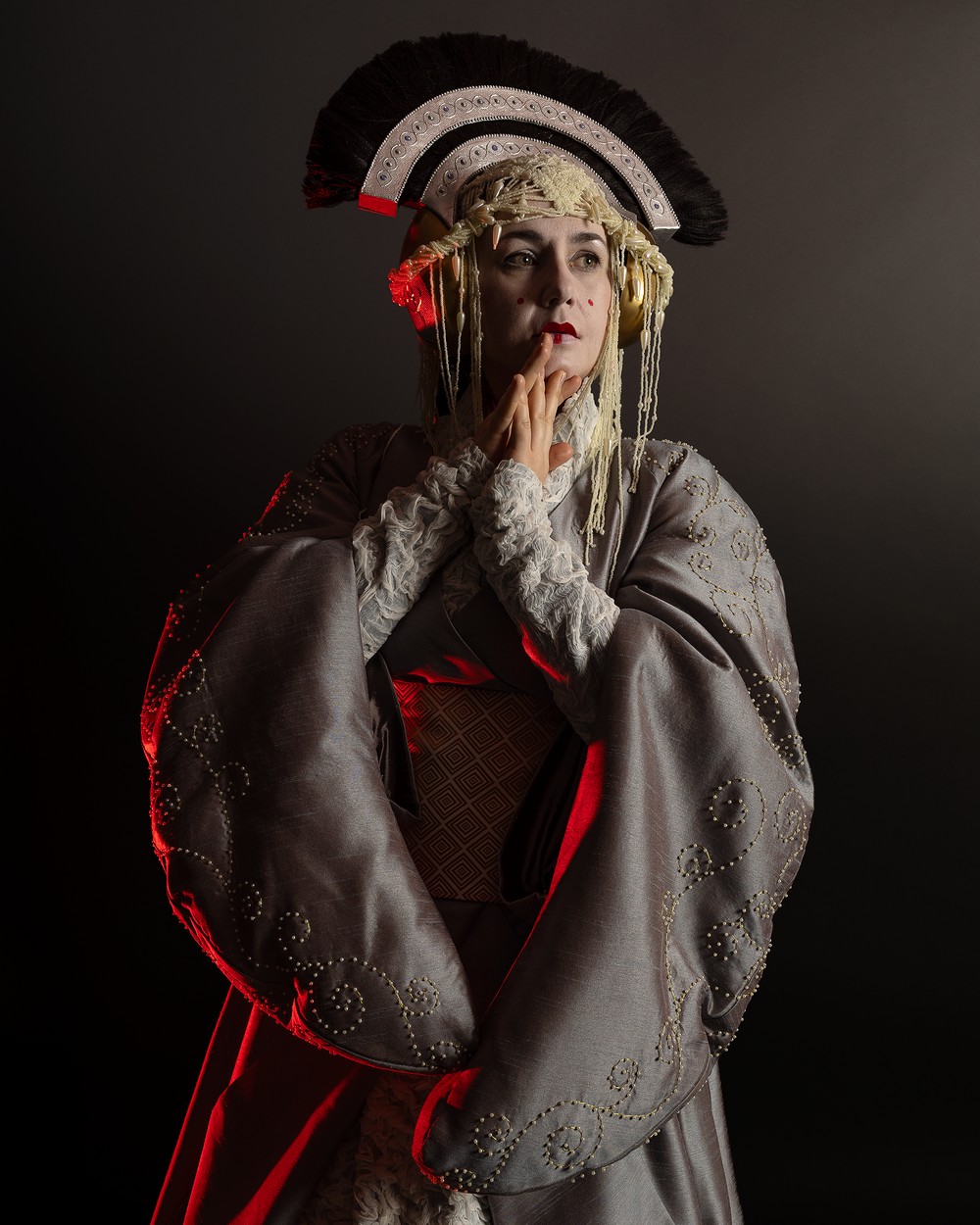
FT: Considering you have been able to recreate a large portion of Her Majesty’s wardrobe so far, do you have a specific dream costume you are currently working toward or hope to tackle next?

AT: At the moment, I’m especially drawn to Padmé’s wedding dress from Attack of the Clones and the richly embroidered burgundy velvet robe from Revenge of the Sith. I’m absolutely in love with the embroidery and decorative details on both costumes. They’re simply breathtaking pieces of design.

They also represent an enormous technical challenge, and at the moment I don’t feel quite ready to take them on. For now, they remain dream projects waiting for the right time.

FT: If you could have a conversation with Trisha Biggar, the original costume designer behind these iconic outfits, what is the one question you would ask her about her design process?

AT: I might jokingly ask where her fascination with eggs and neckties came from when designing Queen Amidala’s costumes!

But seriously, I’d probably spend most of the conversation asking technical questions—why certain construction methods were chosen, why specific fabrics were selected, and what led to those particular design decisions.

FT: I assume Trisha Biggar’s book Dressing a Galaxy: The Costumes of Star Wars is already a cornerstone of your personal library, but for other book nerds like me or for aspiring costumers who want to follow in your footsteps, what other titles would you recommend?

AT: Absolutely—it’s been one of the treasures on my bookshelf for years, sitting right next to its companion volume devoted to the original trilogy.

For anyone interested in film costume design, I wholeheartedly recommend Game of Thrones: The Costumes by Michelle Clapton. I’m also a huge fan of Savage Beauty, which showcases Alexander McQueen’s most iconic creations.
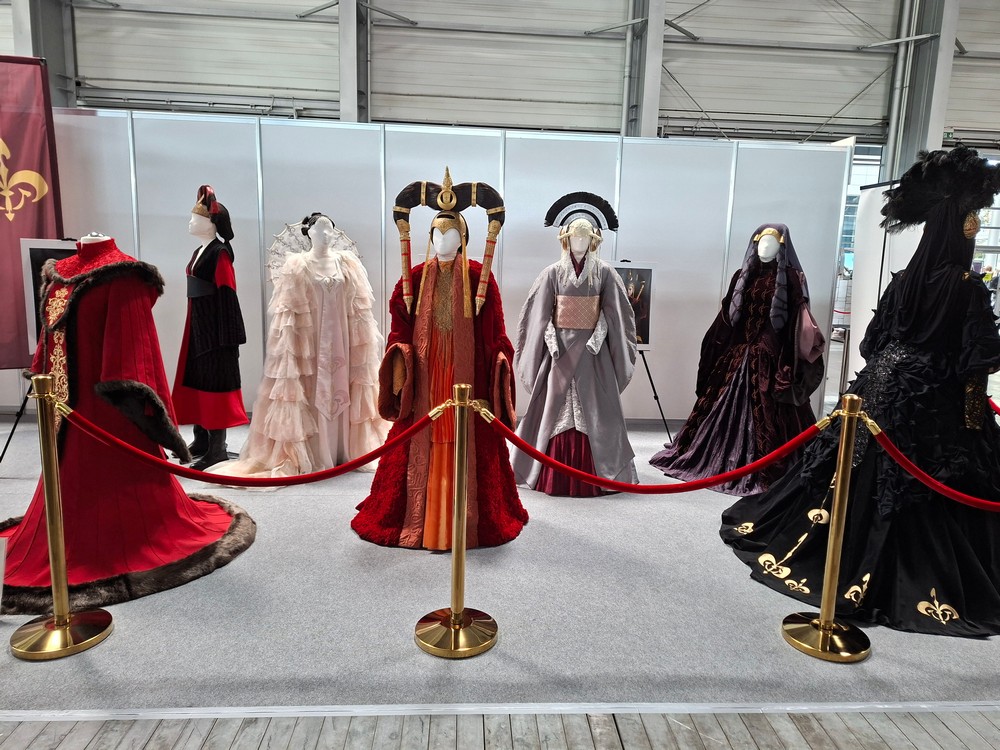
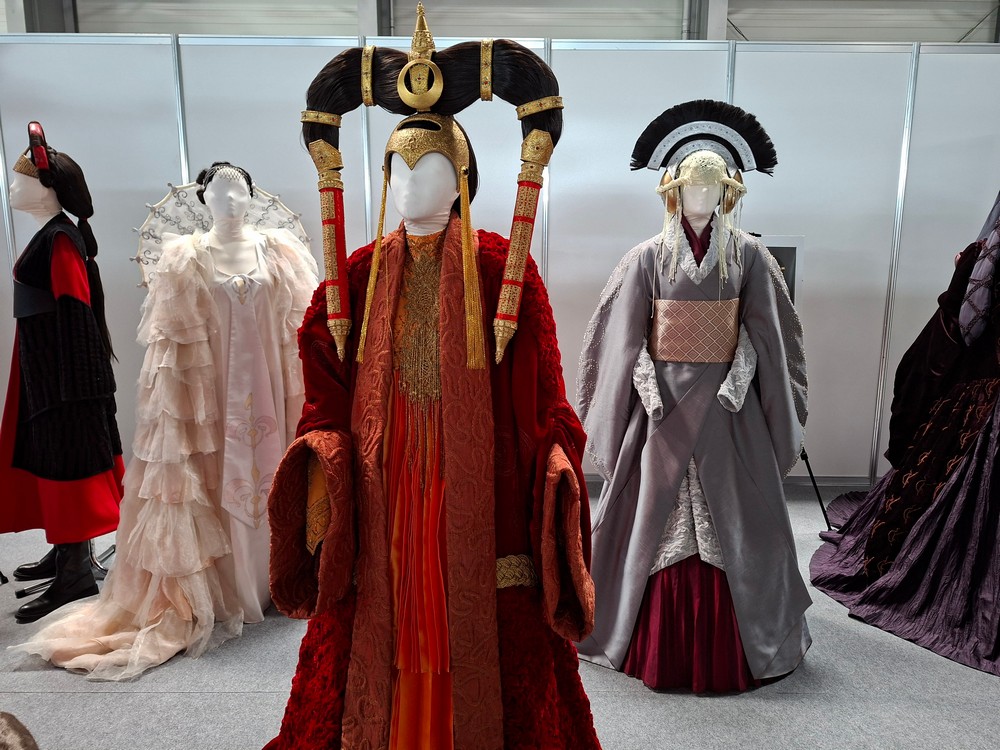
FT: Your exhibitions allow the public to see details that are easily missed on screen. How does your perspective as an artist change when you shift from being the creator wearing the costume to an exhibitor presenting them as static, gallery-quality pieces of art? As you continue your work at ATAT Costume Art, do you feel that your role has shifted from simply being a cosplayer to becoming an educator or historian of these specific, intricate designs?

AT: Definitely.

When I’m supervising my exhibition, many visitors come over to ask questions. Even if I’m wearing one of the costumes, they’re usually interested in much more than just taking a photo with me. I genuinely enjoy talking about the technical side of costume making and sharing what I’ve learned over the years.

I’m also very happy that my work helps introduce more people to Queen Amidala. When I first started exhibiting, many visitors didn’t even know who she was, and the Parade Gown was constantly mistaken for “Princess Leia.” It still happens occasionally, but thankfully much less often.

I hope that, in my own small way, I’ve helped popularize both the character and the extraordinary works of art that her costumes truly are.

Follow ATAT Costume Art online:

https://www.instagram.com/atat.costume.art/

https://www.facebook.com/ATATCostumeArt/

https://www.flickr.com/photos/atsuri/


Nenko Genov
Nenko Genovhttps://www.goodreads.com/author/list/5124820._
Nenko Genov was born in Plovdiv and has been a Star Wars fan since the early 1990s, discovering the saga through worn-out bootleg VHS tapes and the occasional imported collectible in post-communist Bulgaria. During the early years of Bulgarian Star Wars fandom he was known among local fans as “Young_Jedi” and served as a librarian, hosting a humble collection of English-language Star Wars books for local fans to borrow. (Today his collection includes most of the Star Wars titles ever published and takes up his entire attic!) Nenko holds degrees in English Studies and Film & Television Arts, worked for five years in television production and short filmmaking, and has lived in Poland since 2011, where he currently works as an educator. He also runs a long-standing Bulgarian book blog, launched in 2016, and regularly takes part in workshops, conventions and panel discussions focused on literature, film, pop culture and the creative arts. Nenko is a published writer and the author of the award-winning Bulgarian “Farewell, Diary!” trilogy (“Сбогом, дневнико!”) and the steampunk fantasy novel “The Adventures of Captain Claude and the Sky Scoundrels” (“Приключенията на капитан Клод и Небесните негодяи”). Working across Bulgarian, English and Polish, he has translated and edited a wide range of projects, and since 2022 has translated all the Bulgarian editions of Star Wars comics, manga and picture books, while also consulting on Star Wars novel translations and publishing plans. In collaboration with local publishers and with approvals from Lucasfilm and Marvel, he also writes the forewords for Bulgarian editions of Star Wars comics.
- Advertisement -
- Advertisement -
- Advertisement -