



One of the most highly-regarded of all Star Wars non-fiction releases, 2011’s ‘Star Wars: The Blueprints’ by Jonathan Rinzler delved into the world of the technical, bringing to the page details of designs and dimensions that ushered classic vehicles and locations from the mind of George Lucas to celluloid reality, through the pencils, markers, pens and brushes of Concept Designers including Ralph McQuarrie and Doug Chiang, the Art Departments and Production Designs of John Barry, Norman Reynolds and Gavin Bocquet and onwards, to the construction departments and beyond, to cinematic immortality.
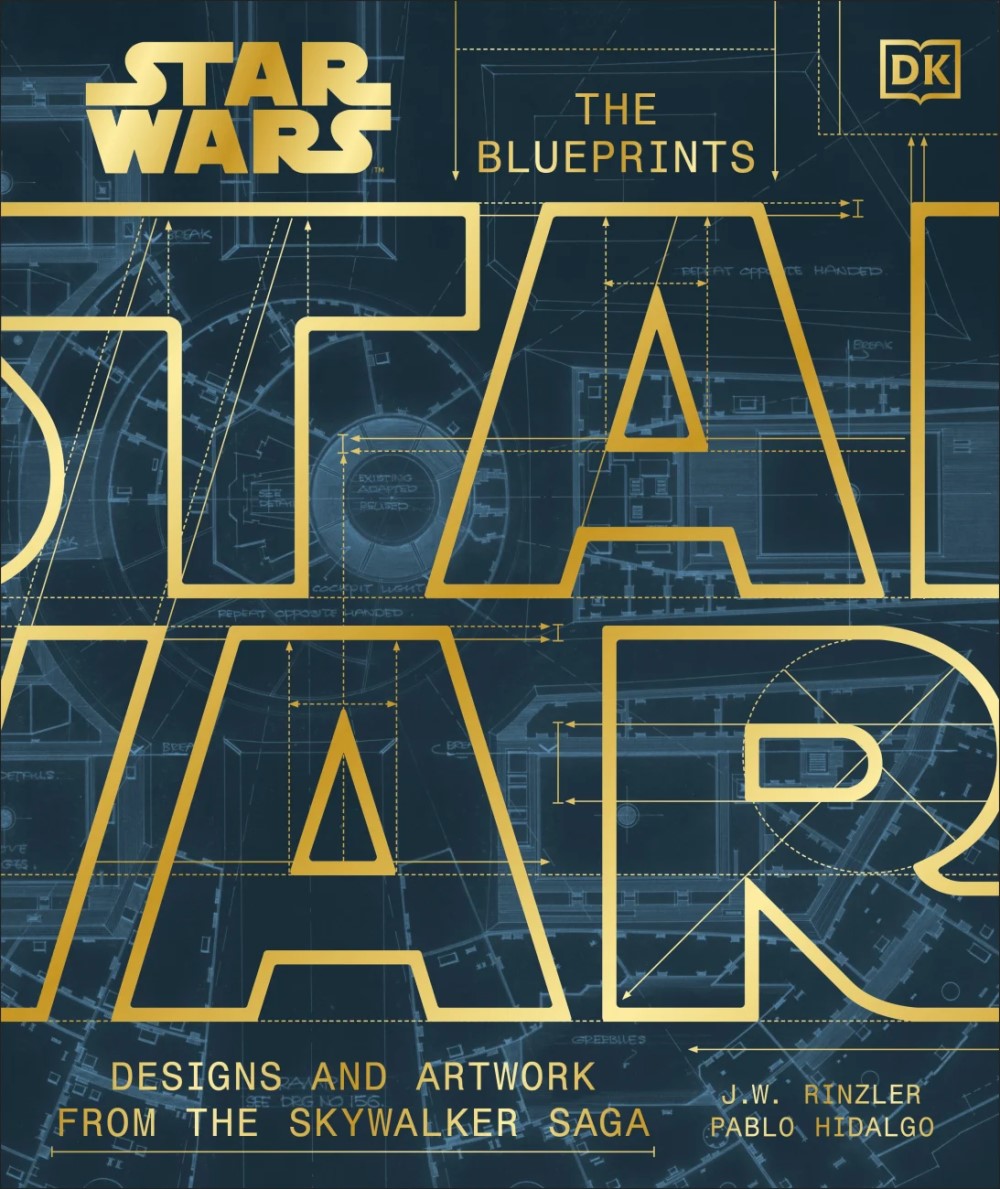 Now, four years after the untimely passing of Rinzler, ‘Star Wars: The Blueprints’ has been revisited and expanded with ‘Star Wars: The Blueprints: The Skywalker Saga’, which not only takes us inside the blueprints and previz of Star Wars: The Force Awakens (2015), Star Wars: The Last Jedi (2017) and Star Wars: The Rise of Skywalker (2019) but brings the most trusted of hands to the project in Pablo Hidalgo, Lucasfilm’s lore master who’s role was to allow us a fresh look at the creation of the sequel trilogy sets and ships while sympathetically laying it out to smoothly transition from Rinzler’s original into this new, expanded edition. With his own enviable library of publications behind him, it was a task he didn’t take lightly, no only following on from Rinzler’s work but also accounting for the changes in film production in the decade between the release of Star Wars: Revenge of the Sith (2005) and The Force Awakens.
“I knew it had a lot to live up to given how great the original edition was,” explains Hidalgo. “Early on, DK had asked me to take a look to see what kind of illustrative work there was available, to see if in fact there was a worthy trove of technical illustrations to present the sequel trilogy. Around that time, I had gotten access to a lot of production assets that I had not previously seen during the making of those films, and was happy to report back that we have hundreds upon hundreds of illustrations available for a book. Given that, as well as all the contemporaneous interview work that had been done during production, I felt we had enough research material to proceed.”
With that comforting knowledge in their back pockets, publishers DK and Hidalgo could confidently progress, with the aim of keeping as much of the original Blueprints as possible and presenting new designs in as sympathetic a way as they could.
“Fittingly, for a book called Blueprints, a lot of the brief was dictated by the schematics of the book,” he explains. “An early exercise I did was deconstruct a PDF of the first edition and see how much we could condense or rearrange the earlier spreads to gain some page-count for newer material. I then pitched how many illustrations we could potentially use for the sequel subject matter, and they laid it out accordingly. It was all very collaborative, back and forth.
Interestingly, very little new information had come to light since the 2011 releaser of the original book, testament to the investigative skills of Rinzler who had scoured the Lucasfilm Archives to not only best present the blueprints themselves, but also tell the story of the UK production art departments, who as Rinzler himself observed, “never really had their moment in the sun.”
“Having been fortunate to visit a few movie sets during my time at Lucasfilm, I cannot understate how impressive it is to walk onto a fully built-out environment. The planning, ingenuity, and creativity that goes into it is amazing, and that’s the result of a lot of people.
Spotlighting some of those people and crediting the artists when possible was important in a book like this.” He continues. “The only body text change for the reprinted material was the shortening some of the introductions for space. There was the use of a The Empire Strikes Back Special Edition image in the Imperial shuttle entry that was mislabeled and updated for accuracy but aside from that, we endeavoured to preserve Jonathan’s book as much as possible.”
Now the original portion of the book was where it needed to be for this new edition, Hidalgo could push on with the sequel trilogy sections, and that brought about its own revelations, as he explains.
“An underappreciated part of the “return to practical” narrative when it comes to set-building and effects work on The Force Awakens is just how high-tech and digital that practical work is. Very few of these technical illustrations are hand-illustrated, and the work they produce includes a lot of digital-machining technologies to plan, design and print components of these builds. It’s not an either-or reality. Digital and practical are not opposites.”
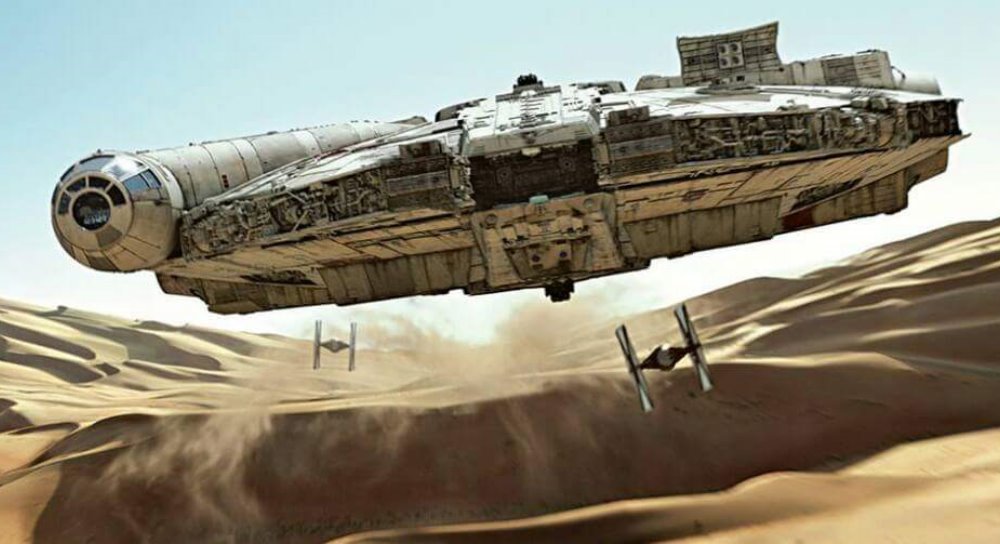
While the sequels gave us numerous new worlds and vehicles to marvel at, one classic starship was very much at the center of the trilogy: the Millennium Falcon. Episode VII Art Director Mark Harris delved deep into the dimensions of the Falcon, ones that changed even within (in the case of The Empire Strikes Back) the running time of the same film.
“The impossibility of the Millennium Falcon interior has now become as much part of its character as its speed and battered appearance. It’s been part of it since the gunport sequence in A New Hope, and because it works so well on screen, we give it a pass. Movie magic. The ship is such a puzzle.”
One of the most infamous swerves Lucasfilm pulled on fans during production – purely to protect the surprises that they hoped to deliver to the public – was to refer to Revenge of the Jedi as ‘Blue Harvest: Horror Beyond Imagination’. With an inquisitive fandom, one that only grew in the age of the internet and online communities, the need to protect character, vehicle and location names grew, something ‘Star Wars: The Blueprints: The Skywalker Saga’ touches on as Hidalgo explains.
“It varies from show to show, but it’s usually the producer and their teams that come up with sometimes very silly nicknames based on a unified theme. It’s all (in theory) for production security in documentation, so that if, say, a call sheet wanders away from set, it’ll list that they shot Goldilocks and Grizzly in the 100-Acre Woods for Space Bear rather than Rey and Kylo on the Mega Destroyer, and hopefully not draw that much attention.” Some of that naming responsibility fell to Hidalgo during the making of a long-awaited Disney Plus series. “I did a bit of the code-naming on Kenobi, where all the code-names were Canada-based because Deb Chow and I are from Canada. The mercenaries were “Manitobans,” and I’m from Manitoba.”
 With his passing in 2021, J.W. Rinzler left behind an enviable legacy of literature, with must-have releases including ‘The Making of Star Wars’, ‘The Making of The Empire Strikes Back’, ‘The Making of Return of the Jedi’ and ‘The Complete Making of Indiana Jones The Definitive Story Behind All Four Films’ essential additions to any Lucasfilm fans bookshelf.
Hidalgo was determined to ensure that ‘Star Wars: The Blueprints: The Skywalker Saga’ and its updated chapters were faithful to his late friend’s high standards.
“As I said in the foreword it was such a loss when Jonathan passed, and it would take many writers to equal his contributions to Star Wars. I of course wish he could have penned this update and was certainly honored to be able to continue his work in this way.”