


Between 1999 and 2009 Lightsabre.co.uk brought news, fanfic, podcasts and much, much more to the masses. Our twenty-first guest was one of British cinemas true greats, a Grand Master of the British Society of Cinematographers and cinematographer of Star Wars – Gil Taylor.
Lightsabre – Gil, welcome to Lightsabre.
GT – Thank you Mark, its a great pleasure to talk to you.
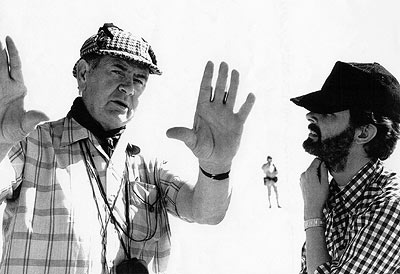 Lightsabre – Over the span of your career you worked with almost every great director in cinema history, including Alfred Hitchcock, Stanley Kubrick, Roman Polanski, J. Lee Thompson, Delbert Mann, Curtis Hanson, Roy Boulting and Richard Donner. But perhaps you are best remembered as the man who set the look of Star Wars. How do you feel about that, now your career is at an end?
GT – I am most happy to be remembered as the man who set the look for Star Wars. I wanted to give Star Wars a unique visual style that would distinguish it from other films in the science fiction genre. I wanted Star Wars to have clarity because I think space isn’t out of focus, also I was mindful that there was an enormous amount of process work to be done in America with Dykstra after we had finished shooting in England, and a crisp result would help this process. The cinematography was specially designed by myself so that these huge dark spacecraft could be illuminated to contain all the action. I literally tore the sets to pieces and inserted huge quartz like panels which would give George Lucas freedom to shoot in all directions quickly without re-lighting. My special light screens used 7000 photofloods on large dimming apparatus. This powerful pattern made a huge impression on the audience.
I was honoured to be awarded the Golden Globe from the American Academy of Science Fiction Fantasy and Horror Films for 1977 for my outstanding photography of Star Wars. I also received a BSC award. Although my career is at its end, I still communicate with Star Wars fans from all over the world with autographs and photographs. In addition to this I have my paintings of my impressions of Star Wars.
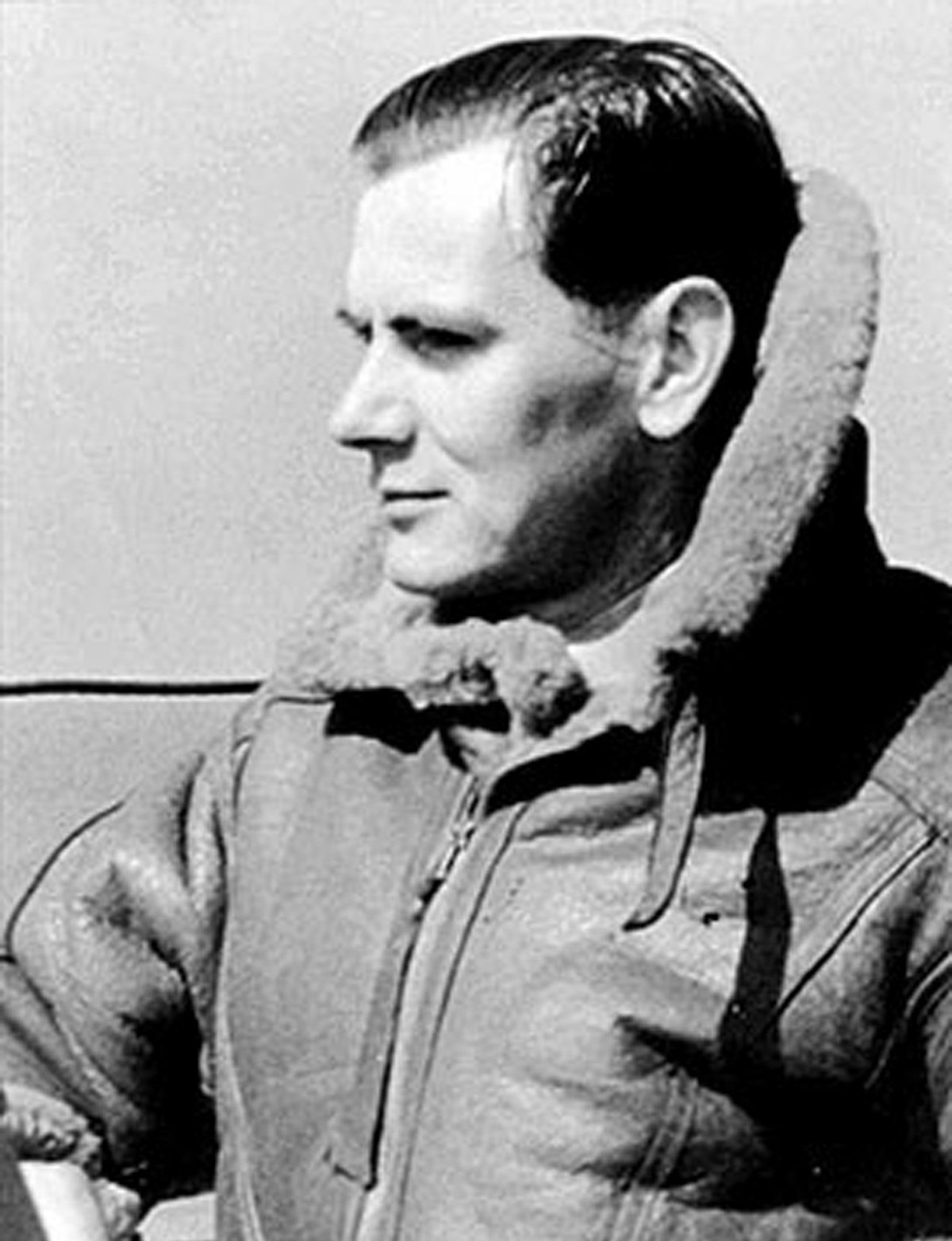
Lightsabre – During the war you serviced as a G. D. Officer in the Royal Air Force Volunteer Reserves, and became an Operational Cameraman as well as shooting cine film of bombing raids and taking a unit to the front. What are your memories of those days, and how did they prepare you for your career in film?
 GT – My wartime experience were incredible, particularly from when I joined a flying operational unit as an air gunner on a Lancaster bomber to enable me to use the first cine cameras on a night operation over Germany. This was requested by Winston Churchill, and my material was delivered to lO. Downing Street for him to view. He was keen for the public to see what our lads were doing. I did ten of these operations including Cologne and Dresden. On the opening of the Second Front, I took a small operational unit of 3 cameramen to direct and cover every kind of news story including the unforgettable concentration camps, Belson amongst them, and up to meet the Russians and the Armistice.
You ask how these experiences helped to prepare me for my film career. Well, they certainly made me tougher, and inspired me to become a Director of Cinematography.
Lightsabre – What has it been like to be a part of the Star Wars phenomenon?
GT – Exciting and gratifying to still be written to and asked for autographs 29 years after making the film.
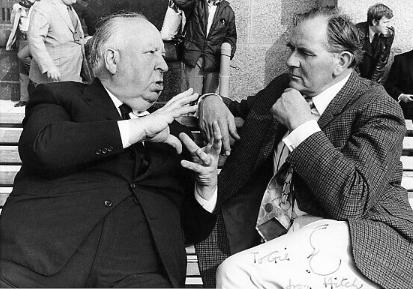 Lightsabre – What memories do you have of being on set back in 1976? How did Lucas, then still a young director, cope with the huge pressure of a Hollywood production, and what advice were you able to impart?
GT – We had great fun and much laughter on set, as the actors took their dialogue apart and George put it back together again! This was a daily happening. Lucas was under enormous pressure from 20th Century Fox the whole time. Myself and the British crew gave him their full support for the duration of the film.
Lightsabre – You worked as cinematographer on Stanley Kubrick’s Doctor Strangelove. What were your impressions of Kubrick?
GT – Kubrick was a frustrated cameraman with immense talent. I sometimes felt as if his hand was on the brush and I was the paint coming off it!
Lightsabre – You had the pleasure of being a part of the Beatles phenomenon when you worked on A Hard Days Night. Looking back at your career, that was equally as iconic as being a part of Star Wars. Was it that film that ignited your love of art?
GT – Yes, it had a huge influence on me. I enjoyed every moment of making the film, their music was inspirational.
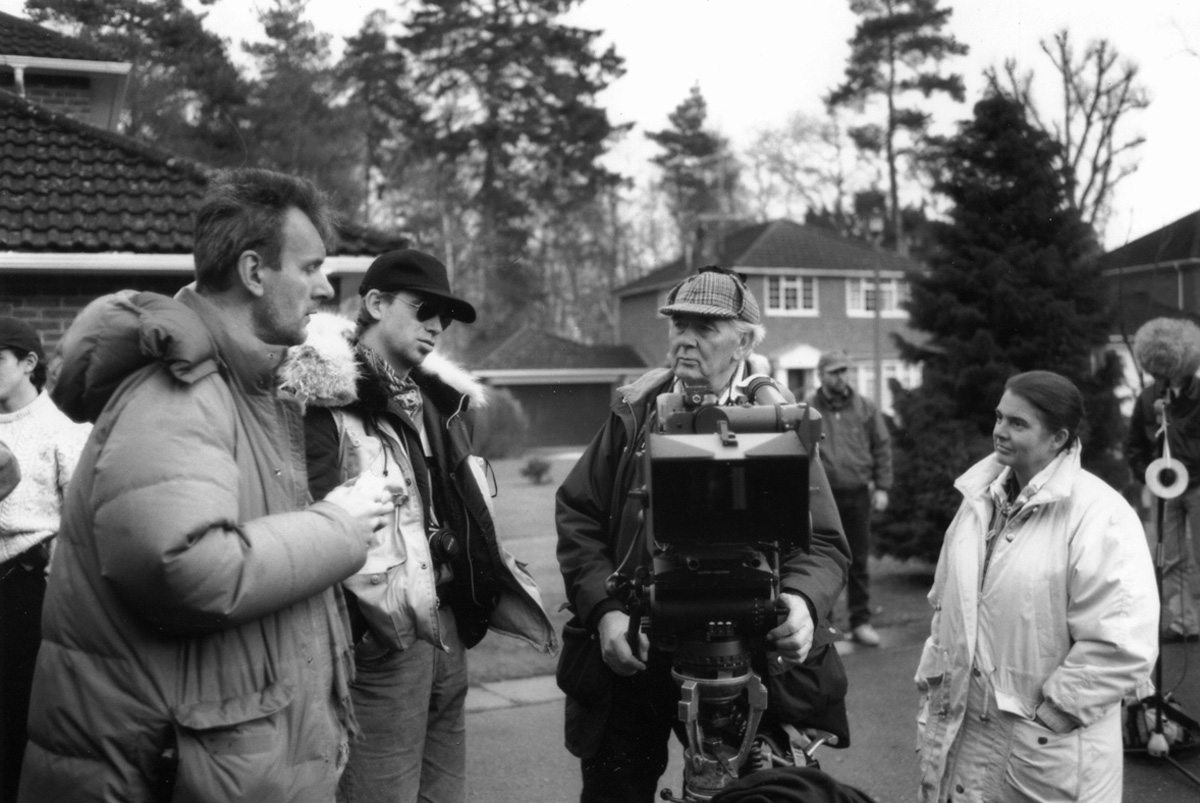 Lightsabre – What would you change about your Star Wars experience if you could go back and do it again?
GT – Nothing. It was a great experience.
Lightsabre – You gave Star Wars a very specific `look’ that filtered through to The Empire Strikes Back and Return of the Jedi. In these early days of digital cinema what are your thoughts? Do you feel like Spielberg, that you want the veneer of the emulsion on a print, or do you feel like Lucas, ready to enter a new realm of presentation?
GT – As I have not shot a film using the digital process, I feel I am not able to comment on this, but I am sure I would share the same observations as Mr. Spielberg.
Lightsabre – You worked on The Dambusters, a film that years later would influence Lucas when he was preparing Star Wars. Given that you were involved in so many iconic films, how did you chose your projects?
GT – The Dambusters bouncing bomb runs over the Dams and their exits I thought were similar to the Star Wars requirements, so I suggested that Lucas should acquire a tape of the film. As to how I chose my film projects, I was most fortunate in that the offers of the films I shot were always made to me.
Lightsabre – Now you are retired you have shifted your focus onto your artwork, concentrating largely on Beatles and Star Wars pieces. How much satisfaction does this bring you?
 GT – A very small part of my artwork was concentrated on film art. I am an impressionist painter of landscapes, with a great love for horses and farm animals. I love painting because I become completely absorbed in what I am doing which helps compensate for not making films!
Lightsabre – A quick question about our site. Any comments?
GT – I think (it) is a splendid site with a wide variety of interest and knowledge.
Lightsabre – It’s been a great interview, and thanks for being our guest. Just one final question. John, Paul, George and Ringo are trapped on the Death Star and Stormtroopers are chasing them down a corridor. Suddenly they are trapped in a dead end. Knowing the lads as you did, how would they escape?
GT – I think the boys would probably have called for R2!
This interview was originally posted on lightsabre.co.uk on 24th July 2005.