


Lucasfilm celebrate Mike Blanchard on his retirement

- Advertisement -
- Advertisement -

Mike Blanchard, Lucasfilm’s vice president of post-production has retired after almost three decades at the company and Lucasfilm take a look at those action-packed years and the projects he worked on.
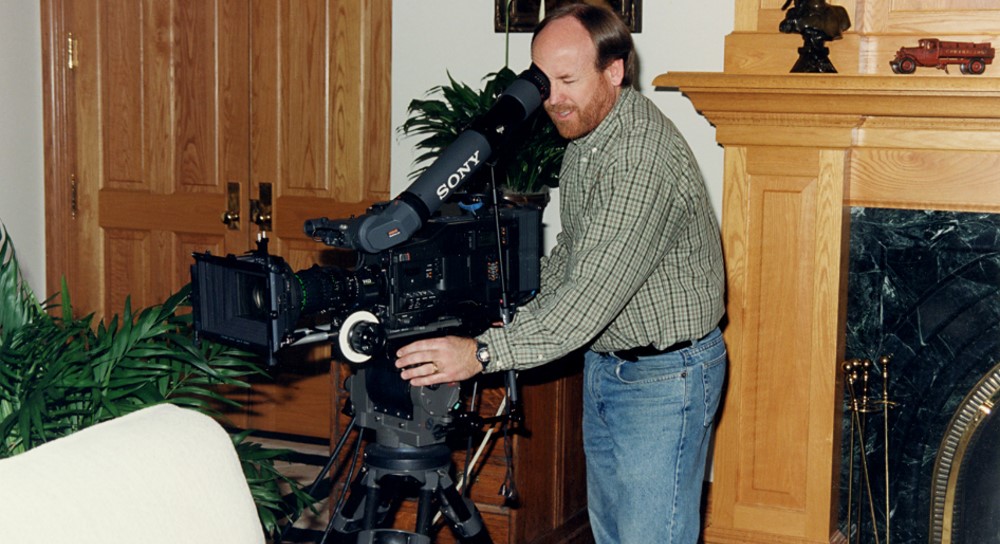
Beginning with the Star Wars Special Edition (1997) releases, then Star Wars: The Phantom Menace (1999) and Star Wars: Attack of the Clones (2002) as the first all-digital blockbuster, Blanchard manned the front lines (read more about his work on Clones specifically at StarWars.com). He haunted industry conventions to recruit partner companies to help develop individual tools. Among countless projects, he collaborated with Sony, Panavision, and the Lucasfilm onset crew to devise a new camera system and workflow that would soon become standard-operating-procedure on movie productions around the world. Blanchard partnered with his former colleagues at ILM to enhance their digital dailies process and helped create fully digital masters of The Phantom Menace to be screened with some of the first DLP cinema projectors made by Texas Instruments.

From one new challenge to the next, Blanchard had little time to reflect on it all. Looking back now, he explains that what got him through those pioneering days was “loyalty” to George Lucas. “Don’t get me wrong. It was hard,” he says. “We had a small team. What George asked for was difficult because he was so far ahead of everything. But there was no confusion about what we were supposed to do. We had a clarity of purpose that came straight from George. We didn’t want to let him down. For me that was it. Once we knew what he wanted, we had to do everything we could to get it done.”

Throughout the intrepid adventure that was the prequel trilogy, Blanchard remained faithful but cautious, with the ever-present thought that something would go irretrievably wrong and foil Lucas’ vision. But their tireless efforts paid off, and Lucas’ example continues to inspire the diverse approaches to filmmaking methods today.

SourceLucasfilm
Mark Newbold
Mark Newbold
Exploring the galaxy since 1978, Mark wrote his first fan fiction in '81 and been a presence online since his first webpage Fanta War in 1996. He currently contributes to ILM.com and SkywalkerSound.com, having previously written for Star Wars Insider, StarWars.com, Star Wars Encyclopedia, Build The Millennium Falcon, Starburst Magazine, Geeky Monkey, TV Film Memorabilia and Model and Collectors Mart. He is a four-time Star Wars Celebration Stage host (the only podcaster to have appeared on every Celebration podcast stage since it began in 2015), the Daily Content Manager of Fantha Tracks and the co-host of Making Tracks, Canon Fodder and Start Your Engines on Fantha Tracks Radio.
- Advertisement -
- Advertisement -

Mike Blanchard, Lucasfilm’s vice president of post-production has retired after almost three decades at the company and Lucasfilm take a look at those action-packed years and the projects he worked on.

Beginning with the Star Wars Special Edition (1997) releases, then Star Wars: The Phantom Menace (1999) and Star Wars: Attack of the Clones (2002) as the first all-digital blockbuster, Blanchard manned the front lines (read more about his work on Clones specifically at StarWars.com). He haunted industry conventions to recruit partner companies to help develop individual tools. Among countless projects, he collaborated with Sony, Panavision, and the Lucasfilm onset crew to devise a new camera system and workflow that would soon become standard-operating-procedure on movie productions around the world. Blanchard partnered with his former colleagues at ILM to enhance their digital dailies process and helped create fully digital masters of The Phantom Menace to be screened with some of the first DLP cinema projectors made by Texas Instruments.

From one new challenge to the next, Blanchard had little time to reflect on it all. Looking back now, he explains that what got him through those pioneering days was “loyalty” to George Lucas. “Don’t get me wrong. It was hard,” he says. “We had a small team. What George asked for was difficult because he was so far ahead of everything. But there was no confusion about what we were supposed to do. We had a clarity of purpose that came straight from George. We didn’t want to let him down. For me that was it. Once we knew what he wanted, we had to do everything we could to get it done.”

Throughout the intrepid adventure that was the prequel trilogy, Blanchard remained faithful but cautious, with the ever-present thought that something would go irretrievably wrong and foil Lucas’ vision. But their tireless efforts paid off, and Lucas’ example continues to inspire the diverse approaches to filmmaking methods today.

SourceLucasfilm
Mark Newbold
Mark Newbold
Exploring the galaxy since 1978, Mark wrote his first fan fiction in '81 and been a presence online since his first webpage Fanta War in 1996. He currently contributes to ILM.com and SkywalkerSound.com, having previously written for Star Wars Insider, StarWars.com, Star Wars Encyclopedia, Build The Millennium Falcon, Starburst Magazine, Geeky Monkey, TV Film Memorabilia and Model and Collectors Mart. He is a four-time Star Wars Celebration Stage host (the only podcaster to have appeared on every Celebration podcast stage since it began in 2015), the Daily Content Manager of Fantha Tracks and the co-host of Making Tracks, Canon Fodder and Start Your Engines on Fantha Tracks Radio.
- Advertisement -
- Advertisement -
- Advertisement -
Close Popup
Privacy Settings saved!
Privacy Settings

When you visit any web site, it may store or retrieve information on your browser, mostly in the form of cookies. Control your personal Cookie Services here.

These cookies are necessary for the website to function and cannot be switched off in our systems.

Technical Cookies
In order to use this website we use the following technically required cookies
  • wordpress_test_cookie
  • wordpress_logged_in_
  • wordpress_sec

Google Adsense
We use Google AdSense to show online advertisements on our website.
  • _tlc
  • _tli
  • _tlp
  • _tlv
  • DSID
  • id
  • IDE

One Signal
For performance reasons we use OneSignal as a notification service.  This saves a number of cookies in order to apply notifcation services on a per-client basis. These cookies are strictly necessary for OneSignal's notification features.  It is essential to the service that these are not turned off.
  • _OneSignal_session
  • __cfduid
  • _ga
  • _gid

Affiliate Links
Fantha Tracks is reader-supported.  When you buy through links on our site, we may earn an affiliate commission.

Media Net
We use Media Net to show online advertisements on our website.
  • SESS#

Decline all Services
Save
Accept all Services
Mastodon