
How the galaxy owes a debt to Star Wars: The Roleplaying Game

- Advertisement -
- Advertisement -

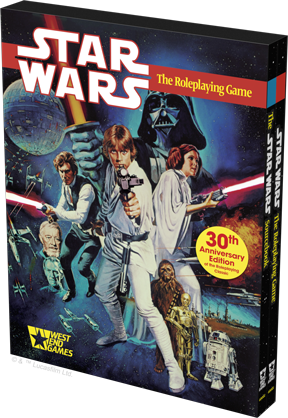
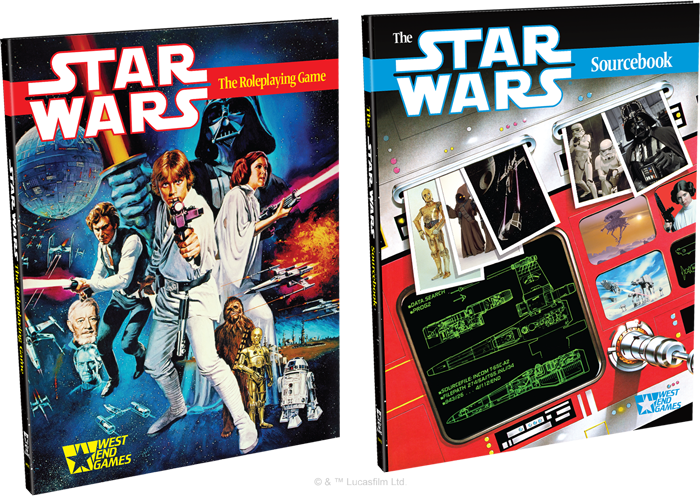
Back in 1987, at the start of what is now often referred to as The Dark Times, a number of Star Wars staples were coming to a close. Marvel had ended their run of their record-breaking comic, while Kenner were done with their childhood-defining line of 3 3/4″ figures, and though this indicated the start of a barren period for Star Wars it was actually far from it. Star Tours – The Adventures Continue would open on 9th January at Disneyland and later that year Star Wars: The Roleplaying Game launched, expanding upon and refining the D6 system developed for West End Games Ghostbusters Roleplaying Game and bringing an incredible amount of detail to a galaxy that until then still referred to Ithorians a Hammerheads and Aqualish as Walrus Men.
So how did “Star Wars” get its vocabulary? Why do we know that Hammerheads are really called Ithorians and that Snaggletooth is really a Snivvian named Zutton? You know what a Twi’lek is, right? And you know that the Imperial Center is Coruscant?

Well, the reason is simple: The 1987 “Star Wars: The Roleplaying Game” from West End Games.

1987 was the 10th anniversary of “Star Wars,” and West End Games had picked up the license to make a roleplaying game set in a galaxy far, far away. Bill Slavicsek was then an editor for West End Games and was very upfront with Lucasfilm. He said, “We told them that to do a role-playing game, we are going to have to expand your world, and are you okay with that? They said, yes, so long as they got to approve it.”

Back in 2012 our Roleplay Editor Jonathan Hicks interviewed Bill Slavicsek, where he discussed how he came to the position.

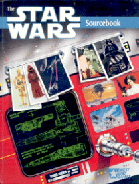
I was a self-proclaimed (at the time) expert on the Star Wars universe. I saw the original film when it debuted, and actually went back to the theater thirty-eight times that summer to see the movie again and again. I like to say that 1977 was a formative year for me. That was the year that Star Wars, Dungeons & Dragons, and The Sword of Shannara ignited my imagination. Who knew at the time that those imagination igniters would turn into an amazing career? So, when fact-checking and lore questions began to come up around the office, I usually knew the answer or knew where to look to find it. Remember, this was before the Internet, when research had to be done by scouring back issues of Starlog, flipping pages of novels, and forwarding and rewinding the VCR until the tape snapped. But my knowledge paid off, and soon I was assigned as the co-designer of The Star Wars Sourcebook. That tome full of back story and world material earned me my first Origins Award for game design and set the stage for the expanded Star Wars universe that would begin to emerge a few years later.

There were a lot of firsts in those early Star Wars RPG products. They were the first RPG products to incorporate color printing. They were the first products to add to the Star Wars mythos since the original trilogy had wrapped up three years earlier. And they were the first Star Wars products to give names and back stories to the various aliens that inhabited the background of the films. Suddenly Hammer Head was an Ithorian, Bib Fortuna was a Twi’lek, and Greedo was a Rodian. The universe was more real. Later, novelists and comic book writers and action figure makers and creators of the animated series would use the names I had come up with. But at the time, all I was trying to do was add context and believability to the universe we all loved so much.

SourceSlashfilm
Mark Newbold
Mark Newbold
Exploring the galaxy since 1978, Mark wrote his first fan fiction in '81 and been a presence online since his first webpage Fanta War in 1996. He currently contributes to ILM.com and SkywalkerSound.com, having previously written for Star Wars Insider, StarWars.com, Star Wars Encyclopedia, Build The Millennium Falcon, Starburst Magazine, Geeky Monkey, TV Film Memorabilia and Model and Collectors Mart. He is a four-time Star Wars Celebration Stage host (the only podcaster to have appeared on every Celebration podcast stage since it began in 2015), the Daily Content Manager of Fantha Tracks and the co-host of Making Tracks, Canon Fodder and Start Your Engines on Fantha Tracks Radio.
- Advertisement -
- Advertisement -

Back in 1987, at the start of what is now often referred to as The Dark Times, a number of Star Wars staples were coming to a close. Marvel had ended their run of their record-breaking comic, while Kenner were done with their childhood-defining line of 3 3/4″ figures, and though this indicated the start of a barren period for Star Wars it was actually far from it. Star Tours – The Adventures Continue would open on 9th January at Disneyland and later that year Star Wars: The Roleplaying Game launched, expanding upon and refining the D6 system developed for West End Games Ghostbusters Roleplaying Game and bringing an incredible amount of detail to a galaxy that until then still referred to Ithorians a Hammerheads and Aqualish as Walrus Men.
So how did “Star Wars” get its vocabulary? Why do we know that Hammerheads are really called Ithorians and that Snaggletooth is really a Snivvian named Zutton? You know what a Twi’lek is, right? And you know that the Imperial Center is Coruscant?

Well, the reason is simple: The 1987 “Star Wars: The Roleplaying Game” from West End Games.

1987 was the 10th anniversary of “Star Wars,” and West End Games had picked up the license to make a roleplaying game set in a galaxy far, far away. Bill Slavicsek was then an editor for West End Games and was very upfront with Lucasfilm. He said, “We told them that to do a role-playing game, we are going to have to expand your world, and are you okay with that? They said, yes, so long as they got to approve it.”

Back in 2012 our Roleplay Editor Jonathan Hicks interviewed Bill Slavicsek, where he discussed how he came to the position.

I was a self-proclaimed (at the time) expert on the Star Wars universe. I saw the original film when it debuted, and actually went back to the theater thirty-eight times that summer to see the movie again and again. I like to say that 1977 was a formative year for me. That was the year that Star Wars, Dungeons & Dragons, and The Sword of Shannara ignited my imagination. Who knew at the time that those imagination igniters would turn into an amazing career? So, when fact-checking and lore questions began to come up around the office, I usually knew the answer or knew where to look to find it. Remember, this was before the Internet, when research had to be done by scouring back issues of Starlog, flipping pages of novels, and forwarding and rewinding the VCR until the tape snapped. But my knowledge paid off, and soon I was assigned as the co-designer of The Star Wars Sourcebook. That tome full of back story and world material earned me my first Origins Award for game design and set the stage for the expanded Star Wars universe that would begin to emerge a few years later.

There were a lot of firsts in those early Star Wars RPG products. They were the first RPG products to incorporate color printing. They were the first products to add to the Star Wars mythos since the original trilogy had wrapped up three years earlier. And they were the first Star Wars products to give names and back stories to the various aliens that inhabited the background of the films. Suddenly Hammer Head was an Ithorian, Bib Fortuna was a Twi’lek, and Greedo was a Rodian. The universe was more real. Later, novelists and comic book writers and action figure makers and creators of the animated series would use the names I had come up with. But at the time, all I was trying to do was add context and believability to the universe we all loved so much.

SourceSlashfilm
Mark Newbold
Mark Newbold
Exploring the galaxy since 1978, Mark wrote his first fan fiction in '81 and been a presence online since his first webpage Fanta War in 1996. He currently contributes to ILM.com and SkywalkerSound.com, having previously written for Star Wars Insider, StarWars.com, Star Wars Encyclopedia, Build The Millennium Falcon, Starburst Magazine, Geeky Monkey, TV Film Memorabilia and Model and Collectors Mart. He is a four-time Star Wars Celebration Stage host (the only podcaster to have appeared on every Celebration podcast stage since it began in 2015), the Daily Content Manager of Fantha Tracks and the co-host of Making Tracks, Canon Fodder and Start Your Engines on Fantha Tracks Radio.
- Advertisement -
- Advertisement -
- Advertisement -