

The Star Wars saga is generously sprinkled with drama fueled by space siblings. Luke and Leia. Maul and Savage. Satine and Bo-Katan, Saw and Steela, Rafa and Trace. Heck, we can even throw in the honorary brothers Anakin and Obi-Wan! When Star Wars wants a conflict to hit hard, it often starts at home.
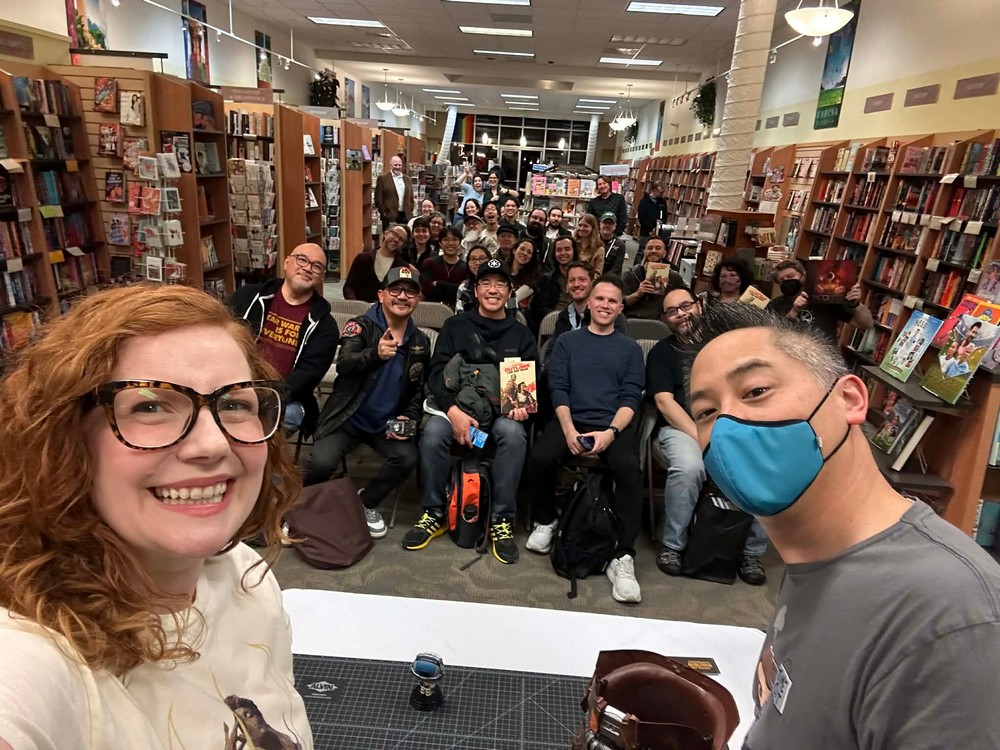
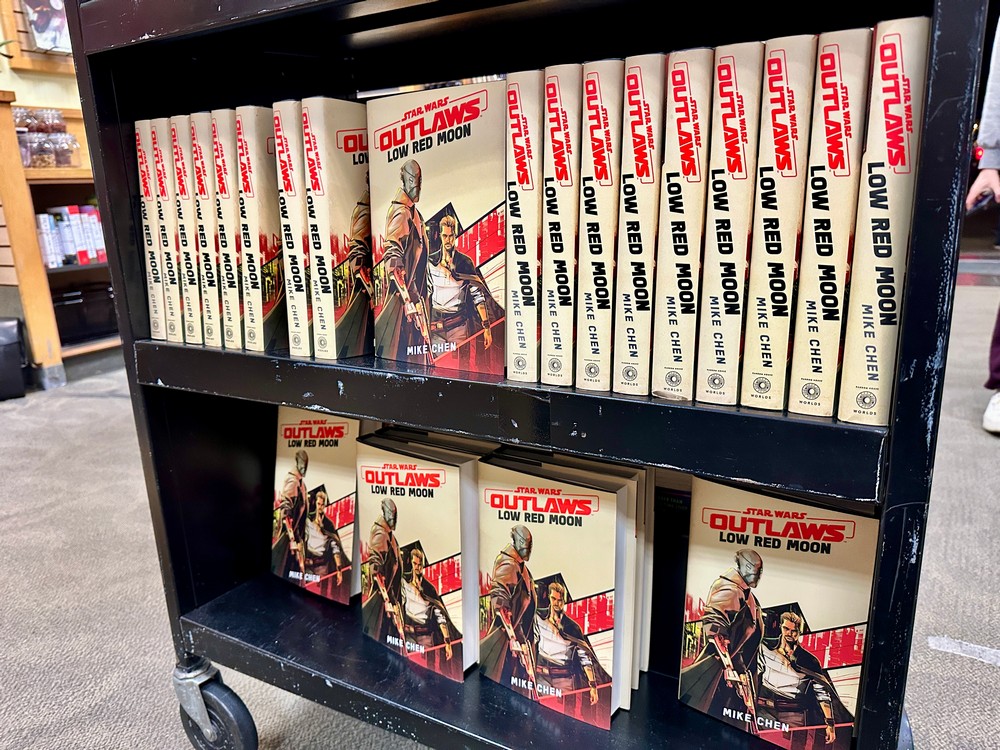
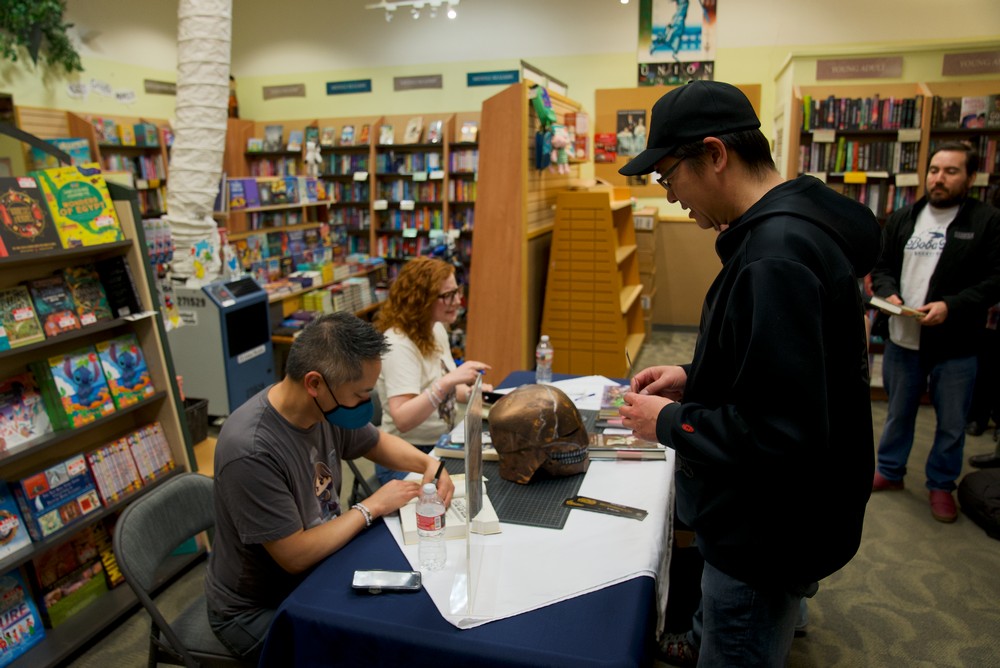
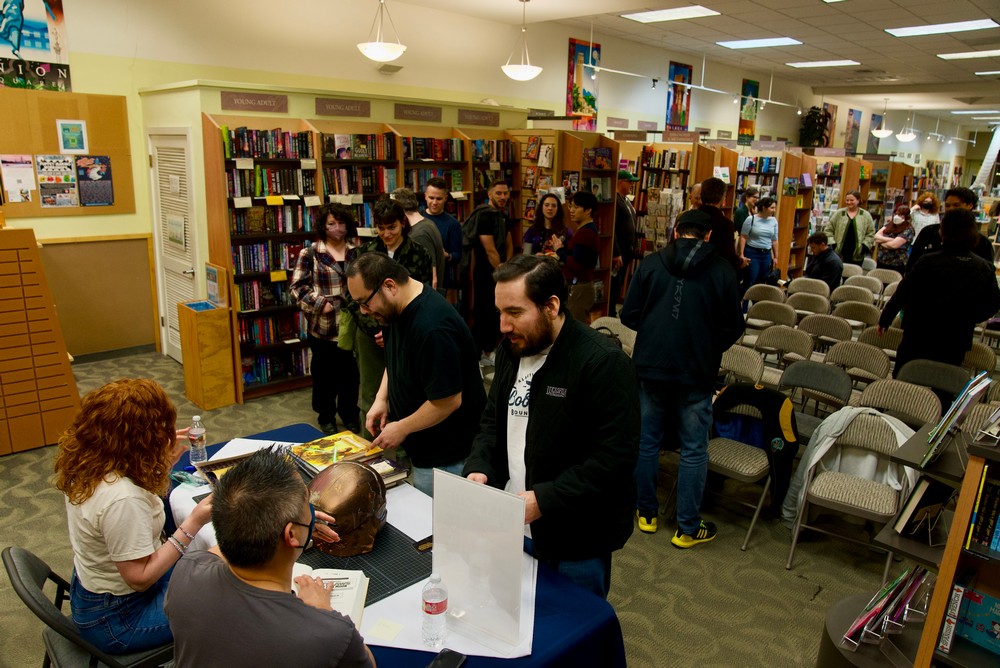
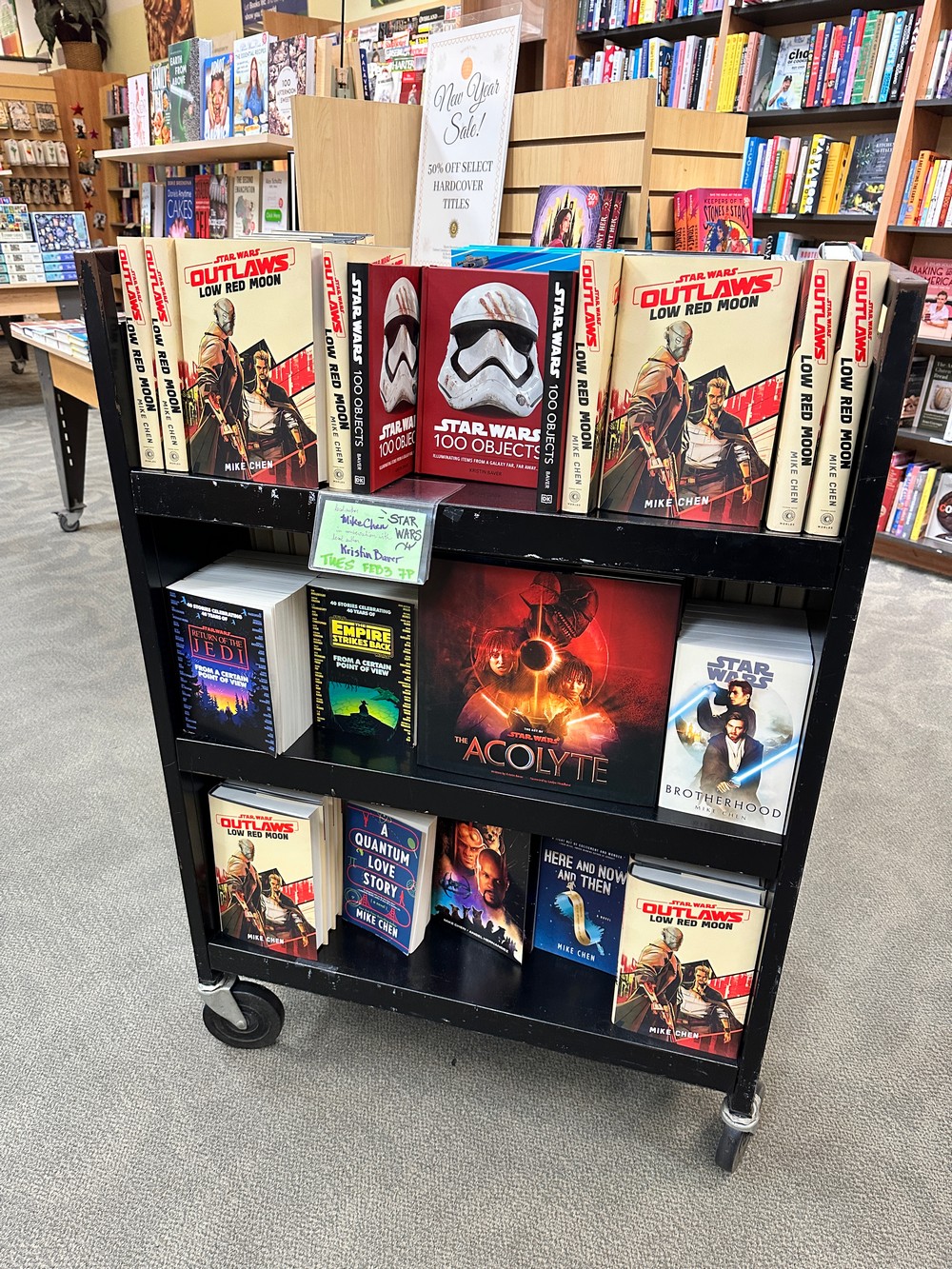
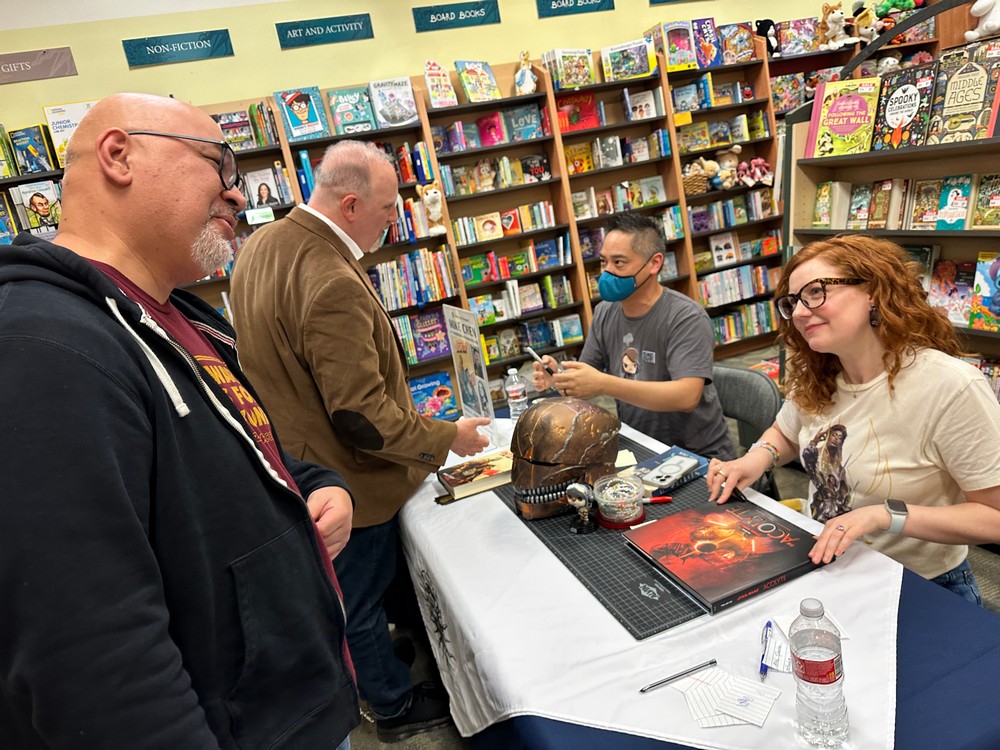
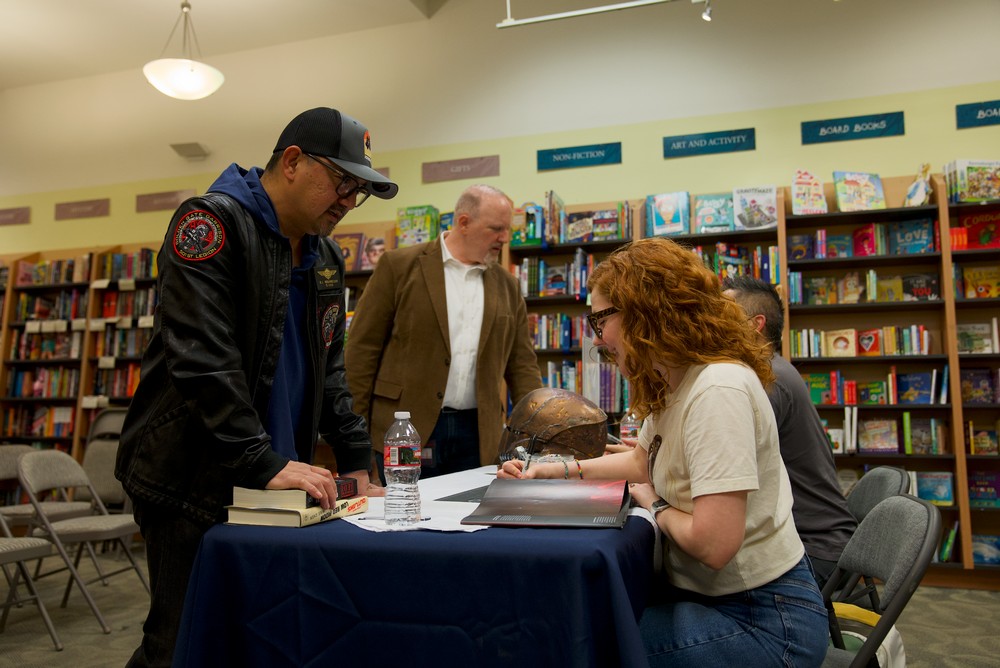
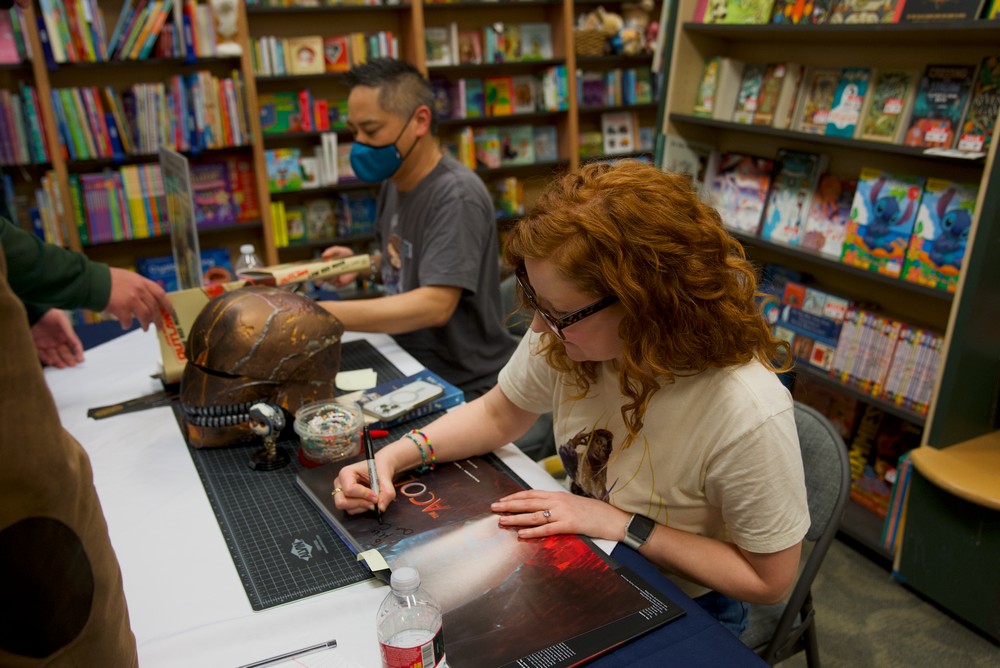
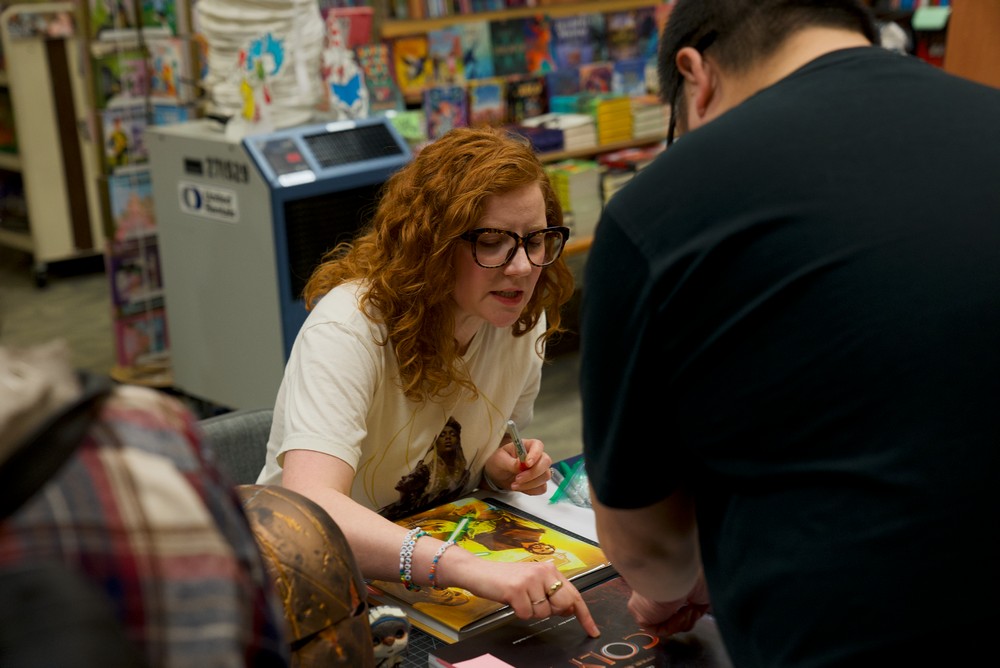
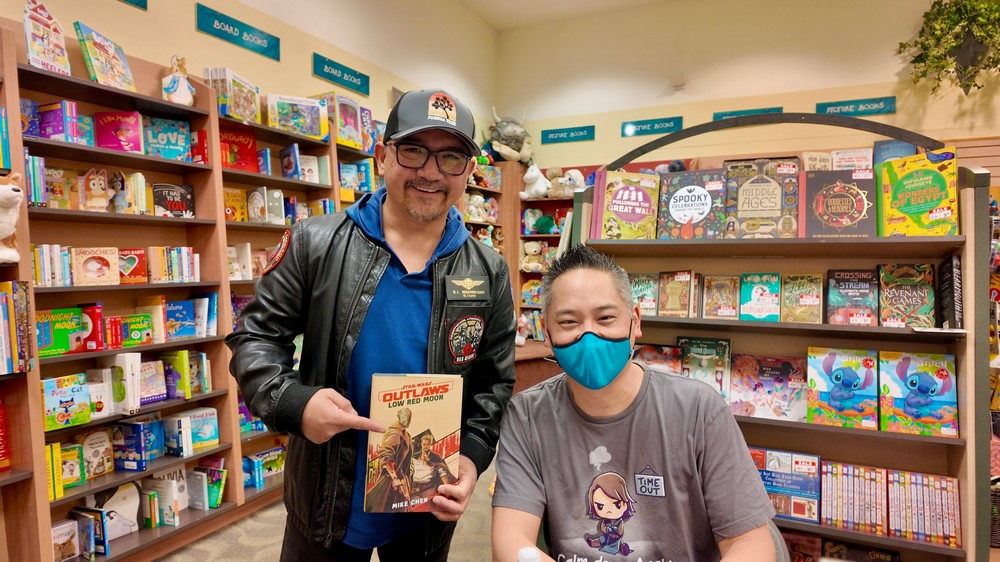
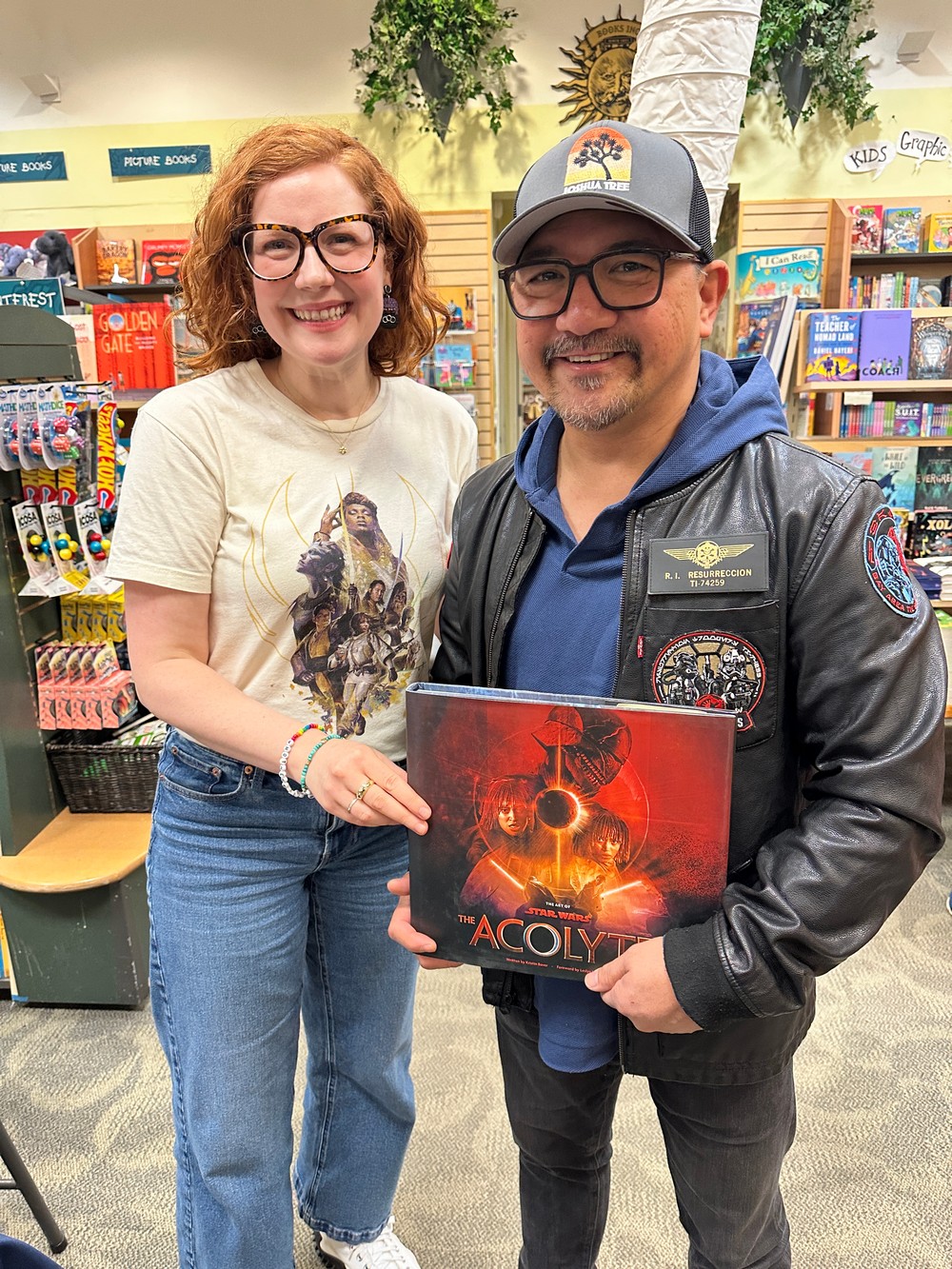
That theme felt especially fitting inside Books, Inc., the oldest independent bookstore in the Bay Area, just a stone’s throw from the Lucasfilm and ILM offices, where an intimate crowd gathered to celebrate the release of two new Star Wars books that lean heavily into that tradition. The Art of The Acolyte and Star Wars: Outlaws – Low Red Moon arrived on the same day, February 3, a shared release date the authors themselves jokingly referred to as being “twinsies.”
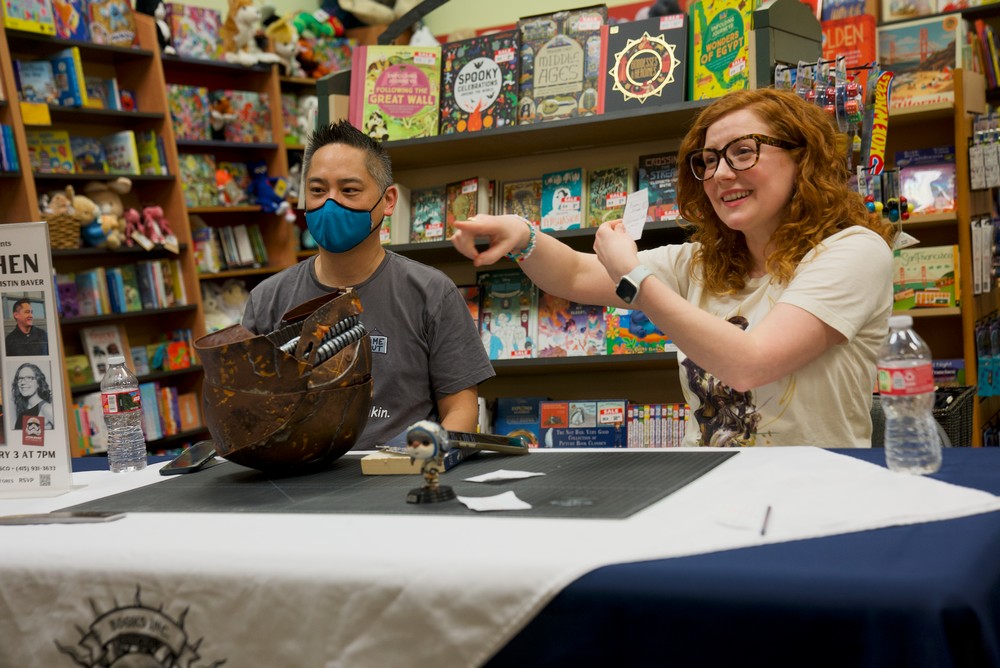
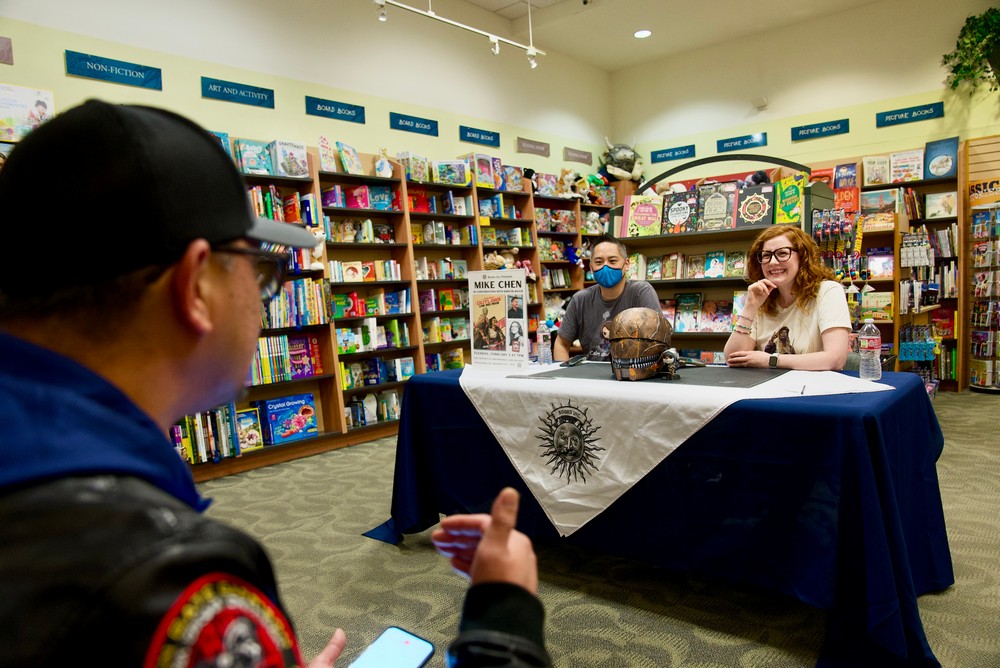
Prolific author Mike Chen, whose novel Low Red Moon serves as a prequel to the open-world video game Star Wars Outlaws, was joined in conversation by Kristin Baver, multi-published author and editor-in-chief of StarWars.com and author of The Art of The Acolyte. Though different in form, both books explore stories shaped by fractured family bonds, with The Acolyte centering on sisters Mae and Osha Aniseya, and Low Red Moon tracing the complicated relationship between half-brothers Jaylen and Sliro Barsha.
OPENING BOOKENDS
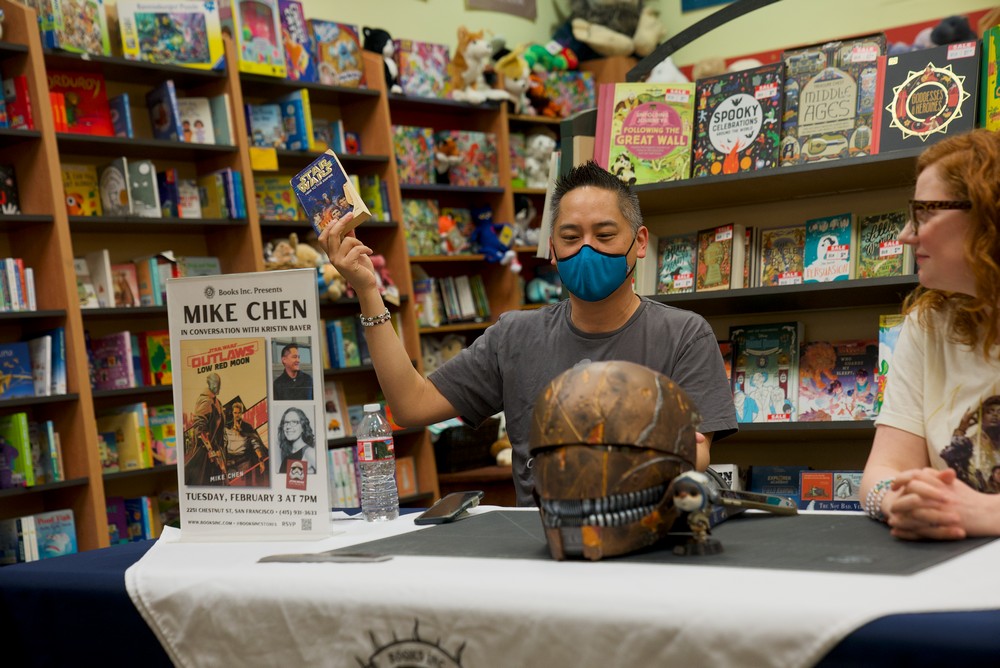
Before the conversation officially began, Mike set the tone by holding up an original 1992 massmarket paperback of Timothy Zahn’s Heir to the Empire, one of the most influential Star Wars novels ever published. The copy, discovered by his wife in a Little Free Library, was well-worn in the best possible way. Mike announced that later in the evening he would be posing a trivia question, with the winner taking home this piece of Star Wars literary history.
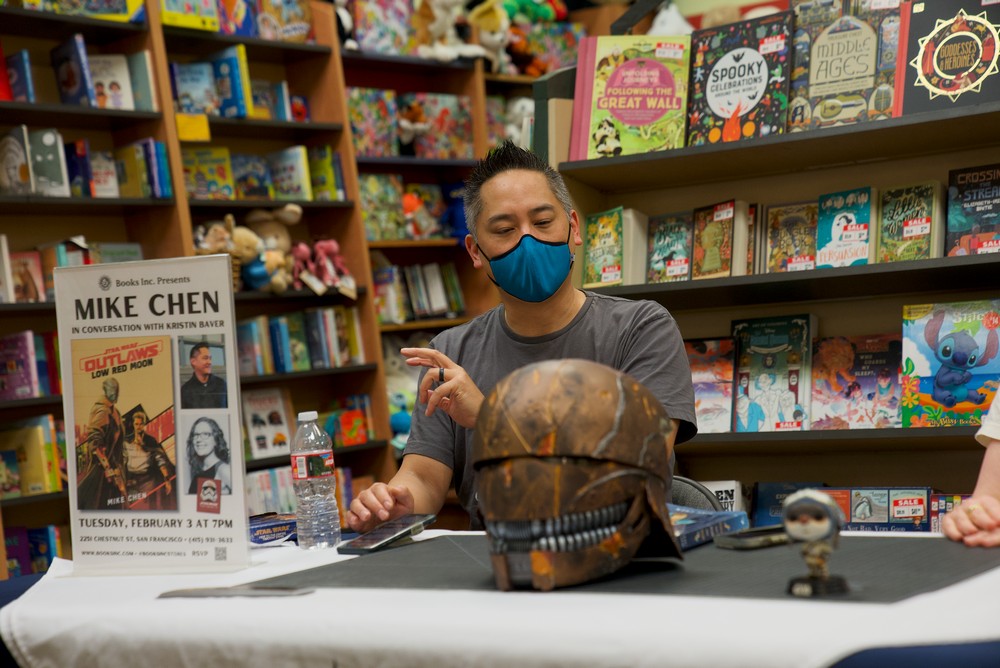
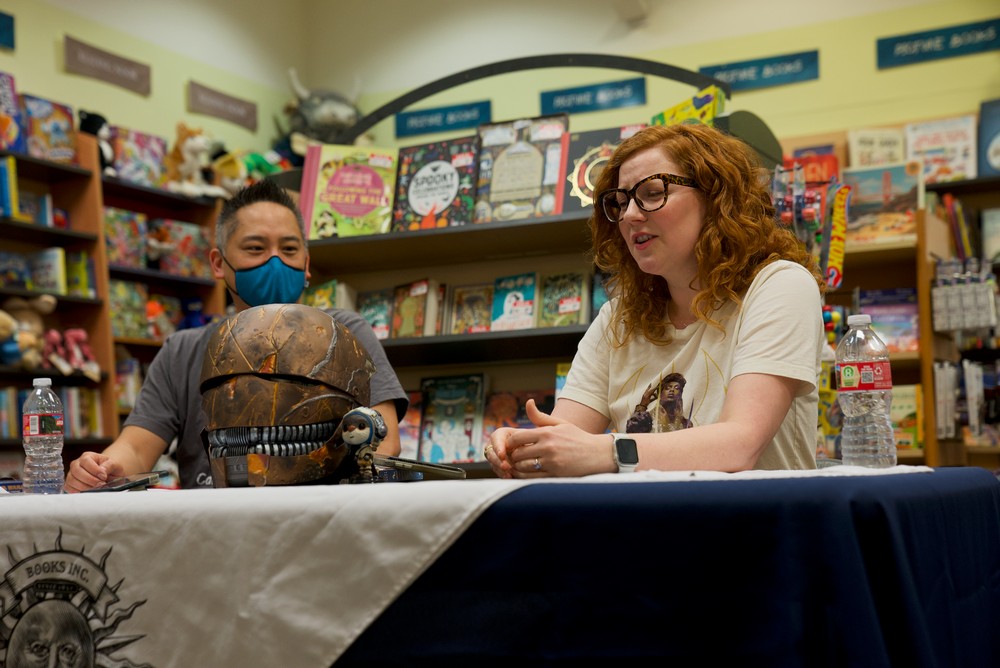
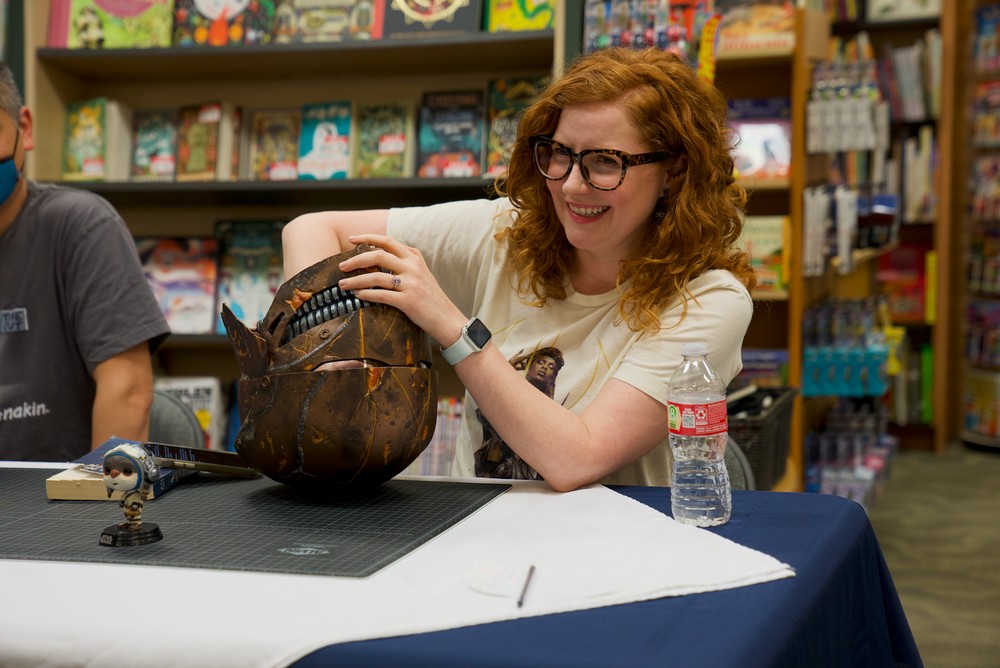
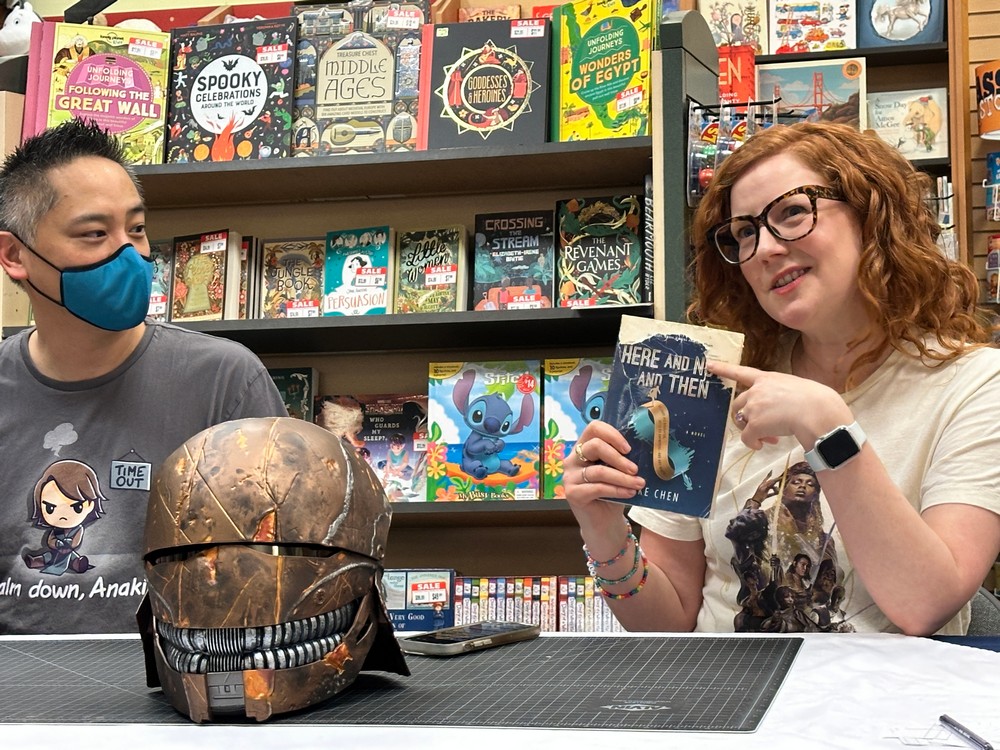
Sitting between the two authors atop their table was a life-size helmet of The Stranger. Its purpose became clear shortly after, when she revealed that the helmet would be used to draw three audience entries, with each winner receiving a copy of the Low Red Moon audiobook. Kristin then officially kicked oR the conversation by holding up her own tattered book: Mike Chen’s Here and Now and Then. She shared that back in 2020, her beloved cat, Hector Smidget (fondly remembered), had chewed up the book’s cover. Kristin admitted she “shamed him on the internet” by posting photos of the damage and tagging Mike, unsure whether he would find it charming or be horrified that his hard-earned work had become a chew toy. The twin paperback show-off neatly set the tenor of the night’s conversation.
LOW RED MOON: DISSECTING A FAMILY DYNAMIC
 With the props established and the room warmed up, Kristin steered the conversation into Star Wars Outlaws: Low Red Moon by asking the obvious question: do you have to be a gamer to enjoy it? Mike’s answer was basically a permission slip. He credited his longtime editor, Gabby Munoz, and her colleague Tom Baker for framing it in a way that made instant sense. You can watch the Skywalker Saga in more than one way (by release order, by episode order, or even via the Machete approach), and it still works. “Your experience is different, but it still works either of the way.” Kristin then asked the question every writer with a controller has heard in their own head. “How many hours of a video game can you play and still count it as research.” Mike’s answer was immediate. “All of them.”
Mike described playing with his laptop open, pausing whenever a line felt like it carried weight, before admitting he went off track in the most Star Wars way possible. Tatooine. Photo mode. Sandcrawler angles. If you want pure immersion, he joked, you can “just get to Tatooine and just mess around for like 10 hours.”
From craft to character, Kristin highlighted one of the book’s boldest choices. At points, the story shifts into ND 5’s point of view in first person (yes, that “sexy droid”). Mike said the audiobook performers helped him lock in the voices, and he gave “a big shout out” to Eric Johnson, who plays Jaylen, and Jay Rincon, who voices ND 5. With both actors reprising their roles for the audiobook, Mike said it felt “like DLC for the game.”
Speaking of ND, Mike leaned into ND-5’s growing reputation as the “hot droid,” joking that in his notes he once imagined the character emerging from the sea like Daniel Craig in Casino Royale, to which Kristin quickly added, “No seaweed, though.”
Kristin later steered the conversation toward Jaylen, a character she joked was not exactly built for instant fandom. “Jaylen’s not a likable character.” Mike’s entry point was family. He pointed to the prologue, where Jaylen and Sliro are children and the cruelty of the Barsha household is already baked in. Jaylen is the heir. Sliro is treated as less than, even told he will receive “half of everything your brother does.” Jaylen’s empathy for his brother, Mike said, is what keeps readers leaning in. “He keeps asking, like, why are you treating him like this? He’s my brother.”
Kristin’s follow up focused on what prequels can do when they work. Would Low Red Moon change how players see Jaylen in the game. Mike said yes and shared a behind-the-scenes moment from a conference call with the voice actors, noting that video from it may surface later. Off camera, Eric Johnson told him he had been searching for who Jaylen is at his core, before joking, “I just needed to go into the future and grab this book.”
Mike said that readers who hit the book first often find themselves rooting for Jaylen once they go back to the game. He compared it to reframing Solo through Q’ira’s eyes.
Perspective changes everything.
THE ACOLYTE: A CELEBRATION OF ART AND ARTISTS
From there, the conversation shifted from game adjacent storytelling to the visual language of The Acolyte. Mike opened by praising Kristin’s art book and asked the key question behind any “Art of” volume. With so much concept art, so many early designs, and so many iterations, how do you decide what makes the cut.
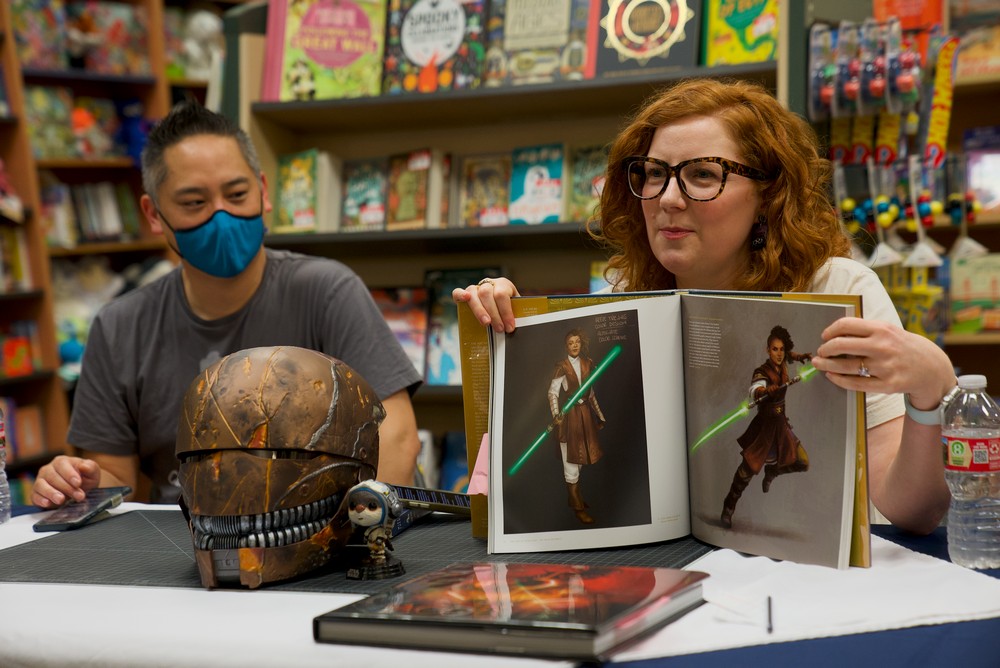
Kristin immediately gave credit to a name many fans know well. She called out Phil Szostak, Lucasfilm creative art manager and author of several The Art of Star Wars books, who was seated in the audience, noting that one of the first things she did on earlier projects was ask him, essentially, how to make one of these books. She explained that The Art of The High Republic was publishing based, which naturally meant fewer production assets. A series is a different beast. For The Acolyte, she said she was digging through folders containing around 68,000 assets! She described it as an “embarrassment of riches,” and the phrase kept fitting as the night went on.
When asked about interviews, Kristin did not hold back her admiration for showrunner Leslye Headland. She said Headland was both her first interview and her last, because she wanted to “bookend everything” and make sure they stayed aligned on what mattered most. When the conversation turned to the Stranger, Kristin noted the wide range of early helmet concepts, some stunning on the page but impossible to build. She loved that creative ambition, aimed at crafting a villain “worthy of being part of the pantheon of Star Wars villains,” and leaned on her editor and designer to help choose when she could not.
The night also veered delightfully off the rails. Kristin talked about spending time with Manny Jacinto during the promotional window, which gave her the chance to include his thoughts on costume and design in the book. When the inevitable question about his charisma came up, Kristin laughed and said Manny was “arguably just a very beautiful person,” before adding that he was also “just such a lovely person.” Mike didn’t argue. Neither did the room. And because this was a conversation between two writers who also happen to be Star Wars fans, the night eventually drifted into a playful Venn diagram question. ND 5 and the Stranger. What sits in the middle. They joked about who is hotter, then pivoted back to character. Mike noted that both figures are trying to escape systems that have trapped them into who they are.
Even the jokes had themes.
A PAIR OF AUDIENCE MOMENTS
One audience question shifted the focus from story to shelf space, calling attention to the different size of The Art of The Acolyte compared to other Star Wars art books. Kristin laughed, acknowledging the frustration it causes collectors, and explained that the format was chosen simply to best showcase the taller, more vertical artwork inside.
Later in the Q&A, I posed a question from the audience that focused on the complicated emotional core of the Barsha family, drawing specifically from moments in the game. I pointed to Jaylen’s confrontation with Sliro, where declarations of inheritance clash with the longing for family (“I was the heir, but we were family!”), only to end in emotional emptiness (“I really thought Mike agreed with the comparison” and responded by pointing to Schitt’s Creek as an influence, citing the late Catherine O’Hara, not just Moira Rose but a tapestry of her many on-screen mother figures, as inspiration when thinking about Jaylen’s mother.
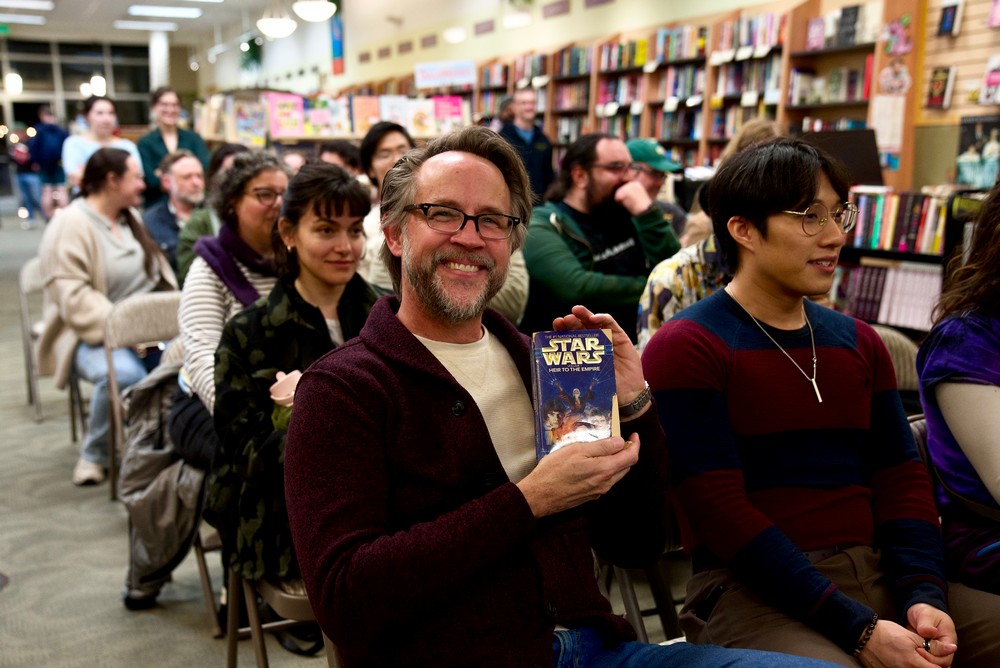
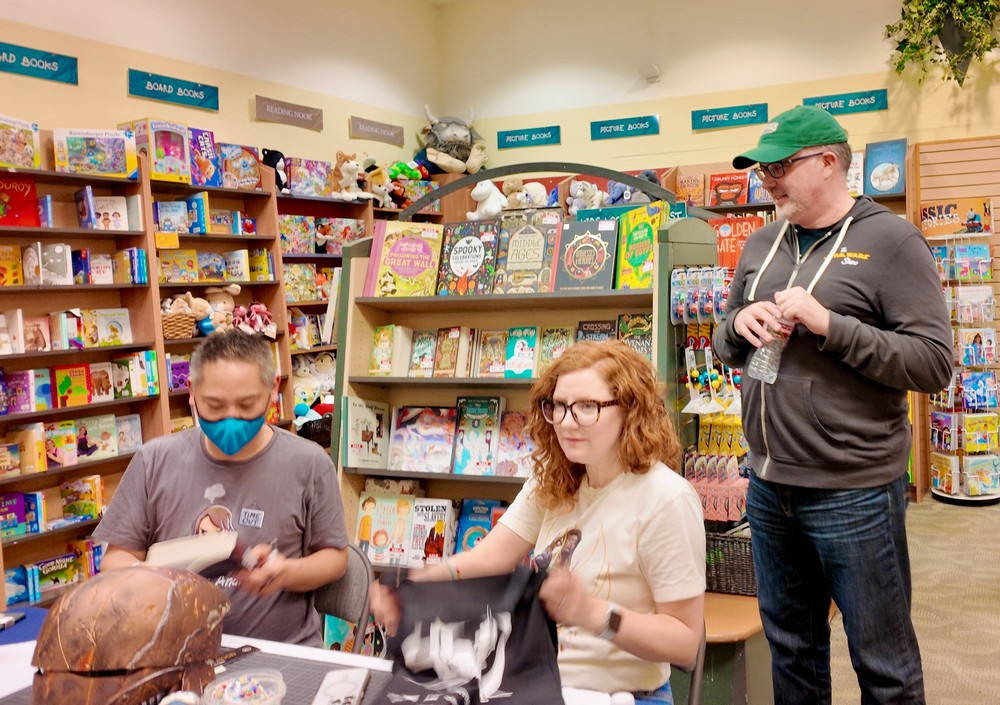
As the night began to wind down, it was time to make good on the promised trivia. In a bit of playful misdirection, Mike offered up a copy of Heir to the Empire as the prize but asked a question from a different corner of Star Wars lore. Who is the main villain of Shadows of the Empire? A familiar voice from the back of the room answered almost instantly, “Prince Xizor!” with Pete Vilmur of Lucasfilm stepping forward to collect his bounty.
The Stranger’s helmet made one final appearance as Kristin drew three names for copies of the Low Red Moon audiobook. Somehow, improbably, I was among the winners (a small miracle, considering I almost never win raffle draws)!
MAGNIFIED POWER OF TWO
Two books. Two creators. Two stories shaped by family bonds. In that small room, the power of two felt unmistakably intensified.
By magnifying the power of two, something else emerged. The room itself became part of the exchange. As readers and fans, we were invited into those stories and images, and into the space between them. There is something quietly powerful about gathering like this. Being together, listening, and allowing stories to remind us why we fell in love with Star Wars in the first place. Not just for the spectacle, but for the way it invites us to dream, to feel, and to find connection in a galaxy that often mirrors our own.
On this night, the power of two creators did not stop at the page. It expanded outward. In a small room, people gathered like those who once huddled around a fire, drawn together by storytelling and attention.
For a few hours, the noise of the outside world softened, replaced by the simple reassurance of listening and imagining together. In that shared space, the power of two gave way to the power of many, and with it, the quiet comfort of not feeling alone.
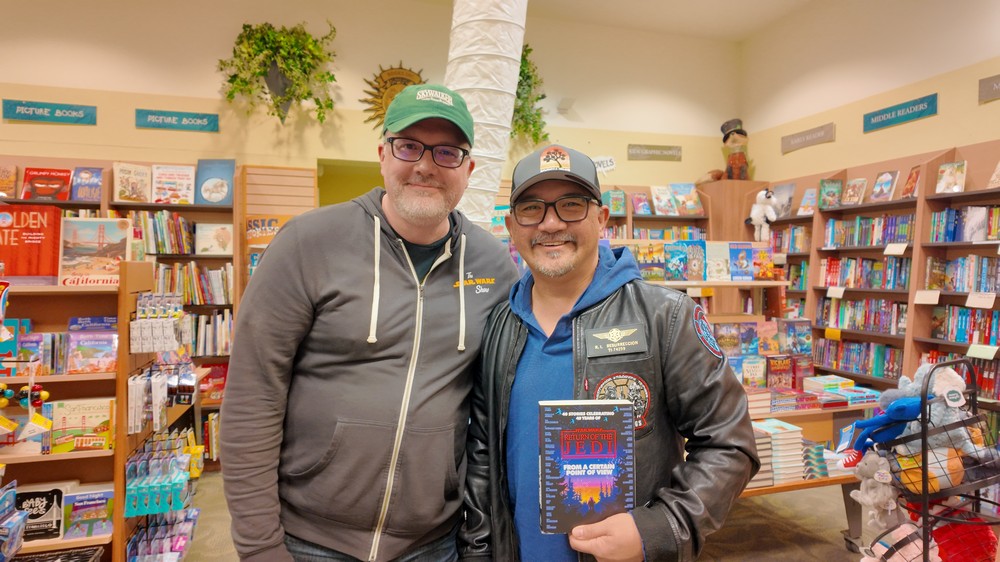
All photos by Sam Simbulan, except for the group selfie provided by Kristin Baver