



Every time an episode of The Mandalorian lands, Fantha Tracks will be giving their responses, and here are our initial gut feelings, deep dives and thoughts on the nineteenth episode – Chapter 19: The Convert. Beware of spoilerific elements in here.
Becca Benjamin
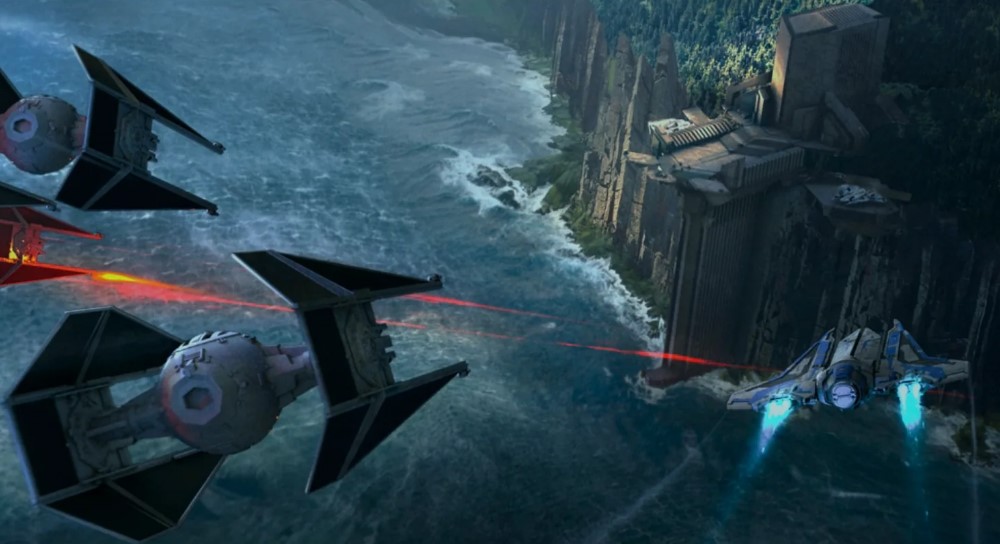
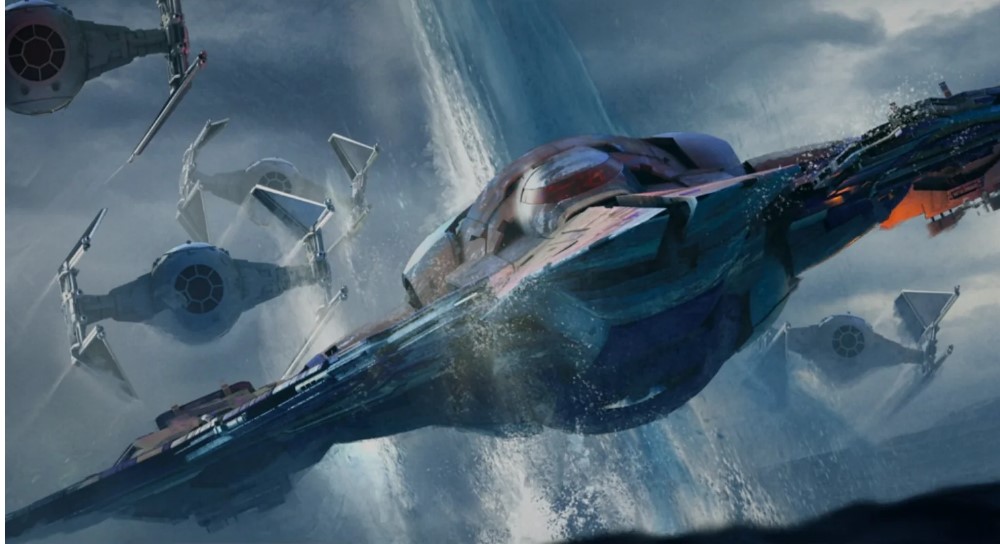
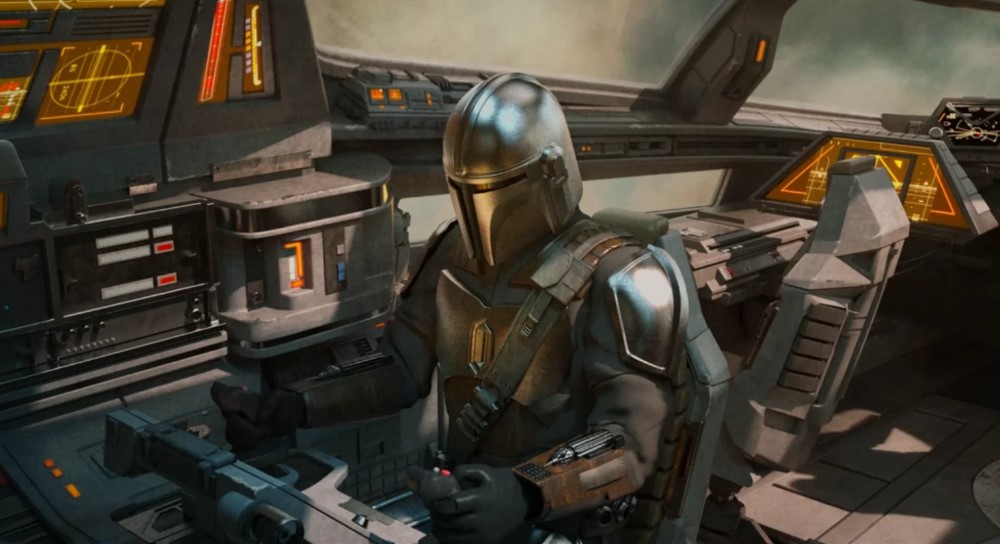
Season 3 of The Mandalorian: Chapter 19: The Convert picks up right where it left off, on the steps of the ‘living waters’ beneath the mines of Mandalore. Bo-Katan is still reeling in whatever she thinks she saw in the ‘living waters’ while Din is trying to catch his breath (literally). All the while, Grogu is looking on like an actual observer, much like us, the audience. It doesn’t take long for trouble to find them, and “trouble” comes in the form of a convoy of TIE Interceptors. And while they manage to take quite a few of them out in a fantastic display of heroics, the short-lived victory doesn’t come without great sacrifice. TIE Bombers show up and take out Bo-Katan’s castle, her home, forcing Din and Bo-Katan to retreat.
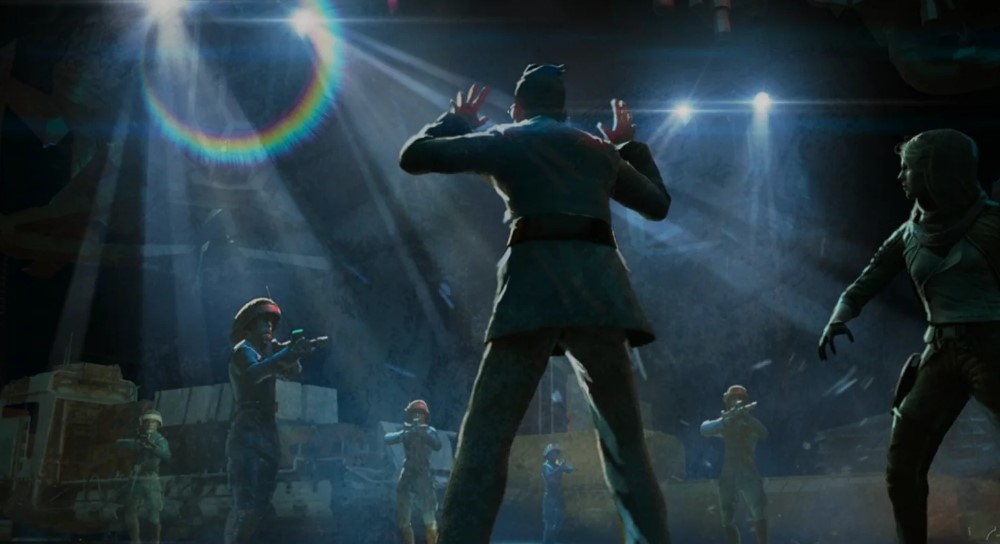
As I said above, short-lived. Suddenly, our storyline shifts to Coruscant, where we find ourselves back on the grand red-carpet staircase of the Opera House from Star Wars: Revenge of the Sith. Only this time, it’s not for the arts or dramatic theater. Instead, Dr. Penn Pershing has taken to the stage to talk about his cloning research and to retell a personal story of the loss of his mother. It’s probably one of the most impactful monologues about the sequel trilogy and Poe’s line, “somehow Palaptine has returned.”
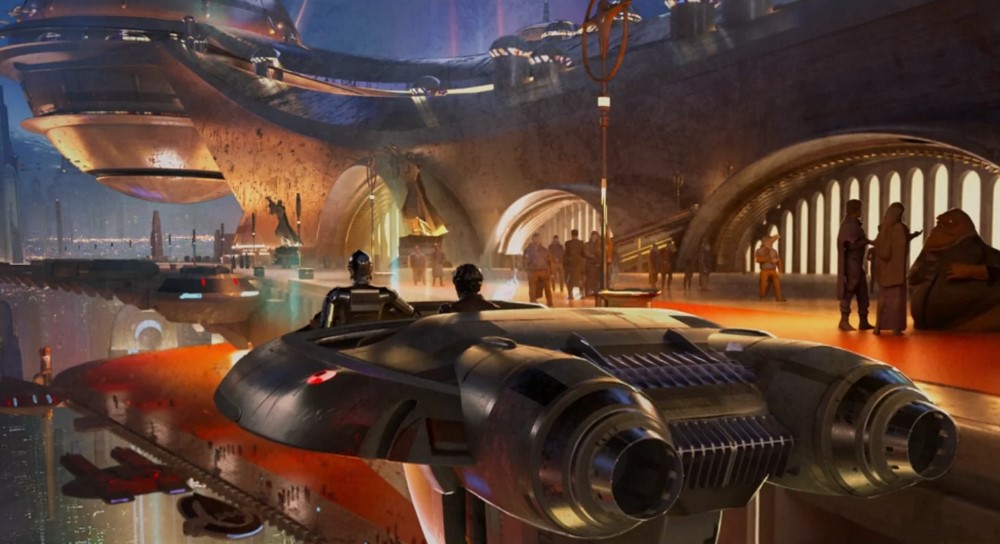
 As Dr. Pershing’s storyline plays out, we see some compelling literary connections come to fruition on-screen. For starters, the New Republic’s rehabilitation centers for Imperial defects and therapy droids from Alexander Freed’s Alphabet Squadron Trilogy and occupational placement (or rather, reform) from Chuck Wendig’s Aftermath Trilogy. In addition to these great written works, we also see Coruscant’s nightlife in action or a “night on the town,” which seems pulled directly from Mike Chen’s Brotherhood “date night” sequence between Anakin and Padme’. Well, minus the backseat of a speeder. Whether intentional or not, these moments pay a respectful homage to the Star Wars literary universe.
The main highlight of this storyline is Elia Kane played by Katy O’Brian. Katy displays a series of emotional ranges, which adds to serious character growth, and twists that propel the story forward in a fantastic progressive way. As a viewer, you want to believe her. Like Dr. Pershing, you grow to trust her. But that is when she strikes! His faith in her made him vulnerable…Taungsdays, am I right?
Also, that train sequence was epic! Anyone who’s ever been on Space Mountain felt elated watching that scene unfold. And let’s not forget the ‘Mind Flayer.’ Again, ‘MIND FLAYER!’ Holy Mother of Mando Moons! What is the New Republic doing with that? To paraphrase that dignitary from the Opera House, “Republic, Rebels, Imperials…they’re all the same.” Yikes.
While Dr. Pershing has his mind flayed, we find ourselves back with Din and Bo-Katan. Once Din proves he has bathed in the ‘living waters’ of Mandalore, the Armorer welcomes him and Bo-Katan back into the tribe. Din seems relieved by their acceptance, while Bo-katan seems taken aback by the induction as she struggles with keeping the Mythosaur sighting a secret.
Chapter 19 is a beautiful and cinematic episode with new storylines and concepts introduced in ‘The Convert.’ I look forward to seeing how it all comes together!
Jen Sopchockchai
I did not have 40 minutes of Doctor Pershing on my Mandalorian bingo card.
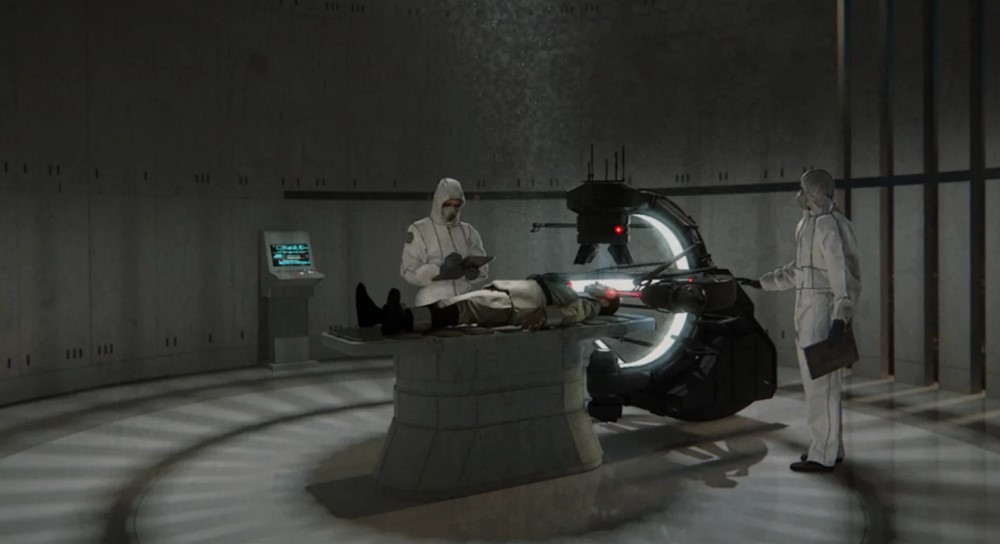
I’m going to admit, I felt like a child who had just had their favorite stuffed animal taken away from them, only to be handled a Rubiks cube. Where are my Mandos? Where is this going? It felt off, and weird. Like it wasn’t supposed to be happening. Now I had to dive in and figure out what was going on with this new storyline. Sure, the reintroduction of Pershing and Elia Kane, a former communications officer for Moff Gideon, would likely mean that a new threat to Grogu was on the horizon. That the cloning research Pershing had attempted would start up again and so too would the hunt for everyone’s favorite baby. But why were we spending so much time with Pershing and the Amnesty Program, without cutting back to our main Mandalorian story until the last five minutes of the episode?
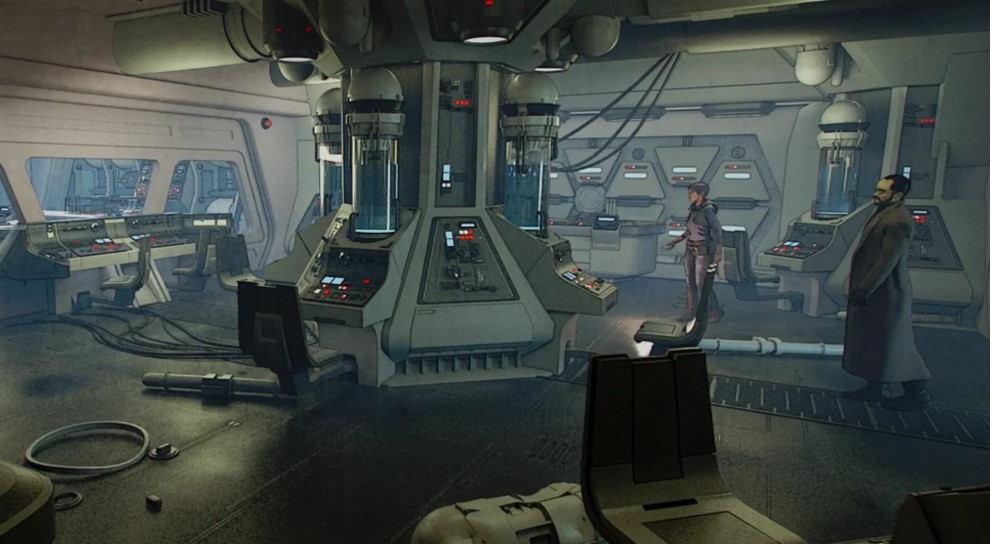
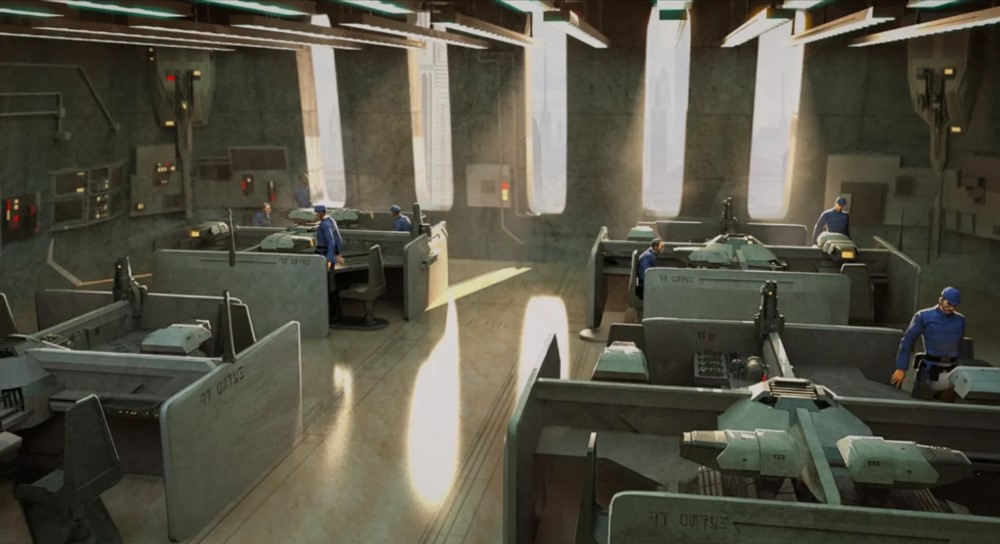
As I look back at the episode as a whole, I see two thematically connected stories about isolation and trying to reintegrate into society when everything you knew before has been destroyed. About finding a sense of belonging in a new, post-Empire Galaxy. Both Bo-Katan and Doctor Pershing find themselves alone and unmoored by a loss of the familiar. They are both converts. In previous episodes, we learn that all of Bo-Katan’s followers have abandoned her. Then a hoard of tie fighters bomb that castle, leaving her without a people and without a home. Meanwhile, Doctor Pershing moves into his new apartment in what’s called Amnesty Housing, where all of the rehabilitated members of the Empire must live. They are branded with new uniforms and pins that don’t actually look all that different from their old ones. Pershing now works in an office (that visually echoes what we saw in Andor) that archives and catalogues old Imperial equipment. New job, new home, new everything. The life he knew before has completely vanished.
A more uplifting reading of these dual storylines, with Bo-Katan’s journey to The Children of the Watch bookending Doctor Pershing’s attempted assimilation into The New Republic, is that Bo-Katan’s is the success story while Doctor Pershing’s is the failure. Pershing’s transgressions end with him strapped into a Mind Flayer, but Bo-Katan ends this episode having found a new home and family who are there for her when she has lost everything. She thinks she’s just going there to help Din testify and get redeemed, but in the process she also qualifies for redemption. They could be opposite sides of the same narrative coin.
In Season 1, Cara Dune says to Din that if the Empire catches her, they’ll upload her to a Mind Flayer. The word upload implies that maybe the Mind Flayer transfers knowledge and memories to cloud storage somewhere, so even if Pershing is a vegetable by the end of the procedure, Elia will still be able to take his mind in digital form back to Moff Gideon. So they get all his scientific genius without the inconvenient moral handwringing.
In retrospect, part of my unsettled feeling in watching this middle stretch of the episode was less about not seeing Mando and Grogu and more about the generally “off” feeling that the portrayal of The New Republic generates here. With the Mind Flayer scene, we see more blatantly how The New Republic may not be any better than the Empire if they’re willing to psychologically condition Amnesty candidates. But the very idealistic, better tomorrow music that played as Pershing gazed upon the sights of Coruscant often had a hollow, ominous effect. Like it was all for show. Theatrics to compensate for the same tyranny rebranded or under new management. In that way this portion of the episode reminded me more of Andor than what I typically associate with The Mandalorian, at least tonally. But I think the series will ultimately be better for it.
(This is condensed and edited – with permission – from Jen’s The Long Take review, which you can subscribe to here)
Paul Naylor
Following hot on the heels of episode 2, Mando splutters back to life following his dip in the Living Waters of Mandalore. Then it was time to go.
What followed was simply sublime. One of, if not the best chase sequences in Star Wars – certainly my current fave, if only for the merit of its daylight visuals. Let’s just take a minute to remind ourselves that this is a TV show. Superb pacing and so cool to see Return of the Jedi-era TIE Interceptors in use (we MUST discuss those sometime on Start Your Engines).
TIEs destroyed, Bo and Mando reunite with the Armourer and co to prove Din Djarin’s dip and atonement. Great, so let’s start another Mando adventure…
No? Oh! Oh okay then. What now then? Boba Fett’s owed a couple of episodes I guess?
But no, it was time for two bit-part players from earlier episodes of The Mandalorian to take to the stage – front and centre. The episode revolved around Doctor Pershing and Imperial Officer Elia Kane, but more importantly we got to learn more about Coruscant (and different coloured biscuits).
It was a refreshing diversion from the main show, but I can imagine it didn’t sit well with many. Would I rush to see it again? I’m not sure, but I enjoyed it for what it was.
A great way to effectively do the TV equivalent of a comic one-shot. Perhaps that could be a future development?
Eric Onkenhout
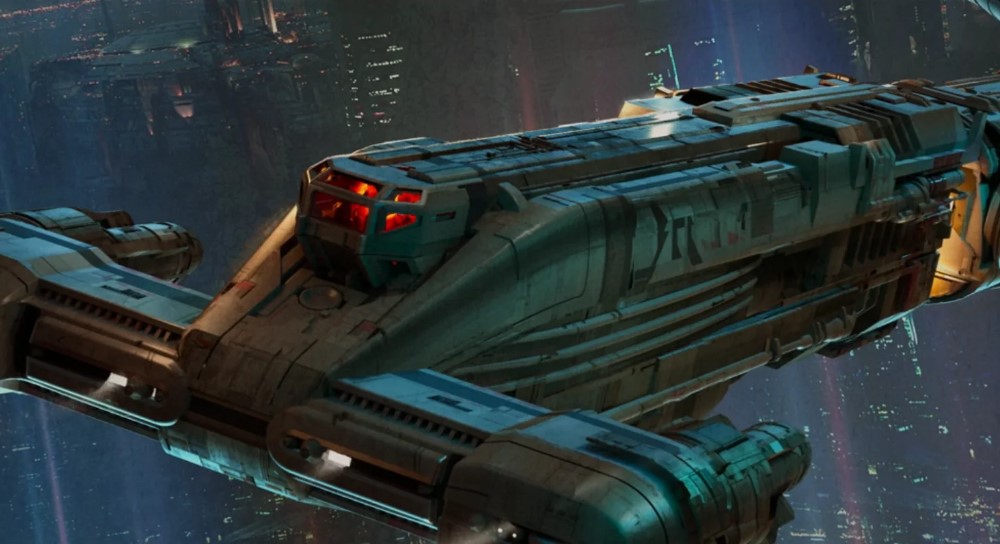
The Convert was a tale of two episodes, or maybe it wasn’t. Perhaps it was a tale of an epilogue and the main narrative. There is no doubting the two parts were quite jarring. First is the action-packed chase scene with Imperial TIE Interceptors pursuing The Gauntlet, Bo-Katan’s Kom’rk-class fighter/transport, and Din’s N-1. After the TIEs destroy Bo-s home, she and Din escape to hyperspace. Queue the record scratch.
The Coruscant in The Convert was a mixture of the Coruscant seen in the prequels and the one seen in Andor with the luminous lights and the crowds of people, but with remnants of the Empire remains. The architecture of the buildings also hints at Coruscant in Andor. Even the stairway to the auditorium is the same as the one Anakin ran up in Revenge of the Sith.
Dr. Pershing speaks of his day as a cloning doctor with the Empire and how they used his knowledge for evil deeds. Pershing even mentions Palpatine indirectly in the same room decades after Palpatine’s manipulation of Anakin began. After the speech, Pershing descends down the stairs and is surrounded by likely powerfully influential citizens who are happy being rich despite which political entity is in power. The Empire, Rebel Alliance, and the New Republic, it’s all the same. Some things never change, as Perrin Fertha echoed the same sentiment in Andor.
Amnesty Housing is where defected Imperials go once the New Republic accepts them. This place has about as much charm as Narkina 5. L52 is Pershing’s new name or assigned number. Another way the New Republic is like the Empire, giving their new members numbers like a stormtrooper. One of the other new members was one of Moff Gideon’s officers, Elia Kane (Katy O’Brian). I get weird vibes from Kane, which I’m sure is intentional. I’m unsure if it’s O’Brian’s portrayal or the character, but she’s very dry and hard to read. She reminded me of Kleya in Andor. Very stoic. You’re not sure if she’s an ally or a spy. I’m leaning toward her being a spy.
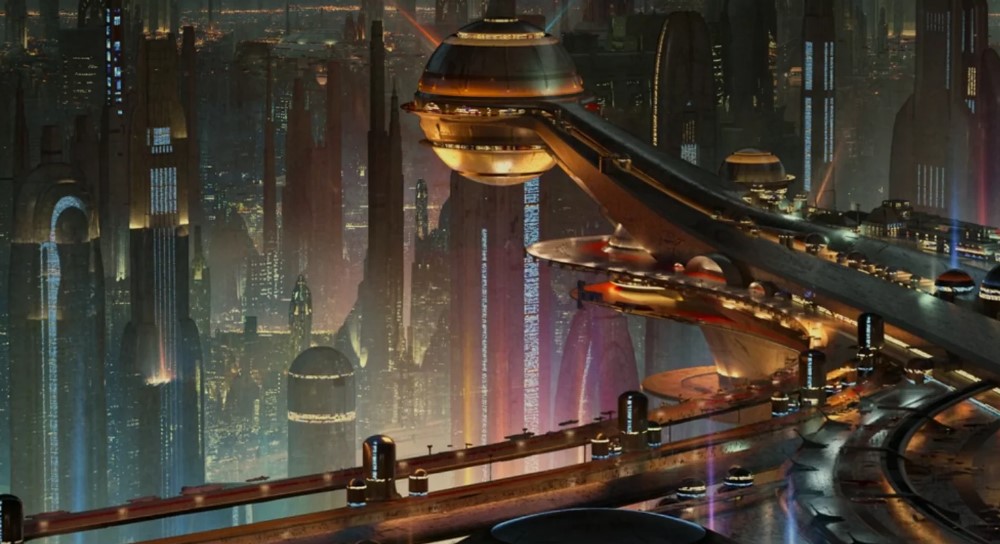 Pershing begins working for The New Republic similarly in a way that Siril Carn does in Andor. Similar workstations do cloning research. I found the scene with Pershing and Kane walking through Coruscant a bit corny. Licking glow sticks that are supposedly like popsicles, and I wasn’t a fan of the music in this scene. Pershing is questioned by an administrative droid about his work conditions but then asks if doing his own research is allowed. But we never hear what that research is. Cloning, probably, but what aspect exactly?
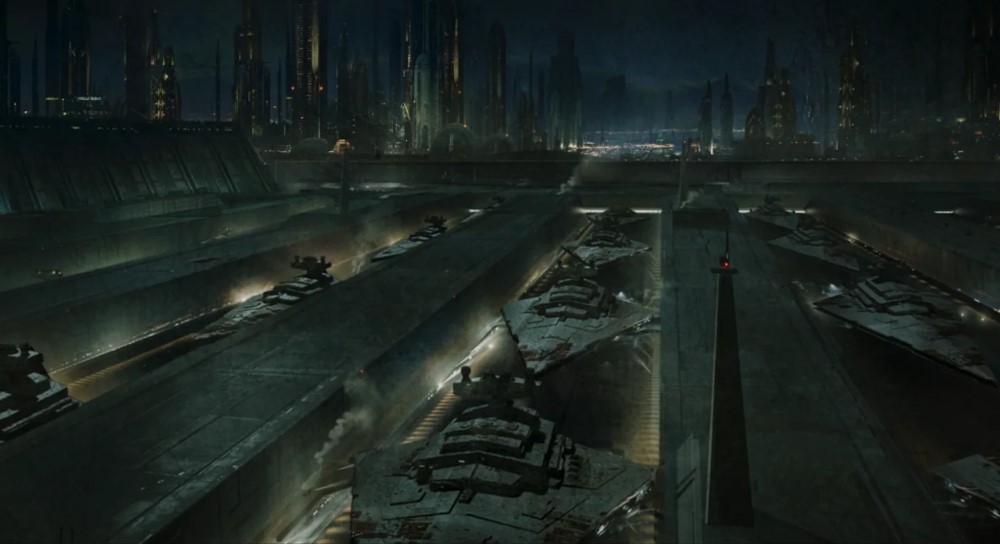
Pershing is going through personal issues. He wants to help the New Republic, but he’s quickly discovering it’s not much different than the Empire. They won’t let him do any research giving him the benefit of the doubt on his intentions. Kane talks him into obtaining Imperial equipment to further his research by raiding a Star Destroyer destined to be scrapped. I admire his ambition, and I trust his intentions. But Kane is using his motivations in order to trap him. Eventually, Kane has him arrested for stealing illegal equipment.
There’s more to The Convert than initially thought. It didn’t help that I fell asleep all three times I tried watching this episode, but it’s a vital episode regardless. I understand that cloning is a hot topic within Star Wars lore right now, and connections are being made with the sequel trilogy. The definition of a convert is a person converted to a different belief. By definition, this applies to Dr. Pershing and Bo-Katan because, at the end of the episode, Bo is accepted into the Mandalorian covert with Din Djarin. How Bo handles that should be interesting, and how to see the results of the mind flayer on the doctor is something to keep an eye on.
Daniel Lo
In the short time since watching chapter 19 of The Mandalorian, I’ve heard several instances of comparisons being made between the latest episode and Andor by both friends and strangers on the internet. My personal impression didn’t quite hit that mark: The episode itself wasn’t a direct reminder of Andor for me, but a tangential similarity in the sense that we were introduced to a subtle new style of Star Wars storytelling. I am of course referring to the 36 minute long Dr. Pershing/Elia Kane filling of a Mandalorian/Bo-Katan sandwich.
One of my favorite aspects of Disney-era Star Wars has been atmospheric dog fights. The Force Awakens gave us the first example of this in the chase sequence between the Millennium Falcon and TIE fighters on Jakku. Despite involving familiar-looking vehicles, the fact that the battle unfolded just meters above a planetary surface and far from the vacuum of space offered a completely different set of sights and sounds that made it all feel new again. The opening sequence of this episode featured the latest instance and it did not disappoint. In fact, despite being a TV show it may have even raised the bar. I may be forgetting something, but the last time I recall so many TIE interceptors in one shot was in Return of the Jedi and to see them chasing down a Gauntlet and N-1 starfighter was a really fun sight to behold. And of course, TIE bombers are always a crowd favorite. Well, maybe not for Bo-Katan, who by the end of the episode has been accepted by the Armorer and her Tribe. Or at least until she takes her helmet off. In the meantime, the mythosaur remains a cliffhanger.
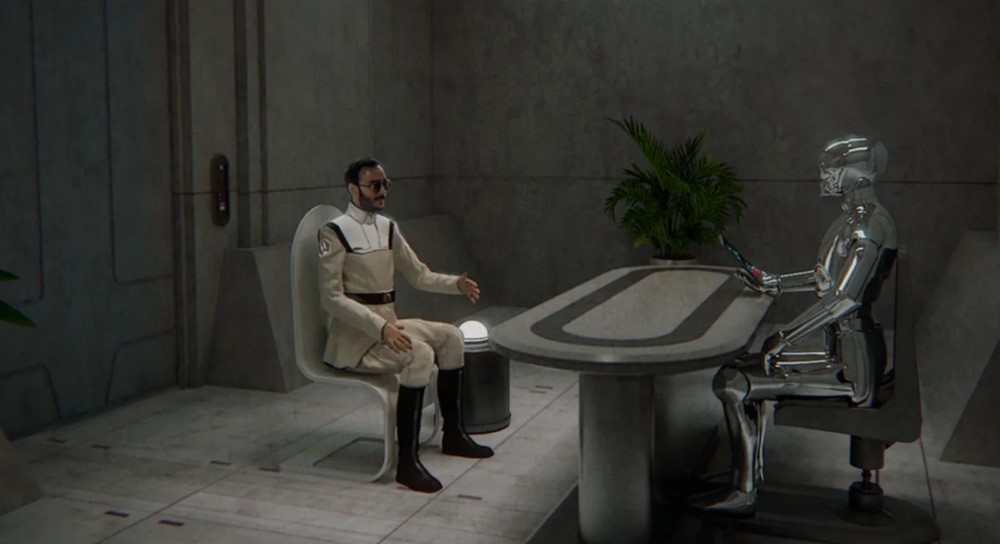
I noted the amount of screen time dedicated to Dr. Pershing and Elia Kane on Coruscant due to its unusual length and continuity. I didn’t go through every single Star Wars film and show to verify this, but to dedicate 36 minutes to the same two same characters on the same planet/location felt unprecedented. I had suspected that Attack of the Clones came close (I checked, and the first 32+ minutes were spent on Coruscant as well), but it also rotated through multiple sets of different characters and situations. Summarizing this segment actually wouldn’t take long: Dr. Pershing ran into Elia Kane in a rehabilitation program, became friends, got framed in a heist, and his brain was fried like an egg from a 1980’s anti-narcotics ad. It’s all in the details of course, like hanging out with fellow residents, glimpses of a workday in the Amnesty program, attending an evening carnival situated around the peak of Umate (very cool by the way), a series of strategically crafted conversations, regular appointments with the parole officer droid, sneaking onto a train and ultimately onboard a decommissioned Star Destroyer where we finally found out who the villain was. Not that it was terribly hard to figure out, especially around the halfway mark when the soundtrack hit us with ‘Palpatine’s Teachings‘, or at least something that sounded extremely close to it. Kane’s character was also written and acted in just the right way to maintain an element of doubt, even if a very small one. It also didn’t hurt that the Amnesty program, and by extension the New Republic, had a subtle sinister undertone too.
Whether intentional or not, this episode contained moments that reminded me of several other films: Top Gun Maverick, when Bo-Katan carved through the canyons and later did her “splitting the throttles” move. Jurassic Park, when Dr. Pershing talked about DNA in an unusual (for Star Wars) amount of detail. The Island, where Amnesty community members wore uniforms, had letter/number combinations as names, and were subjected to mundane routines and monitoring. Oh, and of course Dr. Pershing’s mention of organ cloning. And Bullet Train because, well, I happened to watch it two weeks ago. There were more scenes that felt familiar, but to references that escape me at the moment. Of course, there were also nods to all three Star Wars film trilogies: Lines like “there’s too many of them!” and telling a Mon Calamari character that something was “a trap!“. Then there was the Galaxies Opera House of course, this time from the cheap(er) seats. Also, I’m pretty sure there were passages from ‘March of the Resistance‘ playing in the background during the carnival scene.
A few lingering unanswered questions: Why was it important for Bo-Katan to confirm whether or not Din Djarin saw the mythosaur? Where did such a large squadron of TIE Interceptors come from? Why did Dr. Pershing keep touching his right ear? The title of this episode is The Convert. Was it referring to Bo-Katan or Dr. Pershing? Who was Kane working for? Was Dr. Pershing’s space popsicle a reference to Mace Windu?
 Ross Hollebon
This is an episode about loyalty, told through two stories. There is obviously the Din Djarin path of redemption to the way of the Mandalore. But there is also a visit to Coruscant and the introduction of the New Republic Amnesty Program—and the re-introduction of former Imperials Dr. Penn Pershing and Moff Gideon’s Communications Officer, Elia Kane.
The development of their quick relationship, after Dr. Pershing delivers a speech to the elite of the city, is a wonderful excuse to visit the Coruscant of the New Republic and give nods to the Prequel Trilogy. But it is the line, “Not much has changed, other than taking down the cogwheels,” by Kane that stands out for the world of those living in Amnesty Housing. They go by coded designations given by the New Republic. They work lower-level jobs than their skillset or experience. They help, through a bureaucracy of rules and red tape, dismantle not only confiscated Imperial technology and ships but are also ready to decommission the Alliance Fleet.
Kane convinces Pershing he shouldn’t give up his talent and passion for cloning research and that he’d be doing the New Republic a great service—but it is a ruse meant to eliminate him. It appears she is a double-agent still loyal to the Empire, and now Palpatine’s “Operation Cinder” as referenced by Imperial Valin Hess in season two of The Mandalorian, but in much more depth in Alexander Freed’s novel trilogy, Alphabet Squadron. It appears there are still cogwheels on Coruscant—disguised as reformed Imperials.
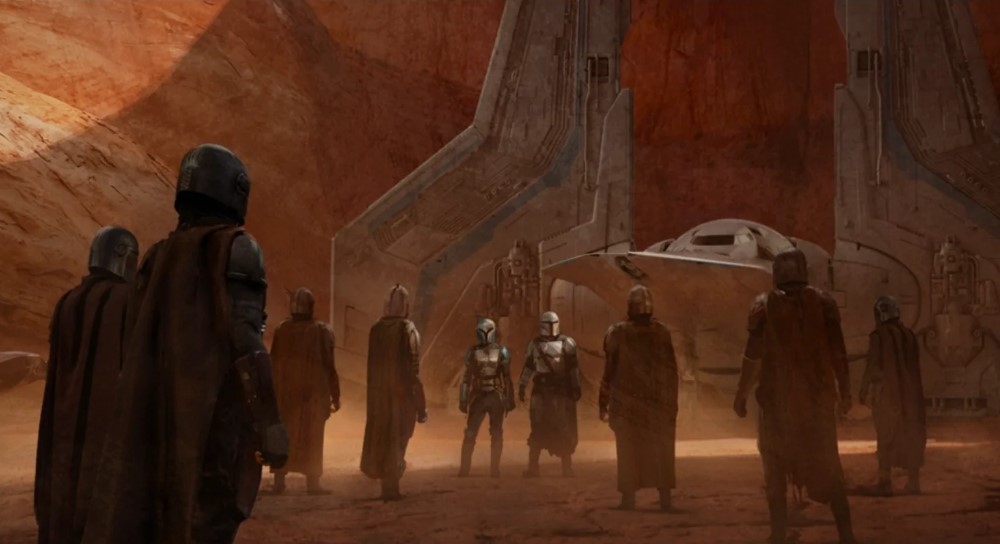
The reform of Din Djarin was made possible by the Living Waters beneath the mines of Mandalore. After proving to The Armorer that he was there—witnessed by Bo-Katan Kryze—the leader of the sect recognizes both Din and Bo-Katan as redeemed and welcomed members of the covert. Both stories of this episode seem to be based on betrayal in the name of loyalty. Kane for her original cause, even if we don’t yet know whether it is now for Moff Gideon, Thrawn, or some other growing anti-New Republic leader.
In the covert, Bo-Katan has seen the mythosaur but is keeping it to herself. Paz Vizsla is brooding and hovering, seemingly not trusting Din or Kryze. A convenience of timely loyalty may be at hand in both scenarios—setting up for intrigue and action moving forward.
Jonathan Hipkiss
My interest was immediately on high alert this week when I went onto Disney plus on Wednesday. A runtime of 59 minutes? For Mando? Amazing. I know the show has drawn some criticisms over the years for its relatively short episodes in seasons 1 and 2 but this has never bothered me really. I’m a big believer that something needs to be as long as it needs to be. Why drag it out? How many times have we watched a film or show and thought this is way too long for that it is. Having said all that, the slow burn of the episode was a brilliant change of pace and truly fascinating to see.
The opening sequence and dog fight with the TIE-Fighters was absolutely stunning. The visuals just popped off the screen and it did make laugh when Grogu just hit the button on his hover-pram to close it up. This kid has seen more danger than most and knows the drill by now. As we switched gears and headed to Coruscant it looked nothing short of beautiful. It was wonderful to see this era of the New Republic realised on screen as we’ve only really been treated to it in the novels and comics. The cloning part of the story in this episode is clear for what they’re setting up. All roads now lead to the Emperor’s return in Episode IX. This doesn’t have any particular effect on me as long as it’s done well and it does make sense for the Empire/Sith/Palpatine to be obsessed over cloning and especially Force-sensitives in their never ending quest for power and eternal life.
 Overall, once again, I thought this was a solid episode. The Mandalorian is proving that you don’t need easter eggs galore in every episode to tell great Star Wars stories and some wonderful production design and brilliant writing helped deliver a great piece of television. I look forward to picking up with Din, Bo and baby next week as we really seem to be building up to something special.
Sander de Lange looks at all the reveals and easter eggs in The Mandalorian – The Guide: Chapter 19: The Convert

Brian Cameron and Carl Bayliss discuss The Convert on Good Morning Tatooine
Mark Newbold discusses The Convert on Making Tracks Reaction Chat: The Mandalorian S3 Ep3 – The Convert