Paul Hirsch, one of the three editors behind A New Hope alongside Marcia Lucas and Paul Chew, takes a look back at a short-lived but fascinating phenomenon known as the Droid Olympics in this article from 2005, looking fondly back at a fun event for editors to show off their reel skills.
The article was stumbled upon by ILM legend and friend of the site Hal Hickel, who posted it to his page yesterday.
Just discovered this very sweet 2005 article by the awesome and talented editor Paul Hirsch (Star Wars, Warcraft, and loads of other films without war in the title). It’s a wonderful time capsule of the late 70’s Northern California film making scene.
The friendly spirit of camaraderie and community combined with an excitement about the art and craft of film, reached its epitome for me in the event known as the Droid Olympics. There were actually three of them: one in 1978, one in 1980 and one in 1982. I missed the first of these, but was lucky enough to be there for the latter two, and they were among the most enjoyable memories I have of my days there.
The notion for these Olympics came from Murch, who was editing Apocalypse Now for Coppola in 1978, when the first event was held. According to him, “There was a lot of film—1,250,000 feet of workprint—with so much robotic reconstituting of trims, that the half-dozen assistants on the film started calling themselves ‘droids’ in honor of the robots in Star Wars, which had been released the year before.
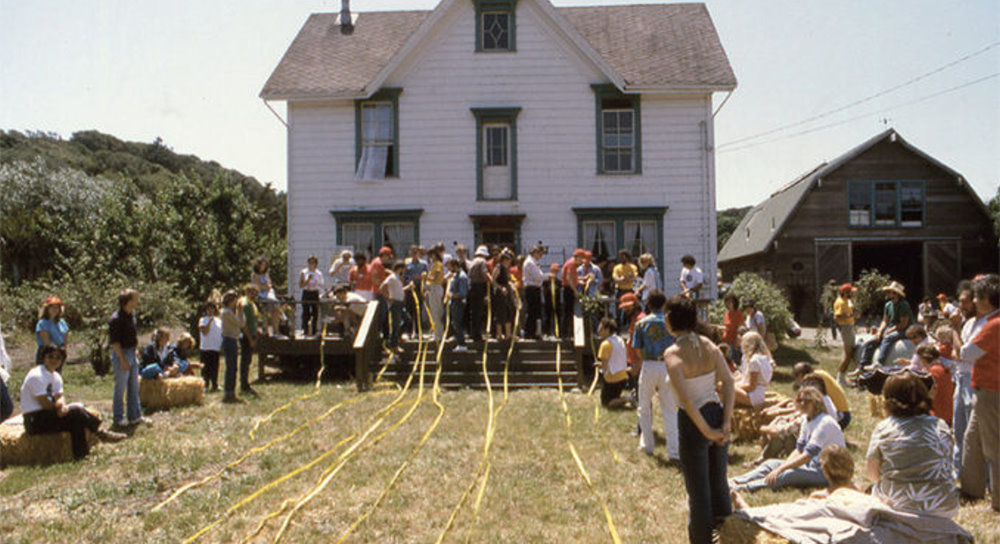
Image courtesy of Walter Murch
“In June of ’78, my wife Aggie had put on a horse show for the local kids in Bolinas,” Murch continued. “And I was eyeing the ribbons and trophies when the idea came to me to throw a similar event for the assistant editors on Apocalypse, to celebrate their skills.”
These are all arcane abilities today, largely forgotten in the wake of the now 10-year-old digital revolution in the professional cutting room. The games were staged at times when there were enough feature films cutting in the area to supply teams to compete, usually four or five. There never was much of a film industry in San Francisco, and the activity ebbed and flowed. But when there were enough pictures working at the same time, the “Games” were held. In those days, editing crews ran from three or four assistants up to eight or more.
Exploring the galaxy since 1978, Mark wrote his first fan fiction in '81 and has been a presence online since webpage Fanta War in 1996. He is the EiC and Daily Content Manager of Fantha Tracks and currently contributes to ILM.com, SkywalkerSound.com, Star Wars – Das Offizielle Magazin, Journal of the Whills and Starburst Magazine, having previously contributed to magazines Star Wars Insider, Geeky Monkey, TV Film Memorabilia, Model and Collectors Mart, partworks Build Darth Vader, Star Wars Encyclopedia, and Build The Millennium Falcon, and websites Jedi.net, Jedi News, StarWars.com, Lightsabre.co.uk, and Wirezone.
He is the only podcaster to have appeared on every Celebration podcast stage since it began in 2015 (hosting it four times), and is the co-host of Making Tracks, Canon Fodder and Start Your Engines on Fantha Tracks Radio.
- Advertisement -
- Advertisement -
Paul Hirsch, one of the three editors behind A New Hope alongside Marcia Lucas and Paul Chew, takes a look back at a short-lived but fascinating phenomenon known as the Droid Olympics in this article from 2005, looking fondly back at a fun event for editors to show off their reel skills.
The article was stumbled upon by ILM legend and friend of the site Hal Hickel, who posted it to his page yesterday.
Just discovered this very sweet 2005 article by the awesome and talented editor Paul Hirsch (Star Wars, Warcraft, and loads of other films without war in the title). It’s a wonderful time capsule of the late 70’s Northern California film making scene.
The friendly spirit of camaraderie and community combined with an excitement about the art and craft of film, reached its epitome for me in the event known as the Droid Olympics. There were actually three of them: one in 1978, one in 1980 and one in 1982. I missed the first of these, but was lucky enough to be there for the latter two, and they were among the most enjoyable memories I have of my days there.
The notion for these Olympics came from Murch, who was editing Apocalypse Now for Coppola in 1978, when the first event was held. According to him, “There was a lot of film—1,250,000 feet of workprint—with so much robotic reconstituting of trims, that the half-dozen assistants on the film started calling themselves ‘droids’ in honor of the robots in Star Wars, which had been released the year before.
Image courtesy of Walter Murch
“In June of ’78, my wife Aggie had put on a horse show for the local kids in Bolinas,” Murch continued. “And I was eyeing the ribbons and trophies when the idea came to me to throw a similar event for the assistant editors on Apocalypse, to celebrate their skills.”
These are all arcane abilities today, largely forgotten in the wake of the now 10-year-old digital revolution in the professional cutting room. The games were staged at times when there were enough feature films cutting in the area to supply teams to compete, usually four or five. There never was much of a film industry in San Francisco, and the activity ebbed and flowed. But when there were enough pictures working at the same time, the “Games” were held. In those days, editing crews ran from three or four assistants up to eight or more.
Exploring the galaxy since 1978, Mark wrote his first fan fiction in '81 and has been a presence online since webpage Fanta War in 1996. He is the EiC and Daily Content Manager of Fantha Tracks and currently contributes to ILM.com, SkywalkerSound.com, Star Wars – Das Offizielle Magazin, Journal of the Whills and Starburst Magazine, having previously contributed to magazines Star Wars Insider, Geeky Monkey, TV Film Memorabilia, Model and Collectors Mart, partworks Build Darth Vader, Star Wars Encyclopedia, and Build The Millennium Falcon, and websites Jedi.net, Jedi News, StarWars.com, Lightsabre.co.uk, and Wirezone.
He is the only podcaster to have appeared on every Celebration podcast stage since it began in 2015 (hosting it four times), and is the co-host of Making Tracks, Canon Fodder and Start Your Engines on Fantha Tracks Radio.
When you visit any web site, it may store or retrieve information on your browser, mostly in the form of cookies. Control your personal Cookie Services here.
For performance reasons we use OneSignal as a notification service. This saves a number of cookies in order to apply notifcation services on a per-client basis. These cookies are strictly necessary for OneSignal's notification features. It is essential to the service that these are not turned off.