



Star Wars™: Dark Forces Remaster has been brought to life by the team at Nightdive Studios, fully remastered through its proprietary KEX engine. New and returning players will enjoy Star Wars: Dark Forces Remaster’s upgraded gameplay, high-resolution textures, enhanced lighting and rendering, and support for gamepads.
The original 1995 Star Wars: Dark Forces raised the bar for FPS games, offering players a significant degree of movement and interactivity, a large selection of items and power-ups, and engaging environments.
In the first Star Wars FPS video game, players assume the role of Kyle Katarn, a defector of the Galactic Empire turned mercenary for hire. Katarn joins the Rebel Alliance’s covert operations division tasked with infiltrating the Galactic Empire, where he discovers the secret Dark Trooper Project. The development of this powerful new series of Imperial battle droids and power-armored stormtroopers stands to strengthen the Empire’s grip on the galaxy unless Katarn and the Rebel Alliance intervene.
Key Features:
• Access to “The Vault”. Enjoy a thoughtfully curated collection of various types of development material and in-game assets showcasing the rich history of this iconic title.
Title: Star Wars: Dark Forces Remaster
Platforms: PlayStation 5, Nintendo Switch
Publisher: Atari
Developer: Nightdive Studios, LucasArts
Genre: Action, Shooting
Ratings: ESRB T, PEGI 12, USK 12, ACB M
Release Date: March 13, 2026
SRP: $29.99, €34.99, £29.99
Subtitles: English, French, Italian, German, Spanish.
When Moff Gideon first uttered the words “Dark Trooper” at the back end of Season Two of The Mandalorian, I know I wasn’t alone in experiencing a surge of excitement that took me straight back to February 1995, when LucasArts released Star Wars: Dark Forces—the first Star Wars first-person shooter.
Now remastered for today’s gaming systems, Nightdive Studios have re-released Dark Forces, allowing both new and returning fans a chance to relive a game that had a huge impact on both the gaming industry and the Star Wars Expanded Universe.
The original Star Wars: Dark Forces was first released on 28 February 1995 for MS-DOS and was closely followed by a Macintosh release later that same year. In 1996, it made its debut on the PlayStation. I was a PC user at the time, and my ageing 486 machine with a 49 MHz processor (rounded up to 50 MHz for marketing) required 8 megabytes of RAM and a full 67.4MB of hard disk space for a complete install.
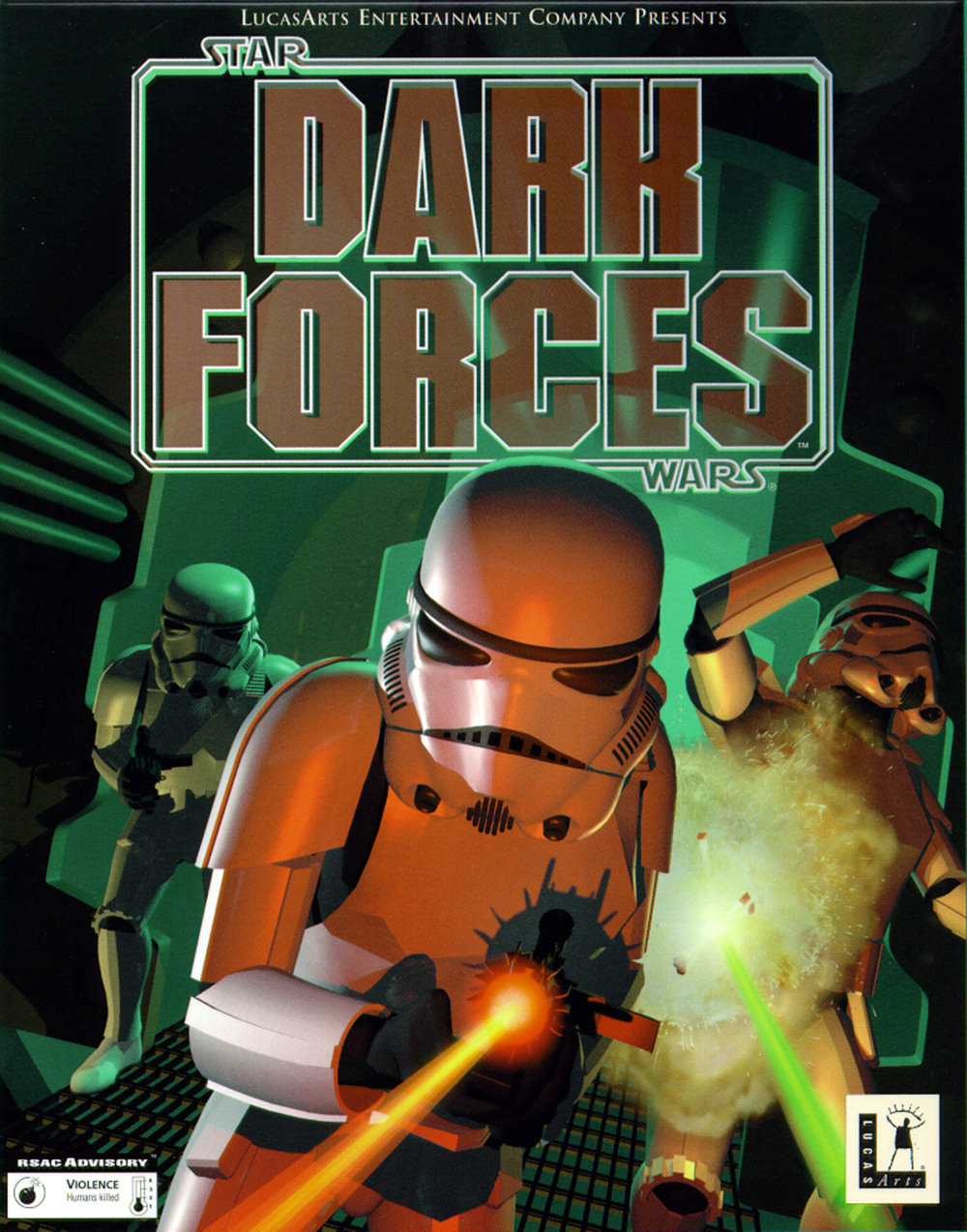 Prior to Dark Forces, LucasArts had released several Star Wars titles, with the most notable predecessor being Star Wars: Rebel Assault. That game pushed the boundaries of early CD-ROM gaming by employing full-motion video cutscenes. However, it was largely a rail shooter, guiding the player through action sequences with limited freedom to explore. Dark Forces represented LucasArts’ shift toward deeper, more interactive gameplay.
Having witnessed the rise of the first-person shooter in titles like Doom, where modders would reimagine the game on the Death Star, LucasArts saw the potential to bring the genre into the Star Wars galaxy. They also recognised an opportunity to expand storytelling through cinematic cutscenes. With that in mind, development of Dark Forces began in 1993. The goal was to challenge FPS expectations by creating more story-driven missions with multi-layered environments.
Rather than simple run-and-gun gameplay, the developers introduced more complex objectives and player mechanics, allowing players to crouch, jump, and swim—features that were not standard at the time.
To achieve this, LucasArts’ lead programmer Ray Gresko developed the Jedi Engine from scratch—a new game engine designed to compete with id Software’s widely used Doom engine. Unlike Doom, which was mapped on a 2D plane, the Jedi Engine allowed rooms (or sectors) to be stacked on top of one another, creating levels with true verticality. The engine also supported atmospheric elements such as scrolling conveyor belts, fog, flowing water, and animated backgrounds.
The final game contains 14 missions, although early design documents reportedly planned over 30 before development was scaled back. Each mission begins with a briefing screen that provides background intel linked to the previous mission’s outcome.
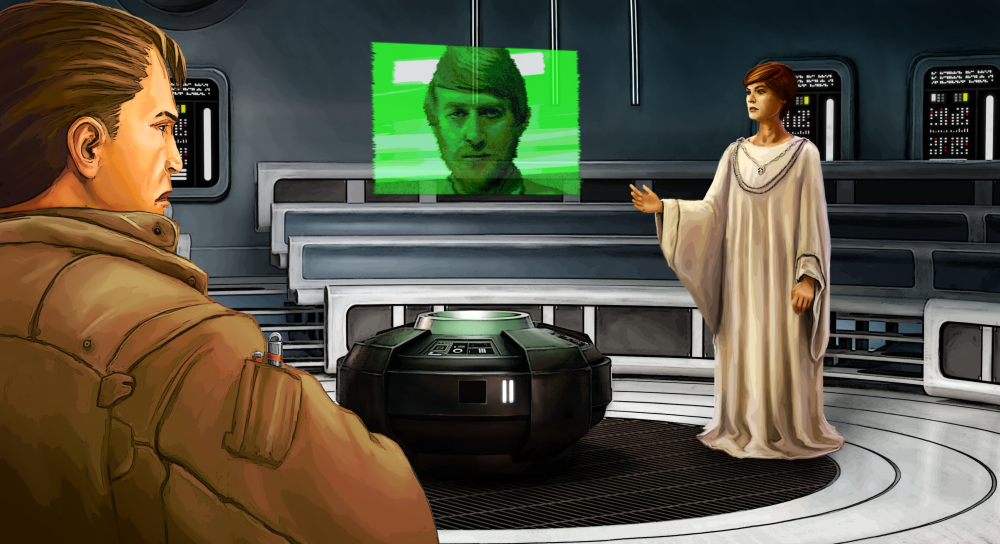
The story follows mercenary and former Imperial officer Kyle Katarn, who now works for the Rebel Alliance. Rebel commander Crix Madine hires Katarn to investigate reports of a new Imperial superweapon. Katarn insists that his partner, Jan Ors, joins as mission officer; essentially acting as his handler, providing briefings and intelligence while piloting his ship, the Moldy Crow.
The game begins with a prologue in which Katarn steals the Death Star plans from an Imperial base on Danuta. Unlike the 2016 Rogue One depiction, Kyle successfully escapes with both the plans and his life—take that, Jyn Erso.
After the destruction of the Death Star, Katarn is once again recruited to investigate a mysterious Imperial military programme. This leads to the discovery of the Dark Trooper Project—an initiative to create advanced battle droids and powered-armour stormtroopers.
Throughout the game, Katarn infiltrates various Imperial installations in search of clues about the Dark Troopers. The missions blend espionage and sabotage, with plenty of Imperial forces to contend with even on easier difficulty settings. The original game used a cinematic engine combining 2.5D sprites with pre-rendered CGI, totalling just under nine minutes of cutscenes.
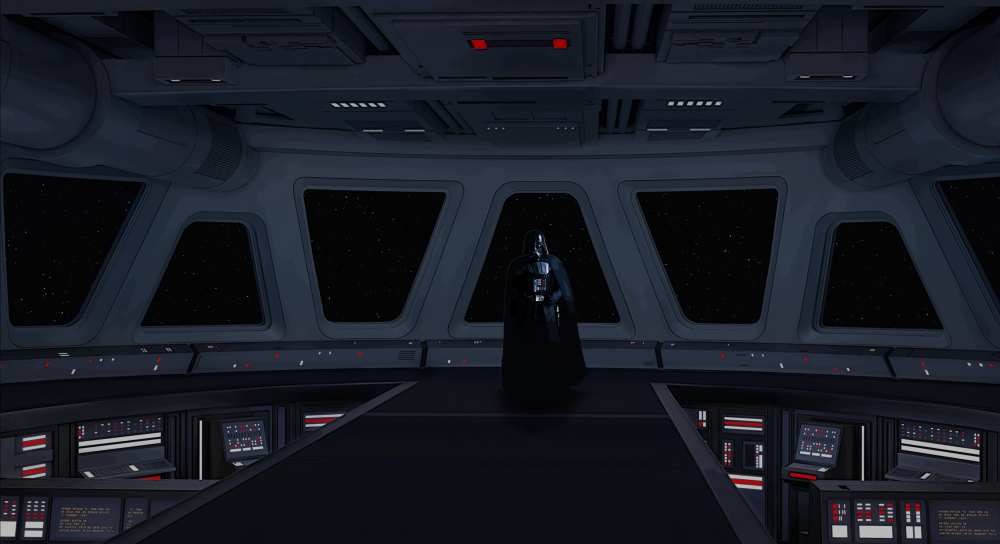
No Star Wars story would be complete without the Dark Lord of the Sith. Darth Vader appears in several cutscenes, urging his officers including Dark Trooper creator General Mohc to eliminate Katarn. He dismisses Katarn’s past as a former Imperial officer as insignificant, suggesting he learned little from the destruction of the first Death Star.
Other characters making appearances include Admiral Ackbar, Mon Mothma, and Jabba the Hutt, often integrated using stylised hologram effects.
Nightdive’s remastered re-release brings Dark Forces up to modern standards with a range of improvements. Using their proprietary KEX Engine, the studio has created a cross-platform upgrade that preserves the original source code while acting as a compatibility layer. This allows the original game mechanics to function as intended on modern systems, while enhancing visuals and performance. It’s less about remaking the game and more about presenting it as it was originally envisioned—only cleaner and sharper.
The remaster supports up to 4K resolution and frame rates of up to 120 frames per second on current-generation consoles, delivering smooth, stutter-free gameplay. Textures and sprites have been rebuilt to look crisp on modern displays without losing their retro aesthetic, while all cinematics have been re-rendered to eliminate compression artefacts.
The Jedi Engine’s original innovations have been further enhanced with modern 3D rendering, including improved lighting effects around blaster bolts, lamps, and reactor cores. These additions don’t fundamentally change the experience but elevate it to contemporary standards.
One particularly nice feature is the ability to switch instantly between modern hardware rendering and classic software rendering. Players can also toggle between remixed audio and the original General MIDI/OPL3 soundtracks. Additional configuration options allow players to tweak the experience, including disabling the exaggerated head-bob movement that some players found disorienting in the original release.
For most players, Star Wars: Dark Forces takes around 6–10 hours to complete, depending on difficulty and play style. Higher difficulties don’t introduce new areas but increase enemy numbers and reduce power-ups, adding challenge—especially when navigating dark environments without functioning infrared goggles.
I quickly found myself remembering sections of levels—and even mistakes I had made nearly thirty years ago—though not always how to avoid them. The gameplay remains enjoyable, even if it feels basic compared to modern standards. Levels typically take 10–15 minutes, making it ideal for short play sessions.
Some of the looped music becomes repetitive, and the controls lack the precision of modern titles, but these issues are easy to adjust to. The storyline has a strong espionage feel, which likely explains its lasting appeal—especially to fans of that genre. There’s something timeless about stealing the Death Star plans, even if it’s no longer canon.
The success of Dark Forces led to a series of sequels, with LucasArts later rebranding the franchise under the Jedi Knight banner—a nod to Kyle’s evolving role within Star Wars Legends. The series includes:
Star Wars: Dark Forces (1995)
Star Wars: Dark Forces II (1997)
Star Wars Jedi Knight: Mysteries of the Sith (1998)
Star Wars Jedi Knight II: Jedi Outcast (2002)
Star Wars Jedi Knight: Jedi Academy (2003)
In addition, three Star Wars: Dark Forces novels written by the late William C. Dietz adapted elements of the games:
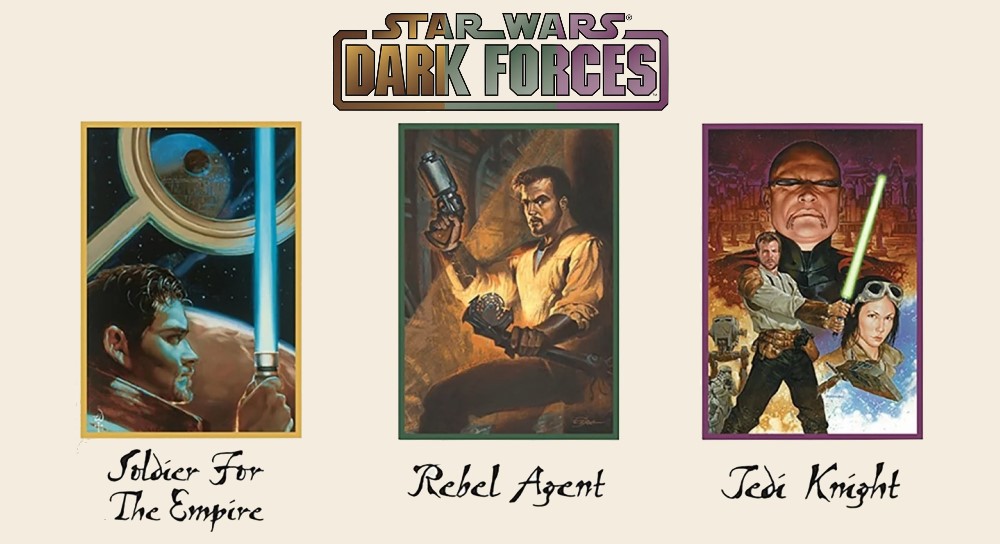
Soldier for the Empire (1997)
Rebel Agent (1998)
Jedi Knight (1998)
There are also numerous Star Wars Legends novels featuring Kyle Katarn as a Jedi Master fighting alongside Luke Skywalker.
A huge thank you to Nightdive Studios for providing review copies of the game!