
Event Review: Star Wars: Maul – Shadow Lord Fan Screening Q&A

- Advertisement -
- Advertisement -

There are fan screenings, and then there are fan screenings that feel like a happening. The Maul: Shadow Lord screening was one of those.

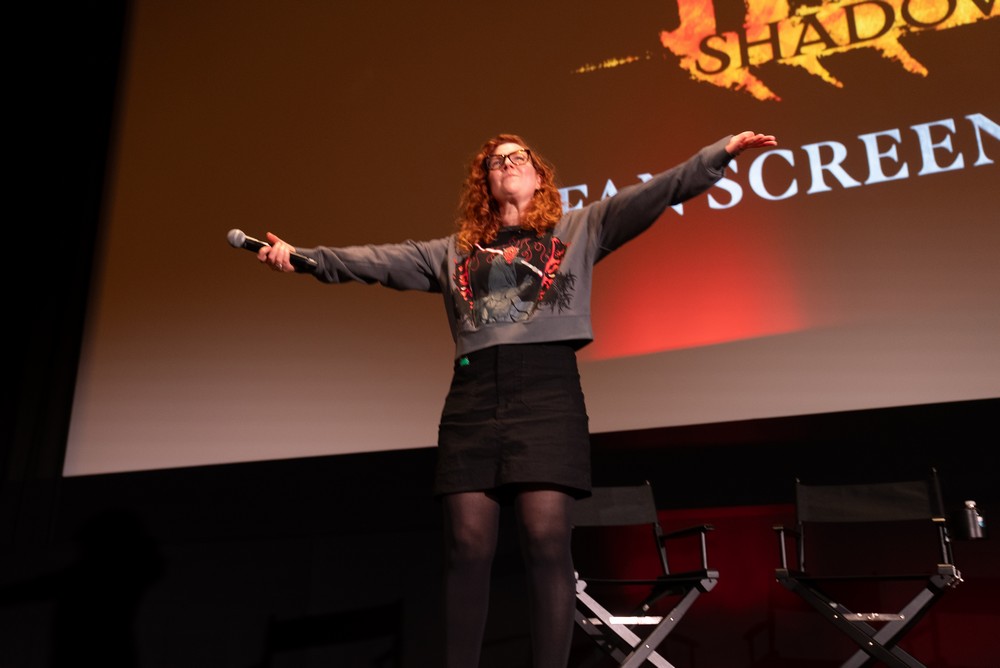
At Lucasfilm, on the Friday night before the series’ April 6 debut, fans were first welcomed by Lucasfilm co-presidents Dave Filoni and Lynwen Brennan before the evening’s screening of the first two episodes, a greeting that drew a roaring response from the crowd.

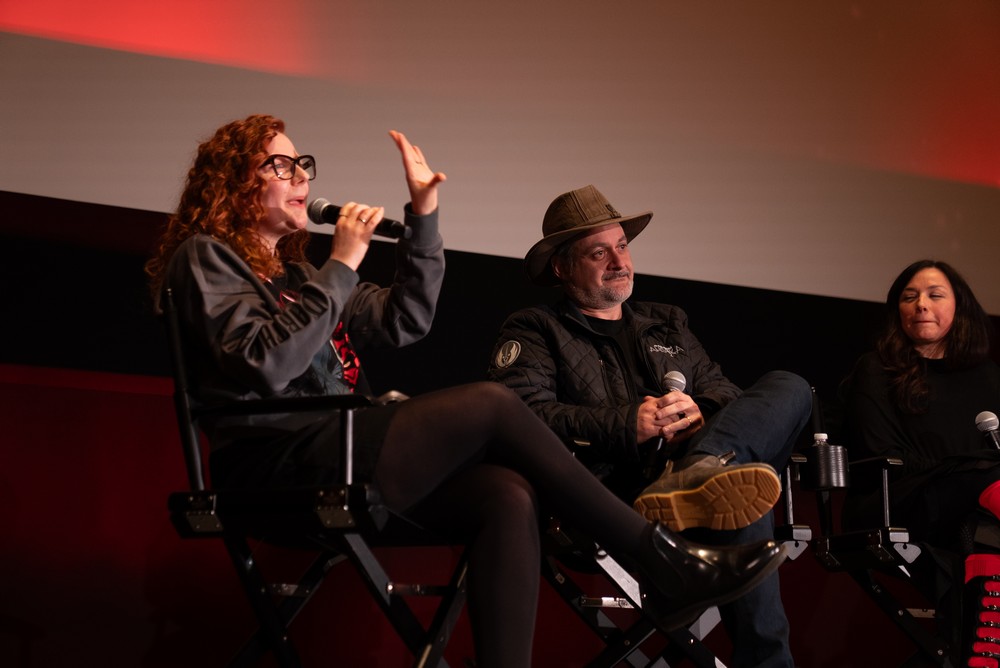
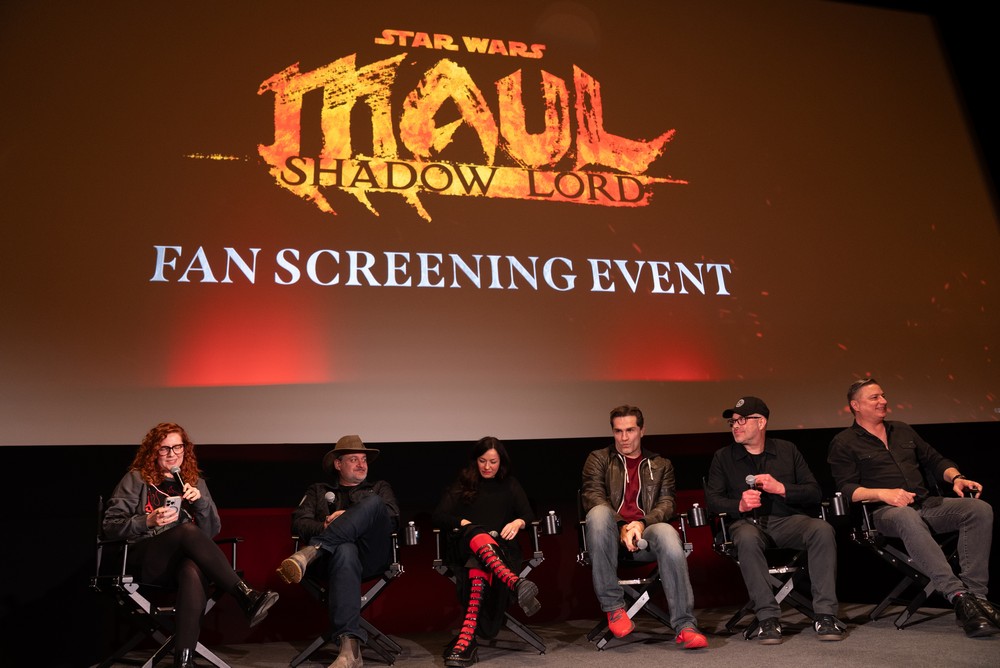
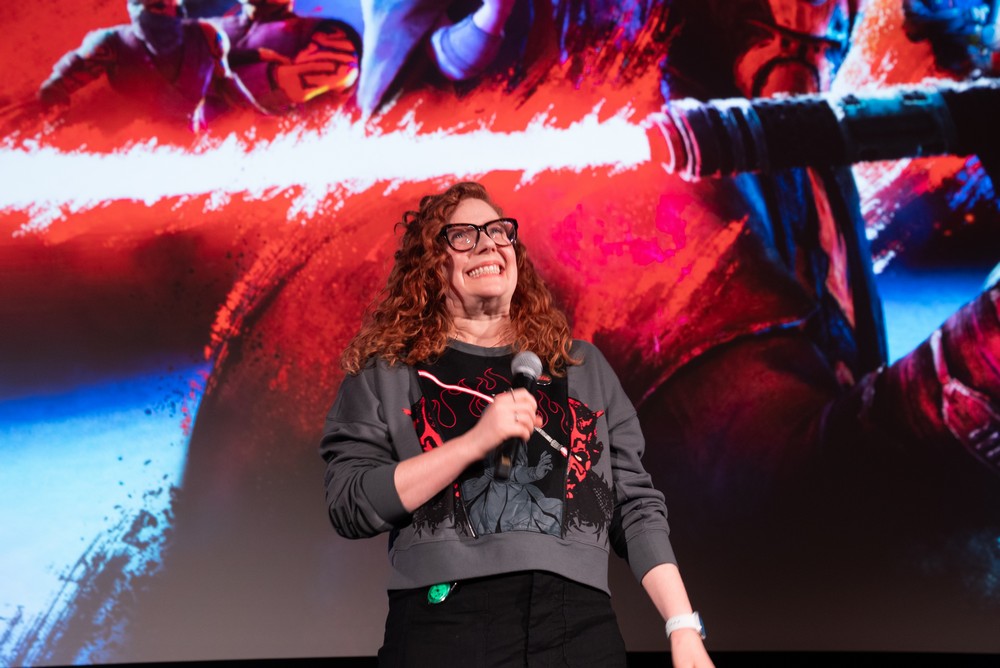
From there, the night rolled straight into a lively, funny, spoiler skittish, and often rather revealing Q&A with creator Dave Filoni, Maul voice actor Sam Witwer, supervising director Brad Rau, head writer Matt Michnovetz, and executive producer Athena Yvette Portillo, moderated by Kristin Baver, editor-in-chief at starwars.com.

No one onstage was exactly keen to hand over the Sith holocron, of course. But what the panel did offer was something better in its own way: a sense of the spirit behind the series, the chemistry of the team making it, and the particular energy that comes when creators and fans are reacting together in one room, at the very same time.
WHY MAUL, WHY NOW?

That was the obvious question, and Filoni gave the clearest answer of the night.

He described Maul as “unfinished business,” and spoke about wanting to better understand what the character is about, what his intentions are, and how he gets from the end of The Clone Wars to where we meet him in Rebels. Filoni also made clear that Maul works in part because he remains mysterious. Reveal too much and you risk reducing him.

How do you take Maul further without over explaining him? How do you reveal more while keeping the shadows intact? It is a good problem, and from the sound of the panel, a problem this team knows very well.

SPOILING IT: FEAR IS THE PATH TO THE DARK SIDE

If the panel had a running joke, it was fear.

Fear of spoilers. Fear of saying too much. Fear of accidentally confirming something. And, perhaps most amusingly, fear of Filoni hearing you say the wrong thing while seated right beside you.

It became one of the most enjoyable energies of the evening.

Witwer especially seemed to enjoy walking right up to the line and then backing away from it. Filoni, meanwhile, joked that the real trick was to make people think you had said something, only for them to realize on the drive home that you had actually said nothing. “That’s the Sith,” he said. “It’s a Sith thing.”

It was a very funny bit, but it also told you something real. This is a team clearly trying to protect what is coming. Still, because the camaraderie onstage was so obvious, the tension never felt stiff. It felt like a running family joke

FILONI — THE MASTER, MENTOR, TORMENTOR
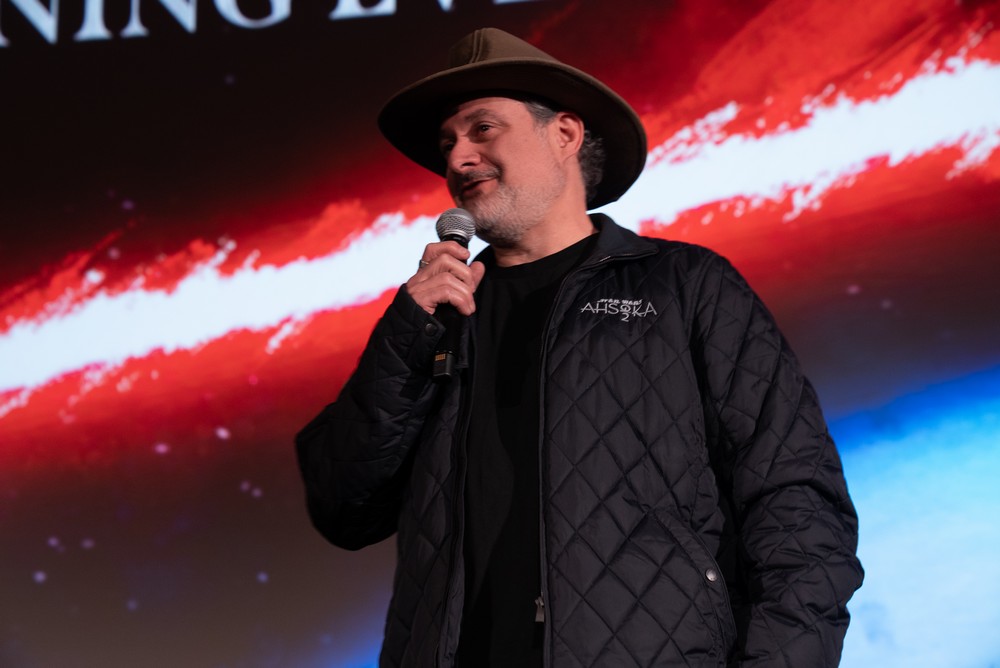
One of the more interesting undercurrents of the evening was Filoni’s role within this team now.

Athena Yvette Portillo recalled Filoni telling her early on that he wanted to “elevate everything in this show” — body mechanics, facial performances, cloth sim, hair sim, effects sim, matte painting, all of it — before simply telling her, “Athena, figure it out.” Filoni then connected that directly to George Lucas, saying that George used to challenge him in much the same way.

That line got a laugh, but it also opened onto something bigger.

George challenged Dave. Dave now challenges the next generation. It is a very Star Wars kind of passing on of the method (as George might say, “It’s like poetry, it rhymes.”).

And that push was not abstract. It showed up in the way they talked about the series itself. Filoni spoke about wanting something more painterly and more heightened than what was possible in the earlier Clone Wars years, while Portillo added a great detail about the lightsaber action, explaining that the animators use authentic martial arts reference, filming themselves and studying movement in house. Witwer then put it bluntly: the fights in this season are unlike anything he has seen in Lucasfilm animation.

What came through strongly was that the others onstage regard Filoni with a mix of affection, trust, and real creative respect. He was not just there as the face of the project. He was clearly the mentor, sounding board, standard bearer, and also the one person no one seemed eager to disappoint. The joke that he was there as a “stabilizing force” so the others would not say too much was funny, but also revealing. He really did feel like the gravitational center of the conversation.

And if the measure of a mentor is what his team goes on to create, the results were right there on the screen.

YOUR FOCUS DETERMINES YOUR REALITY, SAM

Athena said she had to pick Maul as her favorite because he feels new here, “in a way where he has character depth” unlike what audiences have seen before. Witwer built on that by talking about how Maul changes across different phases of his life, how the earlier Clone Wars version differs from the one in Rebels (and is “way different than Spider-Maul, whatever that guy was,” as Witwer memorably put it), and how this is another distinct version again.
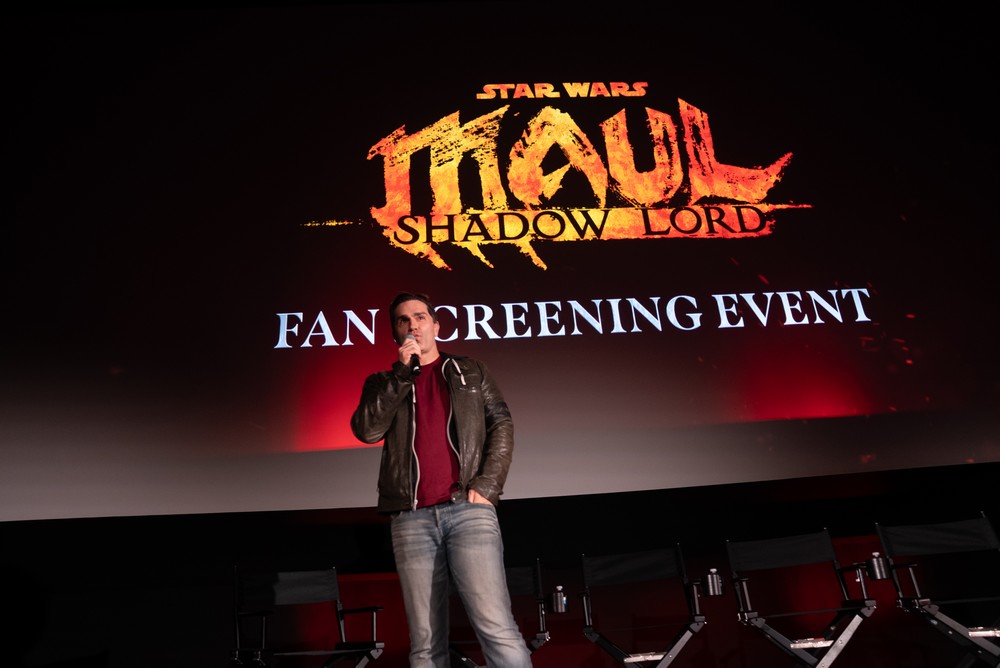
The strongest point came later. Because Filoni wants to preserve some mystery around Maul, Witwer said, the storytelling gets freed up. You do not have to explain everything outright. You can tell story “through behavior.” Through reactions, choices, and vocal nuance.

Then came perhaps the quote of the night: “This is easily my favorite version of the character.” Coming from Witwer, that carries real weight.

THE COUNCIL BEHIND THE CHAOS
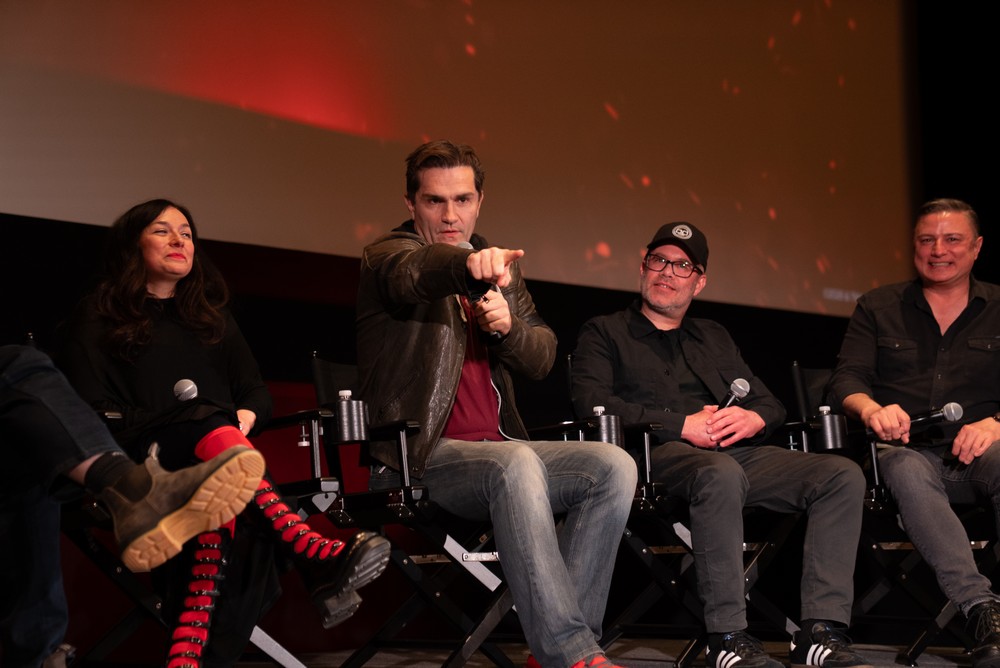
Matt Michnovetz was not the loudest person onstage, but he may have had one of the best lines when he described the writers’ room tendency to “write ourselves into a corner and then see if we can get our way out of it.” It was funny, yes, but also revealing. It suggests a room willing to take risks.

Brad Rau, meanwhile, brought both enthusiasm and feeling. They gave multiple warm shout outs to David W. Collins (Sound Designer / Supervising Sound Editor), which led to Witwer retelling the delightful story of Collins sneaking his headshot into the audition pile for The Force Unleashed. Vanessa Marshall (Rook Kast voice actor) was also warmly acknowledged in the room, and the animation team themselves were repeatedly pointed out and applauded.

Portillo perhaps summed up the team spirit best when she spoke about “everyone’s inclusion” and said, “Everyone was passionate about this project. Everyone fell in love with this project.” She also thanked Filoni directly, calling him “an amazing mentor” and thanking him “for teaching us the ways.”

That camaraderie was not hard to spot. It felt genuine.

Also yes, the chicken parm bit was funny. And Filoni’s quick “We are not menu setters” when Galaxy’s Edge was jokingly invoked got exactly the laugh it deserved.

THE PULL OF THE LIGHT

For all the talk of menace and mystery, the panel also circled back to something more elemental.

Filoni reflected on how audiences respond instinctively when a character steps forward to protect others. He compared it to an earlier screening memory involving Obi-Wan, then pointed out that even in a Maul centered story, the crowd still erupts for that kind of moment. He called it “the power of the Jedi,” and invoked Obi-Wan’s line, “If you strike me down, I’ll become more powerful than you can possibly imagine,” to underline the point that evil cannot really comprehend the strength of selflessness, courage, and sacrifice.

It was a strong reminder that even when Star Wars goes deep into shadow, it still knows where its moral center lives. That is part of its deepest DNA. Beneath the lightsabers, the fallen warriors, the villains we cannot stop watching, and the seductive pull of darkness, Star Wars still comes back to the oldest and simplest struggle of all: good against evil.

And perhaps more than that, it comes back to hope.

To the hope that goodness is not weakness. To the hope that sacrifice matters. To the hope that when darkness presses in, there is still something in people that reaches toward light.

Maybe that is why audiences respond so instinctively in those moments Filoni was talking about. Not only because that is what Star Wars has always taught us to cheer for, but because some part of us wants it to be true of the world too. Or at least true of humanity at its best.

A SHARED FORCE IN THE ROOM

And yet, if there was a real thesis to the evening, for me it was not simply about Maul, or even about what the panel revealed.

It was about the room.

Kristin Baver put it beautifully when she described the experience of sharing something like this in person as “a very surreal but also specific feeling,” that moment when years of work are finally met by “the gasping, the laughing, the applause, and the excitement” of an audience in real time.

Brad Rau’s response made that feeling even more real, admitting that he was “literally crying in the back of the theater just listening to all the reaction.”

That, to me, is the part worth holding onto.

For the most part, a series like Maul: Shadow Lord will live with fans at home. It will be watched in living rooms, on couches, with the lights off, alone or with a few friends. The response from there will scatter into reviews, social media posts, Reddit threads, podcasts, YouTube breakdowns, and all the rest of modern fandom’s running conversation. All of that has its place.

But none of it is quite like this. None of it is as immediate, as honest, or as pure as creators and audience being together in one theater, reacting to the same moments at the same time.

A laugh lands, and they hear it.

A reveal hits, and they feel it.

A scene breathes, and everyone is inside that breath together.

For one night, the distance between the makers of Star Wars and the people who love it closed in a very real way. Not through press notes. Not through critic quotes. Not through online commentary after the fact. But through presence and shared reaction. Through that old fashioned, increasingly rare kind of communal experience that reminds you why fan screenings matter in the first place.

That may have been the most meaningful thing about the Maul: Shadow Lord screening.

Not just that fans got to see it early, but that, for a little while, the people who made it and the people it was made for got to enjoy it together.

 All photos by Sam Simbulan.

Ricky Resurreccion
Ricky Resurreccionhttps://rickyboyblue.com/
Based in the Bay Area of San Francisco, Ricky (TK-74259 of the Golden Gate Garrison of the 501st Legion and a member of the Rebel Legion) is a lifelong Star Wars fan with a deep love for costuming, collecting, and immersive fandom. A Marketing, B2B Sales, and Events professional by trade, he is especially drawn to the energy of fan gatherings and the meaningful connections formed through shared passion at conventions, charity appearances, and community events.
- Advertisement -
- Advertisement -

There are fan screenings, and then there are fan screenings that feel like a happening. The Maul: Shadow Lord screening was one of those.

At Lucasfilm, on the Friday night before the series’ April 6 debut, fans were first welcomed by Lucasfilm co-presidents Dave Filoni and Lynwen Brennan before the evening’s screening of the first two episodes, a greeting that drew a roaring response from the crowd.

From there, the night rolled straight into a lively, funny, spoiler skittish, and often rather revealing Q&A with creator Dave Filoni, Maul voice actor Sam Witwer, supervising director Brad Rau, head writer Matt Michnovetz, and executive producer Athena Yvette Portillo, moderated by Kristin Baver, editor-in-chief at starwars.com.

No one onstage was exactly keen to hand over the Sith holocron, of course. But what the panel did offer was something better in its own way: a sense of the spirit behind the series, the chemistry of the team making it, and the particular energy that comes when creators and fans are reacting together in one room, at the very same time.

WHY MAUL, WHY NOW?

That was the obvious question, and Filoni gave the clearest answer of the night.

He described Maul as “unfinished business,” and spoke about wanting to better understand what the character is about, what his intentions are, and how he gets from the end of The Clone Wars to where we meet him in Rebels. Filoni also made clear that Maul works in part because he remains mysterious. Reveal too much and you risk reducing him.

How do you take Maul further without over explaining him? How do you reveal more while keeping the shadows intact? It is a good problem, and from the sound of the panel, a problem this team knows very well.

SPOILING IT: FEAR IS THE PATH TO THE DARK SIDE

If the panel had a running joke, it was fear.

Fear of spoilers. Fear of saying too much. Fear of accidentally confirming something. And, perhaps most amusingly, fear of Filoni hearing you say the wrong thing while seated right beside you.

It became one of the most enjoyable energies of the evening.

Witwer especially seemed to enjoy walking right up to the line and then backing away from it. Filoni, meanwhile, joked that the real trick was to make people think you had said something, only for them to realize on the drive home that you had actually said nothing. “That’s the Sith,” he said. “It’s a Sith thing.”

It was a very funny bit, but it also told you something real. This is a team clearly trying to protect what is coming. Still, because the camaraderie onstage was so obvious, the tension never felt stiff. It felt like a running family joke

FILONI — THE MASTER, MENTOR, TORMENTOR

One of the more interesting undercurrents of the evening was Filoni’s role within this team now.

Athena Yvette Portillo recalled Filoni telling her early on that he wanted to “elevate everything in this show” — body mechanics, facial performances, cloth sim, hair sim, effects sim, matte painting, all of it — before simply telling her, “Athena, figure it out.” Filoni then connected that directly to George Lucas, saying that George used to challenge him in much the same way.

That line got a laugh, but it also opened onto something bigger.

George challenged Dave. Dave now challenges the next generation. It is a very Star Wars kind of passing on of the method (as George might say, “It’s like poetry, it rhymes.”).

And that push was not abstract. It showed up in the way they talked about the series itself. Filoni spoke about wanting something more painterly and more heightened than what was possible in the earlier Clone Wars years, while Portillo added a great detail about the lightsaber action, explaining that the animators use authentic martial arts reference, filming themselves and studying movement in house. Witwer then put it bluntly: the fights in this season are unlike anything he has seen in Lucasfilm animation.

What came through strongly was that the others onstage regard Filoni with a mix of affection, trust, and real creative respect. He was not just there as the face of the project. He was clearly the mentor, sounding board, standard bearer, and also the one person no one seemed eager to disappoint. The joke that he was there as a “stabilizing force” so the others would not say too much was funny, but also revealing. He really did feel like the gravitational center of the conversation.

And if the measure of a mentor is what his team goes on to create, the results were right there on the screen.

YOUR FOCUS DETERMINES YOUR REALITY, SAM

Athena said she had to pick Maul as her favorite because he feels new here, “in a way where he has character depth” unlike what audiences have seen before. Witwer built on that by talking about how Maul changes across different phases of his life, how the earlier Clone Wars version differs from the one in Rebels (and is “way different than Spider-Maul, whatever that guy was,” as Witwer memorably put it), and how this is another distinct version again.

The strongest point came later. Because Filoni wants to preserve some mystery around Maul, Witwer said, the storytelling gets freed up. You do not have to explain everything outright. You can tell story “through behavior.” Through reactions, choices, and vocal nuance.

Then came perhaps the quote of the night: “This is easily my favorite version of the character.” Coming from Witwer, that carries real weight.

THE COUNCIL BEHIND THE CHAOS
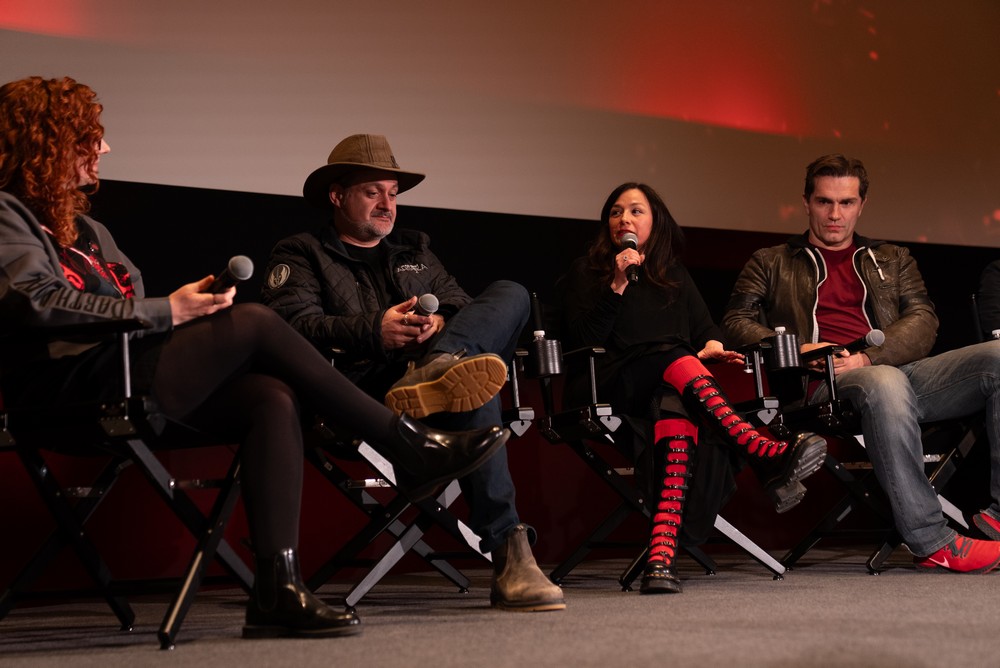
Matt Michnovetz was not the loudest person onstage, but he may have had one of the best lines when he described the writers’ room tendency to “write ourselves into a corner and then see if we can get our way out of it.” It was funny, yes, but also revealing. It suggests a room willing to take risks.

Brad Rau, meanwhile, brought both enthusiasm and feeling. They gave multiple warm shout outs to David W. Collins (Sound Designer / Supervising Sound Editor), which led to Witwer retelling the delightful story of Collins sneaking his headshot into the audition pile for The Force Unleashed. Vanessa Marshall (Rook Kast voice actor) was also warmly acknowledged in the room, and the animation team themselves were repeatedly pointed out and applauded.

Portillo perhaps summed up the team spirit best when she spoke about “everyone’s inclusion” and said, “Everyone was passionate about this project. Everyone fell in love with this project.” She also thanked Filoni directly, calling him “an amazing mentor” and thanking him “for teaching us the ways.”

That camaraderie was not hard to spot. It felt genuine.

Also yes, the chicken parm bit was funny. And Filoni’s quick “We are not menu setters” when Galaxy’s Edge was jokingly invoked got exactly the laugh it deserved.

THE PULL OF THE LIGHT

For all the talk of menace and mystery, the panel also circled back to something more elemental.

Filoni reflected on how audiences respond instinctively when a character steps forward to protect others. He compared it to an earlier screening memory involving Obi-Wan, then pointed out that even in a Maul centered story, the crowd still erupts for that kind of moment. He called it “the power of the Jedi,” and invoked Obi-Wan’s line, “If you strike me down, I’ll become more powerful than you can possibly imagine,” to underline the point that evil cannot really comprehend the strength of selflessness, courage, and sacrifice.

It was a strong reminder that even when Star Wars goes deep into shadow, it still knows where its moral center lives. That is part of its deepest DNA. Beneath the lightsabers, the fallen warriors, the villains we cannot stop watching, and the seductive pull of darkness, Star Wars still comes back to the oldest and simplest struggle of all: good against evil.

And perhaps more than that, it comes back to hope.

To the hope that goodness is not weakness. To the hope that sacrifice matters. To the hope that when darkness presses in, there is still something in people that reaches toward light.

Maybe that is why audiences respond so instinctively in those moments Filoni was talking about. Not only because that is what Star Wars has always taught us to cheer for, but because some part of us wants it to be true of the world too. Or at least true of humanity at its best.

A SHARED FORCE IN THE ROOM
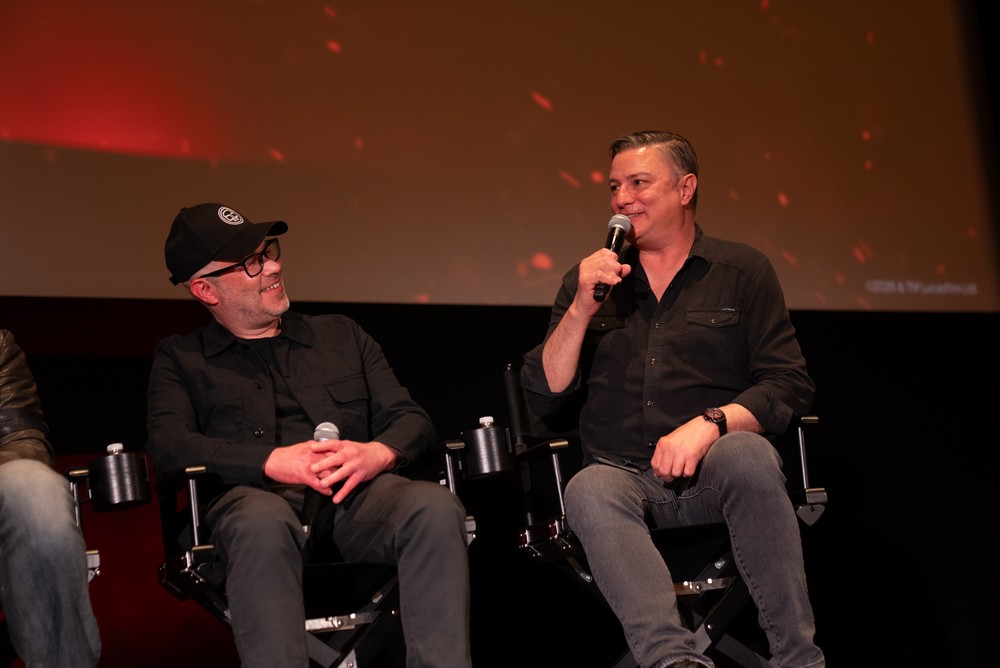
And yet, if there was a real thesis to the evening, for me it was not simply about Maul, or even about what the panel revealed.

It was about the room.

Kristin Baver put it beautifully when she described the experience of sharing something like this in person as “a very surreal but also specific feeling,” that moment when years of work are finally met by “the gasping, the laughing, the applause, and the excitement” of an audience in real time.

Brad Rau’s response made that feeling even more real, admitting that he was “literally crying in the back of the theater just listening to all the reaction.”

That, to me, is the part worth holding onto.

For the most part, a series like Maul: Shadow Lord will live with fans at home. It will be watched in living rooms, on couches, with the lights off, alone or with a few friends. The response from there will scatter into reviews, social media posts, Reddit threads, podcasts, YouTube breakdowns, and all the rest of modern fandom’s running conversation. All of that has its place.

But none of it is quite like this. None of it is as immediate, as honest, or as pure as creators and audience being together in one theater, reacting to the same moments at the same time.

A laugh lands, and they hear it.

A reveal hits, and they feel it.

A scene breathes, and everyone is inside that breath together.
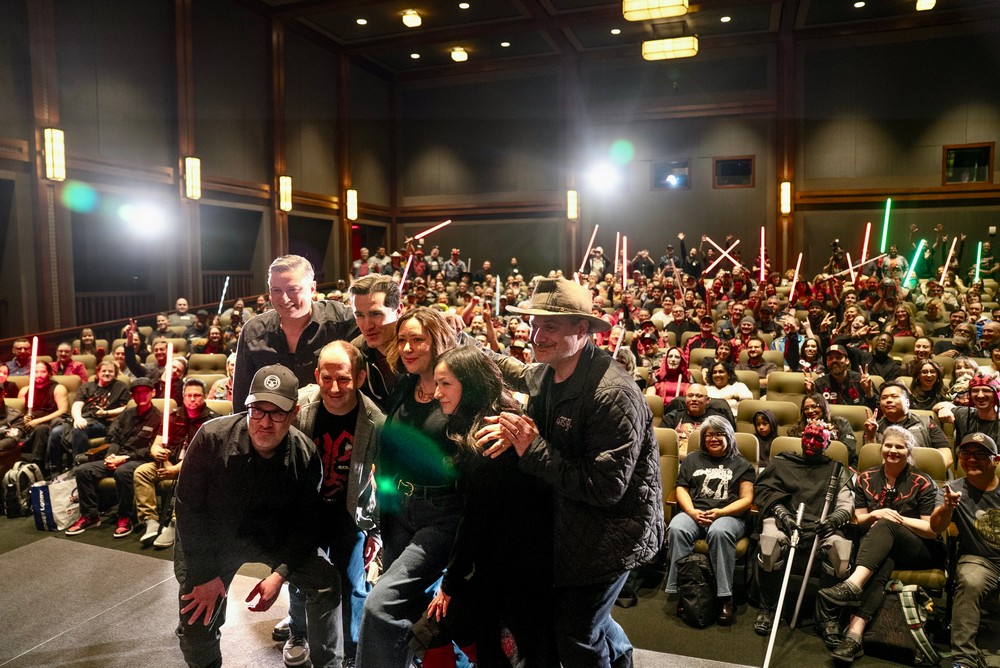
For one night, the distance between the makers of Star Wars and the people who love it closed in a very real way. Not through press notes. Not through critic quotes. Not through online commentary after the fact. But through presence and shared reaction. Through that old fashioned, increasingly rare kind of communal experience that reminds you why fan screenings matter in the first place.

That may have been the most meaningful thing about the Maul: Shadow Lord screening.

Not just that fans got to see it early, but that, for a little while, the people who made it and the people it was made for got to enjoy it together.

 All photos by Sam Simbulan.

Ricky Resurreccion
Ricky Resurreccionhttps://rickyboyblue.com/
Based in the Bay Area of San Francisco, Ricky (TK-74259 of the Golden Gate Garrison of the 501st Legion and a member of the Rebel Legion) is a lifelong Star Wars fan with a deep love for costuming, collecting, and immersive fandom. A Marketing, B2B Sales, and Events professional by trade, he is especially drawn to the energy of fan gatherings and the meaningful connections formed through shared passion at conventions, charity appearances, and community events.
- Advertisement -
- Advertisement -
- Advertisement -