


Every time an episode of Star Wars: The Acolyte lands, Fantha Tracks will be giving their responses, and here are our initial gut feelings, deep dives and thoughts on episode three of season one, ‘Destiny’. Beware of spoilerific elements in here.
 Ross Hollebon
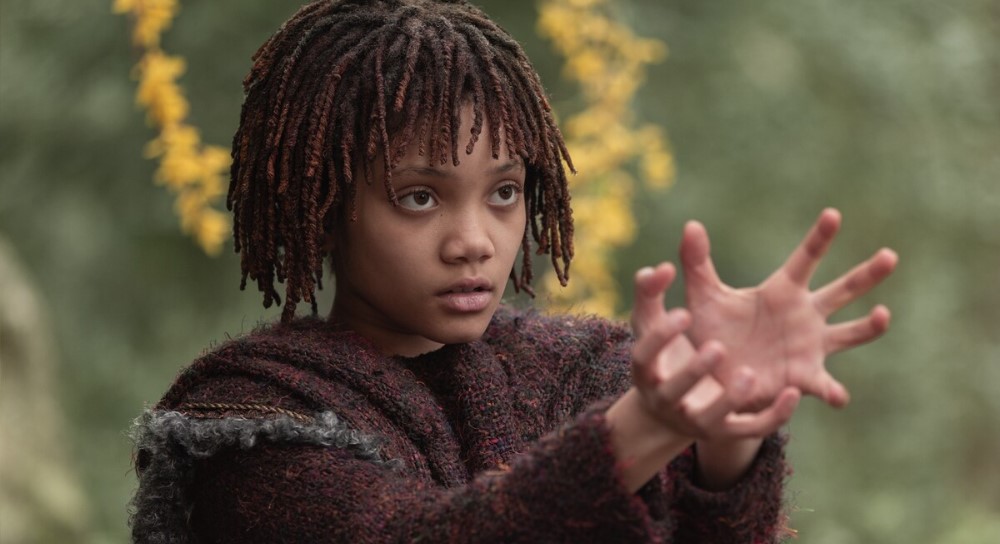
A bunta tree, 16 years before the opening of The Acolyte series. During episode 2 its poisonous leaves were used to concoct a deadly liquid. In episode 3 Osha is at ease, sitting under the beauty and serenity of the yellow-flowered bunta tree—a perfect dichotomy of the coven twin girls, Mae and Osha. But the symbolism also serves as a reminder that rarely is anything absolute.
During “Destiny,” live-action Star Wars explores the ways of the Jedi from a different vantage point. Mother Aniseya breaks it down for her daughter, Osha, explaining, “This isn’t about good or bad. This is about power and who is allowed to use it.”
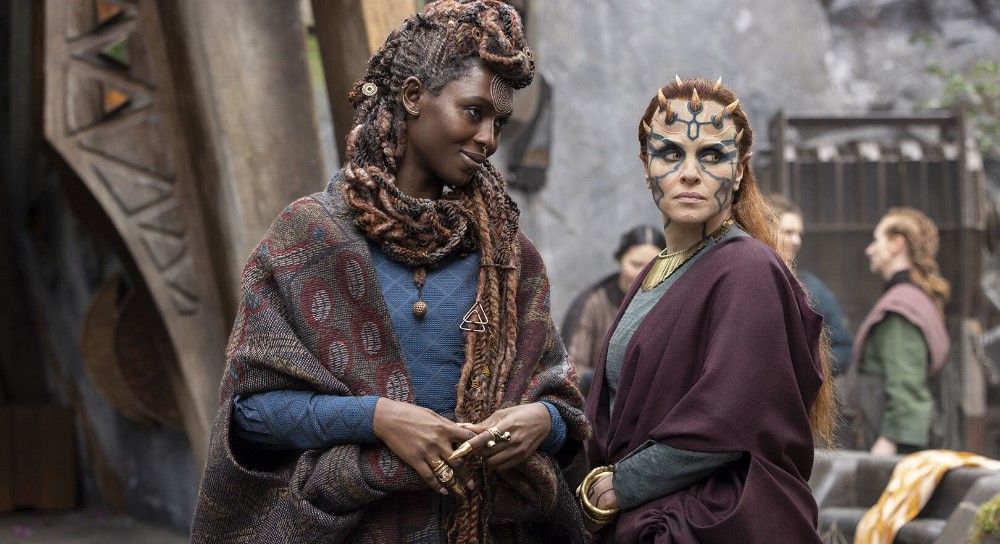
Mother Koril, who carried the twins but without conception from a male, described the Jedi as “deranged monks.” They’re actions, though coated in care and respect, reek of arrogance, entitlement, and double standards as they infiltrate the fortress of the coven and interrupt a sacred Ascension ritual.
Some phrases uttered by Master Indara, who is doing the right thing in her mind, include:
“We mean you and your coven no harm.”
“We are concerned that you are training children.”
“You cannot deny that Jedi have the right to test potential Padawans. With your permission, of course.”
“We appreciate your cooperation.”
 The Jedi are currently in “power” so their word carries the most weight, making them blind to the fact that other people may have different interpretations of the Force and what they deem as “right.”
“All living things are connected by the same Thread,” explained Mother Aniseya, to her twins, before the attempted Ascension ceremony. “A Thread woven through all of existence. Some call it a Force and claim to use it. But we know the Thread is not a power you wield. Pull the Thread. Change everything. It ties you to your destiny. It binds you to others.”
This binding gets incredibly complicated as the episode culminates. Osha wants to leave to become a Jedi. Mother Aniseya reluctantly blesses it. Mae commits to a dark place, telling Osha she’ll kill her rather than let her leave the coven. Mae burns Osha’s sketchbook and the fire spreads quickly throughout the fortress—but what role have the Jedi played in tragedy? Whether or not intended, the situation quickly becomes an extinction-level event for this specific coven. But there are more threads to pull, as well as leaves to fall.
As Star Wars fans are all too aware, Koril reminds Aniseya, “The twins are not normal children.” Especially not this pair, representing two sides of the bunta tree regardless of where they draw their connection to the Force or Threads. And it is already understood that one of the paths is less inclusive than the other—willing to disregard a student who was initially taken from her family as a child.
 Dan Lo
I have in the past reviewed shows based on the nebulous criteria of how much it “feels like Star Wars“. Sometimes I can back it up with hard data points, and other times I can’t quite put my finger on it. There have definitely been instances where there isn’t a whole lot wrong with the production and overall look, but so lacking in familiarity that it did not feel right.
There is no other way to say this, but I had a really hard time with the latest episode of The Acolyte for that reason. Visually speaking it had exceeded my expectations in certain moments, but too much of the episode just did not feel like Star Wars to me. In the first 15 minutes or so, I had to remind myself way too often that I was in fact watching Star Wars and not a random fantasy show that I had accidentally tuned into. Mother Koril being a Zabrak provided a hint of familiarity, although having both horns and hair was a slightly odd choice. The Ascension ceremony was by far my least favorite part, particularly when they began chanting and singing in English which made it feel like an unexpected musical. Witchcraft in general also makes me uneasy, even if portrayed in a fictional context, and took up way too much screen time for my liking.
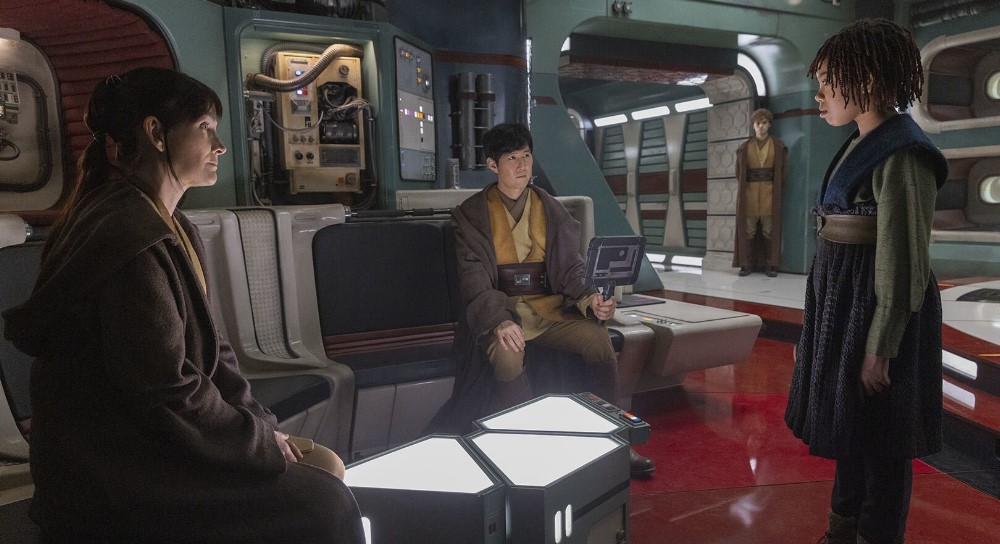
The arrival of the Jedi helped reintroduce some familiarity, although Aniseya’s interactions with them involved some wild swings: From welcoming, being mildly snarky, allowing the Jedi to undermine her authority, to forcibly reasserting her power all in under four minutes. The invitation of Osha and Mae to take the Jedi test also felt a little clunky. “The Jedi do not take children” said Sol, and immediately asked if Osha would like to be taken by them. Was this intentional humor? I honestly couldn’t tell. Indara then acknowledged that they needed the witches’ permission to test Osha and Mae. Despite being clearly against the idea, they agreed. Why they did so was unclear, other than the plot necessitated it.
 The closing scenes were also confusing. Mae expressed her reluctance to losing Osha to the Jedi by threatening to kill her. We saw her burning Osha’s book, and it was implied that she set the doorway on fire although we didn’t actually see that happen. The rest of the compound quickly went up in flames, which again happened offscreen. Not too long after, the two sisters met again on a broken bridge, with Mae expressing far too much concern for someone she had just threatened (and possibly tried) to kill. At this point, I don’t know if this was all the product of careless writing or if we were being shown another onion layer. I’m doing my best to assume the latter.
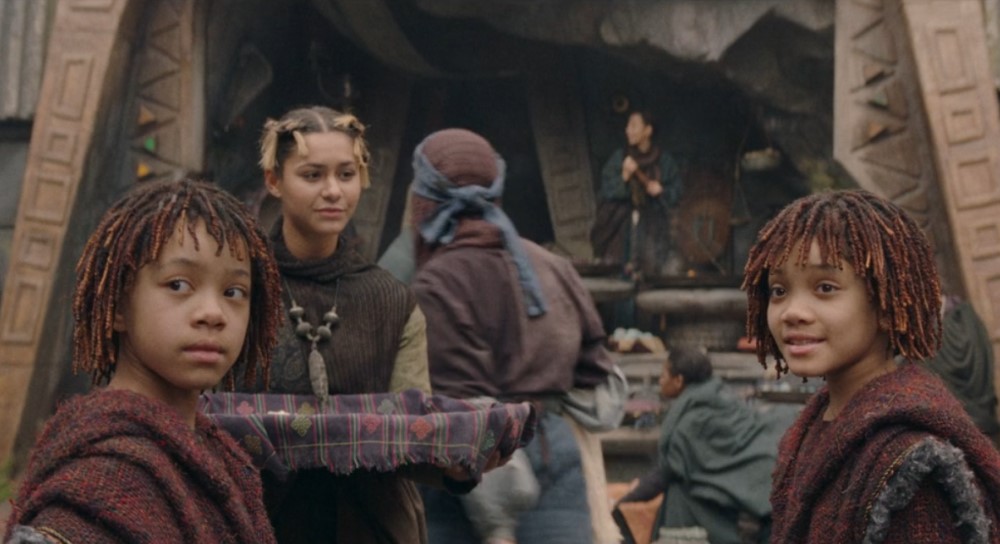
Conceptually speaking, the characters of Osha and Mae are interesting. Like Anakin Skywalker, they don’t have a father. Osha is eager to leave home to see the rest of the galaxy, which reminded me of Luke. There are also strong echoes of Arcann and Thexan from Star Wars: The Old Republic. I do wish that young Osha and Mae were given some distinguishing features such as a simple difference in their outfits, as I had a bit of trouble keeping track of who was who at first. At this point they won’t be sharing anymore screen time as kids so that probably won’t be an issue. Well, provided there are no further flashbacks.
Mark Newbold
If you’re watching The Acolyte searching for something different, taking familiar elements and mixing them in a galactic stockpot to cook up something new, then you’ve come to the right place. Destiny, the third episode of the debut season, is certainly a shift in tone and feel from even the first two episodes and as such a very different experience to many other Star Wars adventures, but surely that’s exactly what makes it Star Wars. To retread, retread, retread old ground would eventually see the franchise go stale, so to strike out in new directions is both confident and bold. Doing a flashback episode when you’re only two episodes in to an entirely new era is the height of confidence, but watched with interest not only in the ‘now’ of the youth of Osha and Mae but also the foreshadowing it delivers, and what’s could be more Star Wars than that?
There’s plenty to ponder on in this episode. We already know that Mae is the acolyte and Osha the Jedi who walked away. Instantly we have parallels to Ahsoka Tano, another Jedi who left the Order, and to Anakin as we learn the twins have no father. Is this where and how the Sith learned to do this, ultimately bringing about the creation of Anakin? That’s not been firmly established in canon (was it Plageuis? Was it the will of the Force?) but no matter, just the reveal that the twins only have mothers (one who created them, the other who carried them) is tantalising enough.
 There’s also the presense of the Jedi on Brendok, something very much in keeping with existing lore regarding their early ‘adoption’ of younglings into the Order. The first epsiode showed a room of children of a variety of species training with Master Sol, all around 7-years-old. From what we can surmise, by this stage they’d be a few years into their training, but the fact remians that these chosen few are taken from their parents and families, never to return. The will of the Force, or a millennia old institution continuing practices that need a morality check? It’s hard to tell, but in this era there’s a superiority to the Jedi, an ease with which they use their powers that has an edge to it that’s not seen quite so easily in the prequel era. No wonder the Witches of Brendok – isolated and concealed in their mountain home far from the rest of a galaxy that doesn’t understand them or their powers – are so cautious when the four Jedi land. They’ve clearly spied on them, watching the girls by the bunta tree and assessing the layout of their home. We’ve only ever really thought of the Jedi as heroes, but decades ago Obi-Wan Kenobi warned us of things being seen from certain points of view.
As a key element of the fabric of The Acolyte, Leslye Headland set out to investigate what caused the fall from the heights of the High Republic and the regard in which the Jedi were held across the galaxy to a centralised temple on Coruscant just a century later when their numbers are depleted, their view of the Force obscured and the rug completely pulled from under their feet. Hubris, arrogance, call it what you will but the Jedi were outplayed, and this show is showing us the first exchanges on the chess board. Without this episode, not only would we know less of Mae and Osha, but equally we’d know less about the Jedi and their tactics.
It’s also worth pointing out that there seems to be plenty of moments ‘missing’ from the episode. How did the witches all die? How did Torbin get his scar? Surely there’s more to come from this ‘flashback’, and with Kogonada directing the seventh episode, maybe that’s where we’ll find these moments, but for now appreciate the episode for the effort taken in crafting new worlds, histories, factions and points of view. If Star Wars is going to continue to prosper and aim towards a century of storytelling, it needs more episodes like this. 100% GFFA, with a twist.
Eric Onkenhout
The third episode of The Acolyte, Destiny, has to be one of the more interesting stories to come out of Lucasfilm live-action. The parallels between this episode and Anakin’s journey in The Phantom Menace are obvious. Sixteen years earlier Osha and her twin sister Mae are living on Brendok with a coven of witches. Both are about to graduate through a ceremony called the Ascension. However, Osha is hesitant because she doesn’t want to become a witch. This feeling baffles Mae. Osha decides to go through the ceremony anyway but is interrupted by four Jedi who arrive to take the twins to be tested for Force ability.
The similarities between Osha and Anakin begin here. Just like Anakin, we find out that the twins were born without a father, Osha and Anakin both have always wanted to be a Jedi but are afraid (naturally). When Osha asks Mother Aniseya if she’ll see her again, she answers no. Shmi, on the other hand, leaves the answer up to Anakin who answers yes. Osha is much more willing to accept change than Anakin. And, later on, she leaves the order when she decides it’s not for her. Anakin stays until the end.
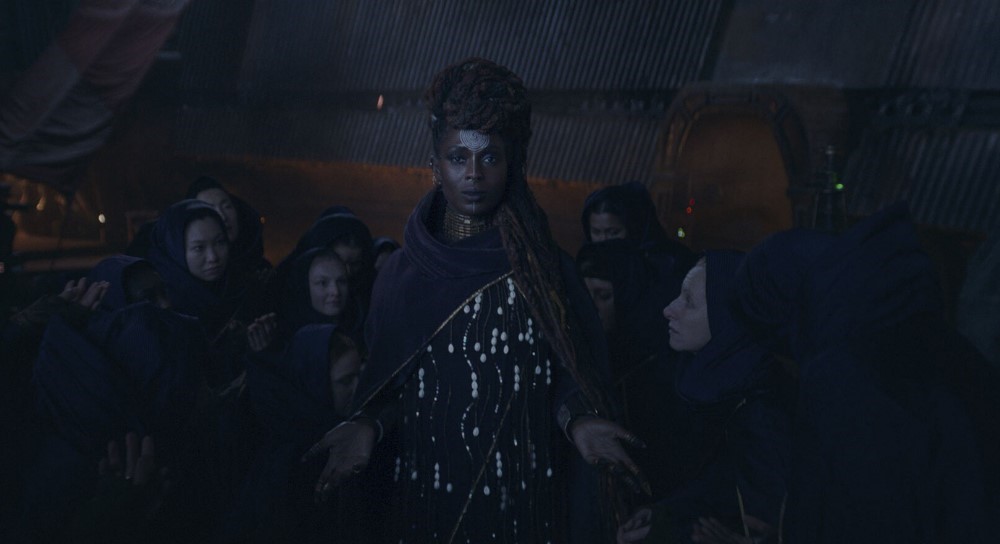 The coven is interesting in that they appear very similar to the witches of Dathomir, but slightly less dark. But were cast out for their dark magic anyway. Witnessing the Jedi and the witches discussing what’s right in the Force and who has what right as an organization was fascinating. We were always told how noble and just the Jedi were. Their hubris was finally revealed in The Last Jedi and we’re seeing it unfold here. We see lots of this in The High Republic as well with the Path of the Open Hand who feel the Force should not be used at all. Maybe Luke was right after all, and maybe Rey will continue his vision in the future.
I can’t wait to learn more about this coven and the Jedi practices during this era. The Acolyte is bridging the gap between the guardians of peace and justice and the dogmatic view of the Jedi. Dooku had a point.
Sander de Lange looks at all the reveals and easter eggs in The Acolyte – The Guide: Episode 3 ‘Destiny’.

Mark Mulcaster and Mark Newbold discuss the third episode on Making Tracks Reaction Chat: The Acolyte S1 Ep3 – ‘Destiny.