



Journey through the entire Dark Horse Star Wars comics run, one series at a time and in chronological, in-universe order. Between 1991 and 2014, Dark Horse Comics produced over forty individual Star Wars comic series, helping to shape what fans now call Legends, expanding the universe beyond the films. From the birth of the Jedi 25,000 years before the films to the far-future Legacy era, we will chronicle one of the most ambitious Expanded Universe projects in Star Wars history.
Era: Tales of the Jedi
Series: Tales of the Jedi – The Fall of the Sith Empire
Behind the scenes
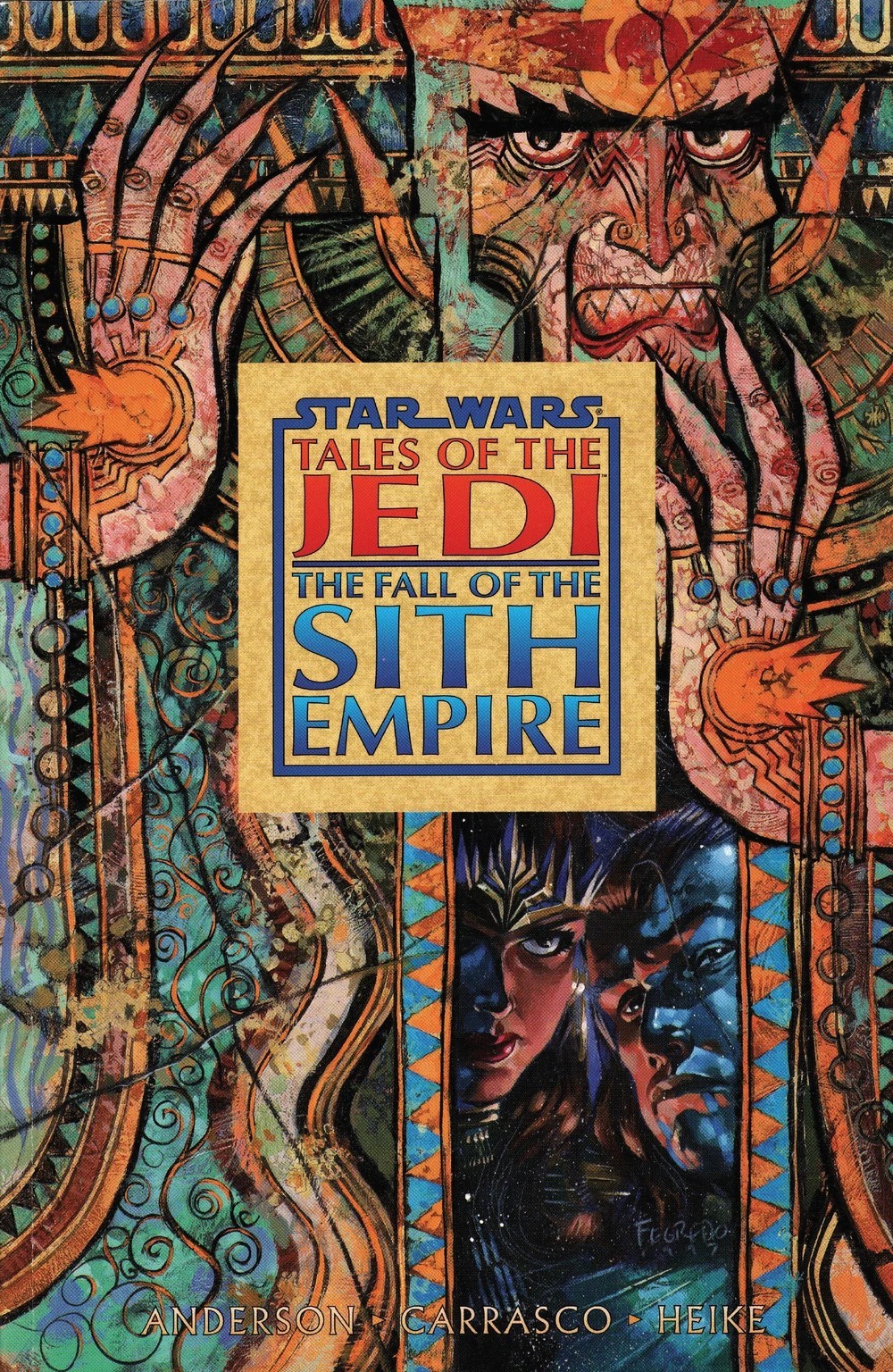 When Tales of the Jedi – The Fall of the Sith Empire launched in 1997, Kevin J. Anderson and the Dark Horse creative team returned directly to the story they had begun with The Golden Age of the Sith. Anderson later explained that, after completing The Sith War — part of the previously published Tales of the Jedi storyline following Jedi Ulic Qel-Droma and the rise of the Sith Lord Exar Kun — the team deliberately stepped away from that story before eventually returning for Redemption. Instead, they used the opportunity to travel another thousand years into the past and explore the ancient Sith Empire. The idea had not been commissioned by Lucasfilm — Anderson and the team proposed it themselves.
Running for five issues between June and October 1997, The Fall of the Sith Empire reunited Anderson with artist Dario Carrasco Jr., continuing the visual identity established in The Golden Age of the Sith. The series moved beyond discovering the ancient Sith and instead showed the consequences of that discovery, depicting the Great Hyperspace War as the isolated Sith Empire finally collided with the Galactic Republic.
The story also established several important pieces of Legends history. Naga Sadow’s Sith illusions and meditation sphere demonstrate a very different form of warfare through the Force, while the battles on Coruscant, Kirrek, Koros Major and Korriban turn events previously described as ancient history into a galactic conflict.
Its conclusion also creates direct connections to stories set thousands of years later: Odan-Urr discovers a Sith holocron and begins his path towards establishing the Great Jedi Library on Ossus, while the defeated Naga Sadow escapes to Yavin 4 with his Massassi followers. In Legends, the Massassi would construct temples and monuments on the moon under Sadow, with the site later expanded under the Sith Lord Exar Kun. Thousands of years later, the Great Massassi Temple would become the Rebel Alliance’s Base One — the very temple seen in A New Hope, from which the Rebels launch their attack on the Death Star.
As with The Golden Age of the Sith, Anderson again credited Tom Veitch for his “help and imagination in creating the ancient Star Wars Universe.” Together, the two series transformed what had once been little more than the mysterious title “Dark Lord of the Sith” into thousands of years of history, providing mythology that would continue through Tales of the Jedi, Knights of the Old Republic, The Old Republic, and much of the Legends timeline that followed.
Summary:
Set immediately after The Golden Age of the Sith around 5,000 BBY, Tales of the Jedi – The Fall of the Sith Empire begins with Jori Daragon returning to Koros Major aboard the Starbreaker 12, desperate to warn the Republic that Naga Sadow is preparing an invasion. Her reputation works against her: Jori and her brother Gav had fled Cinnagar with debts and criminal charges hanging over them, and her claims of a hidden Sith Empire are dismissed as fantasy. She is arrested, while the Starbreaker 12 is awarded to Ssk Kahorr — the businessman and gangster who had previously blamed the Daragons for the loss of his ship after secretly testing one of their unproven hyperspace routes — and Jori is sentenced to hard labour on the colony world of Ronika.
Refusing to give up, Jori escapes Ronika aboard an ore shuttle and returns to Cinnagar, eventually reaching Empress Teta. Her warning finally finds support in Jedi Odan-Urr, whose visions of an approaching Sith threat match Jori’s account. Teta begins preparing the newly unified Koros system for war, while Jedi Memit Nadill travels to Coruscant to warn the Republic and rally its Jedi defenders. By then, however, Naga Sadow has already followed the tracking device hidden aboard the Starbreaker 12 and brought the Sith Empire into Republic space.
Sadow launches attacks across the Republic, including major assaults on Coruscant, Koros Major and Kirrek. From his Sith meditation sphere above Primus Goluud, he uses the Force to create vast illusions that make his armies appear far greater than they really are. On Coruscant, Memit Nadill and the Jedi defend the Senate Hall against Massassi warriors and Sith war beasts, while on Kirrek, Odan-Urr discovers that his battle meditation cannot easily influence the single-minded fury of the Massassi. His master Ooroo sacrifices himself by shattering the tank containing the cyanogen atmosphere he needs to survive, releasing the poisonous gas into the attacking Massassi and helping turn the battle in the Republic’s favour.
Meanwhile, Gav Daragon has been placed in command of the Sith attack on his former home of Koros Major. Still believing Naga Sadow to be his teacher, Gav searches for Jori but instead encounters Aarrba the Hutt. When Aarrba reacts angrily to his return, Gav’s Massassi bodyguards kill him. Jori arrives moments later and, believing Gav responsible, confronts her brother. Horrified by what the war has made him part of, Gav finally turns against Sadow and travels to Primus Goluud, firing upon the Dark Lord’s meditation sphere and breaking his concentration. Across the battlefield, much of the seemingly enormous Sith army disappears, revealed to have been an illusion.
Sadow tricks Gav into boarding the damaged meditation sphere and abandons him there. When Jori and Empress Teta’s fleet arrive, Gav uses the sphere’s communications to give them the coordinates of the Sith Empire. Sadow responds by using a weapon aboard his flagship to trigger destructive solar flares from Primus Goluud. Teta’s forces escape and pursue the retreating Sith, but Gav remains trapped aboard the meditation sphere and is killed, saying goodbye to his sister before the star engulfs him.
Returning to Sith space, Sadow discovers that Ludo Kressh survived their earlier conflict and has proclaimed himself the new Dark Lord. Their rival fleets clash above Korriban until Sadow destroys Kressh’s flagship, killing his rival. Almost immediately, Empress Teta’s forces arrive using the coordinates provided by Gav and attack what remains of Sadow’s weakened fleet. Facing defeat, Sadow sacrifices his remaining Sith ships and escapes with his Massassi followers to the remote moon of Yavin 4.
The Great Hyperspace War ends with the ancient Sith Empire shattered. Back in Republic space, Odan-Urr discovers a Sith holocron aboard one of the abandoned enemy vessels and, remembering Ooroo’s final words, looks towards creating a great centre of Jedi knowledge on Ossus. Jori is given ownership of Aarrba’s repair dock, while Naga Sadow disappears into exile on Yavin 4. The Sith Empire may have fallen, but the knowledge, survivors and dark-side legacy left behind will continue to shape galactic history for thousands of years.
Thared’s thoughts:
I’m still really enjoying Tales of the Jedi. The Golden Age of the Sith felt like discovering an ancient legend; The Fall of the Sith Empire feels like watching that legend become an epic war. With striking painted cover artwork by Duncan Fegredo; I love Dario Carrasco Jr.’s artwork and the sheer scale he gives the conflict: enormous fleets, pyramidal drop transports, beast riders and ancient armies battling across worlds.
Odan-Urr and Memit Nadill are becoming two of my favourite Jedi. I particularly like seeing Jedi acting as advisers to Empress Teta rather than simply as warriors. There is something almost medieval about Jedi serving alongside royalty, and it even reminded me of the Imperial Knights from Legacy thousands of years later — Force-users once again serving alongside an Emperor rather than the Republic. Seeing Teta offer amnesty to the exiles of Kirrek so that they can unite against the Sith was another moment I really enjoyed.
It was sad to see Aarrba die. A “nice” Hutt still feels unusual in Star Wars. His death also demonstrates just how effectively Naga Sadow has manipulated Gav. Sadow doesn’t simply turn him evil; he isolates him, gives him power, convinces him that he understands him, and gradually places him in situations where his choices become increasingly difficult to undo. Gav even gets his own The Empire Strikes Back moment with, “This deal is getting worse all the time….”
I also liked the payoff to the tracking beacon aboard the Starbreaker 12. Ssk Kahorr — the businessman and gangster who caused Gav and Jori so much trouble in the previous story — finally gets his hands on their ship, only for the beacon secretly planted by Sadow to lead the entire Sith invasion fleet directly to him.
The Great Hyperspace War itself is exactly the sort of ancient Star Wars history I hoped Tales of the Jedi would explore. Sith armies descending upon Coruscant in pyramidal transports and Jedi defending the Senate this far back in the timeline, Massassi warriors riding enormous beasts and Empress Teta leading her forces into battle all make this feel like a genuine war from another age.
And then there is Yavin IV. Seeing Naga Sadow and the surviving Massassi arrive on the familiar jungle moon and begin constructing their temples gives this ancient story a great connection to the films. Thousands of years later, those Massassi structures will still be standing, with the Great Temple eventually becoming the Rebel base from which the attack on the Death Star is launched in A New Hope. It is exactly the kind of connection I love about Legends — taking something familiar from the films and revealing thousands of years of history beneath it.
The Jedi Journals were once again the highlight of reading the original issues. Eddie Malone’s comparison of the Sith Empire to “Genghis Khan and his minions” particularly appealed to me because it captures the same ancient, invading-empire feeling I get from these stories. Chris Stansfield also raised an interesting question about setting Tales of the Jedi thousands of years before the original trilogy: how technologically different should Star Wars really look after that length of time? His reference to the characters’ “Conan the Barbarian mode of dress” captures the visual approach the creators took to making this era feel ancient without removing the technology that makes it Star Wars.
The final issue also contains Bob Cooper’s editorial reflections on the early days of Dark Horse Comics. Reading these contemporary editorials alongside fellow Star Wars “fanatics” letters is becoming one of my favourite parts of revisiting the original issues. We aren’t just reading Legends history; we’re able to see how the people creating and reading these stories experienced them as that history was being written….
Article by Jared ‘Thared’ Peppard.