

Speaking with Lucasfilm, Visual Effects Supervisor Julian Foddy from ILM London discusses his work on the recently completed debut season of The Acolyte, his external influences that made the worlds of the show so realistic, and their work on the stunning Brendok rings chase from the eighth and final episode The Acolyte.
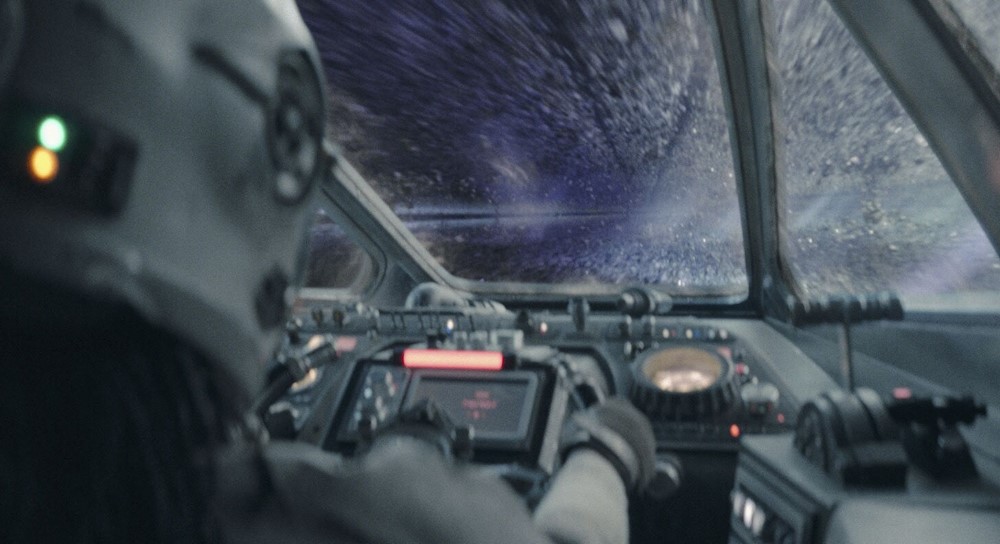
Acolyte’s finale episode, where the Jedi Sol (Lee Jung-jae) and Mae (Amandla Stenberg) race through an asteroid belt that forms the rings of Brendok’s moons. As Foddy explains, the concept arrived relatively late in development as a means to separate the two characters. “Asteroid belts provide a lot of obstacles and things to interact with in space, of which there are not many,” he says. “We’ve seen asteroids a lot in Star Wars before, so [production designer] Kevin [Jenkins] had the idea of using the moon’s rings that have an unusual coloration with blue and turquoise. There’s an aqua-marine feeling to the crystals, as if they’re made of ice or minerals.”
Foddy explains what he calls “the pseudo-science” behind their approach to the crystals and their separation: “If these rings are being held in place by gravity and they’re made from some sort of crystal, maybe the different bands of gravity are pushing the crystals together at different densities that refract light in different ways, which is why the colors and light change. We have amazing shafts of sunlight, bits of crystal floating for volume and atmosphere, and you could get these god-rays, as we call them. Then we enter the dark side of the moon and we go into shadow, which allows a dramatic reemergence back into the light.” The result is a beautiful sequence to watch, with multi-colored layers of rock and crystal that feel almost like the iconic slit-scan effects seen in films like 2001: A Space Odyssey (1968).